
Breed guide / Dalmatian
Living with a Dalmatian
The Dalmatian is a tall, short-coated dog with black or liver-brown spots and the long stride of a former carriage dog. The coat is the easy bit to brush. Finding time for a proper walk, keeping on top of pee changes and knowing which ears can hear are the bits worth thinking about before you get one.
Jump to a section
The short version: can you fit the dog around your working day?
The Dalmatian is a long-legged, spotted carriage dog bred for stamina, with a short, dense coat that still leaves hair on your clothes. The question is less whether you can manage a glorious Sunday hike and more whether anyone is around to give the dog an unhurried walk and a toilet break in the rain after work. If you’re already living with one, take ten minutes to work out what’s normal for their wee, practise a quiet check-in on the lead, and put a brush by the door. Those are three jobs nobody told you about in the film. 12324
Dalmatian notes / 01
The daily bits that matter
| At a glance | What to expect |
|---|---|
| Build | Athletic and substantial, with a deep chest, level back and long stride. The RKC places the breed in Utility. |
| Exercise | Plan for a substantial, split daily routine with time to sniff. Age, heat, fitness and health matter more than hitting a breed-page number. |
| Coat | Short, dense and straightforward to brush. PDSA describes considerable shedding through the year. |
| Before buying | Ask for the puppy’s individual BAER hearing report and both parents’ five RKC Best Practice screening results. Ask what the urinary DNA result means instead of buying on an “LUA” label. |
| Main health practicalities | Know the ear-by-ear hearing result, know what counts as normal peeing, and call the emergency vet if your dog is repeatedly trying and cannot pass urine. |
| UK longevity evidence | 13.2 years median survival (95% CI 13.0 to 13.3) in McMillan et al.’s 2024 study. Not a forecast for your dog. 20 |
Names and recognition: same dog, different filing cabinet
The Royal Kennel Club calls it the Dalmatian and puts it in Utility. The Fédération Cynologique Internationale (FCI) records Dalmatinski pas as standard no. 153, with Dalmatian as the English name. It puts the breed in Group 6, Scent Hounds and Related Breeds, section “Related breeds”, with no required working trial. Those labels belong to the registries, not to different kinds of Dalmatian. “Coach dog” is a description of what people used the dog for. 234
Dalmatian notes / 02
What the names mean
| Registry or status | What the record actually says |
|---|---|
| Royal Kennel Club | Dalmatian, Utility; UK standard. |
| FCI | Dalmatinski pas, Croatia as country of origin, definitive acceptance 1 January 1955. The currently listed standard date and English edition date differ from that recognition date. |
| Recent UK registrations | RKC Utility table records 983 in 2024 and 743 in 2025. These are registrations, not a census or a rescue demand count. 5 |
| “LUA Dalmatian” | A urinary genetics label, not a different breed or a coat colour. See health. |
Size and build: make room for the actual dog
A Dalmatian can look light on its feet and still take up most of a hatchback boot once it lies down. The UK standard asks for balance rather than bulk: the body is a little longer than the height, the chest is deep without being broad, the feet are compact and the tail tapers towards the hock. It describes a smooth, long stride rather than high, busy front steps. Watch an adult move on an ordinary lead if you’re meeting a litter’s mother. 14
The RKC does not give a weight target. PDSA gives an 18 to 27 kg general breed range without splitting it by sex or attaching a sampled population. That is a rough reference from a charity, not a number to steer your dog towards. Feel for easily palpable ribs under a light covering and look for a waist from above; get the vet or nurse to show you on your own dog. Buy the harness by chest measurement, not by what the packet thinks a Dalmatian weighs. 2327
Dalmatian notes / 03
What you measure at home
| Adult measurement | Males | Females |
|---|---|---|
| UK RKC ideal height, at withers | 58 to 61 cm | 56 to 58 cm |
| FCI standard height, at withers | 56 to 62 cm | 54 to 60 cm |
| UK standard weight | Not set | Not set |
| UK primary-care sex-specific weight | Not established in the sources used for this draft | Not established in the sources used for this draft |
Coat, colours and grooming: short hair still gets everywhere
The UK coat standard is short, dense and sleek, with black or liver-brown spots on white. The body spots are generally larger than those down the legs and on other extremities; an allowance for some head or ear patching in the UK standard isn’t an excuse to grade the dog in your hall. PDSA calls the coat low maintenance but describes shedding all year, with more in spring and autumn. Run a soft body brush or mitt over the dog in the direction of the coat and throw a washable cover down where they actually lie. The fancy bed in the corner may not be that place. 123
After a wet walk, towel the feet, look between the pads and check where the harness rubs the chest and behind the legs. Speckles that have always been there are not the same as newly reddened skin, pimples, hair loss or constant paw licking. If the dog keeps scratching, ask the vet what to check before buying another strong shampoo. Pair handling with a reward and give the dog a chance to move away instead of making every brush an ambush. For a deaf dog, get into their sightline before starting. 282634
Dalmatian notes / 04
The coat in practice
| Coat or care | What to do with it |
|---|---|
| Standard colours | White with black spots; white with liver-brown spots. The RKC separately lists lemon and orange under non-standard colours; neither colour nor a paper registration is a substitute for health information. |
| Brushing | RKC lists weekly grooming. Start gently and adjust to shedding and comfort. |
| Nails, paws and ears | Handle little and often. Stop with soreness, strong odour, discharge or an obvious change; don’t push anything down an ear canal. |
| Hearing status | You can’t tell if a puppy hears both sides from their spots or reaction to a household noise. Use the BAER result. |
Temperament: see what happens after the walk
The UK standard’s ideal includes good demeanour and endurance, but that isn’t a promise of a dog who loves the whole pub or one who needs every walk turned into a race. If a Dalmatian is constantly getting up every time someone moves, note the context: are they looking for the front door, unable to get comfortable, tracking people in a new house, or getting wound up by a succession of games? An adult who can have a sniff and then go back to their bed may tell you more than one who gives a very impressive first greeting. 138
With a new dog, ask what their rest looks like when there’s no visitor about. If they can choose to turn away or leave, you learn which people and places they actually enjoy. Watch for lip licking, head turning, freezing or repeated retreat. Those are reasons to give more space, not to push the greeting through. With a dog you’ve lived with for years, a new reluctance to turn, sleep or be touched warrants a vet conversation; a change is not a personality test. A dog who didn’t hear the request isn’t stubborn, either. 3834
Dalmatian notes / 05
Watch what happens after the walk
| Situation | Useful thing to learn |
|---|---|
| Visitor arrives | Can the dog wait behind a gate with a bed, or is this a distance problem to work on? |
| Busy path | Can they take a treat and turn with you, or do you need to step farther from the crowd? |
| New rescue | Ask for observations after quiet downtime, on lead and with ordinary house noises; don’t generalise from the handover. |
| Abrupt behaviour change | Look for discomfort, illness or hearing change with the vet before rewriting training. |
Training: give them a reason to look back
Start with a voluntary check-in rather than a formal heel. Mark and reward any voluntary look back on a quiet walk. Add a visual recall cue close up so it means something before you need it on a field. For a deaf dog, build the habit of looking at you first, use a visible marker such as a thumbs-up and deliver the reward straight afterwards. Practise behind a shut gate, then on a long line attached to a well-fitting harness in an appropriate open space. A hand signal can only work when the dog can see it, so near roads the lead is the plan, not the backup. 3436
At home, make the mat a place where nothing else is demanded and practise going there before you need to put a supermarket delivery through the door. If a dog can’t hear you coming, enter their line of sight rather than looming over their bed or reaching from behind. Agree which hand means what across the household. You don’t need a dozen signals, but it helps if your partner isn’t using “come here” for “get off the sofa”. 3437
Dalmatian notes / 06
What to practise on the lead
| Teach first | An easy practice version |
|---|---|
| Check in | Reward a glance towards you while you’re both standing still, then try it on walks. |
| This way | Step away on a slack lead and reward turning with you before you need the cue around livestock or traffic. |
| Mat | Reward choosing the mat in a quiet room; build up to a knock at the door in small steps. |
| Handling | Harness, paws and ears in short sessions. Approach in sight, touch lightly, reward, pause. |
Exercise: use the long legs, not a stopwatch
The RKC profile says more than 120 minutes daily, PDSA says at least 120 minutes, and Battersea uses a Dalmatian as an example of a dog that may need up to about 120 minutes. The descriptions don’t line up as a prescription for each dog. They’re a good warning that a fit adult can need a lot of your day. For many homes, a decent morning outing and a second walk with some sniffing and simple training are more workable than trying to cram everything into a single heroic lap. Have a third, short toilet outing if the dog needs it rather than holding out for a formal walk. 22339
Keep growing puppies’ walks shorter and build them gradually instead of trying to make a running partner on week one. For an adult returning from rest, an older dog or a dog with stiff joints, ask what they can manage, do a shorter route, and take note of how they get up the following morning. In hot weather, pick cooler times or skip the long walk, with water and sensible toilet breaks. A deaf Dalmatian can walk, sniff and play just as well; choose where and how to allow freedom rather than counting hearing as a reason to cut the outing short. 394034
Dalmatian notes / 07
Build the walk around the dog
| Who or when | What to put on the calendar |
|---|---|
| Healthy, fit adult | Two planned outings, varied terrain at a manageable pace, sniffing, and secure space for faster play where suitable. |
| Growing puppy | Short outings as suitable after veterinary vaccination advice, brief play and training, rest between. No forced mileage or high-impact programme. |
| Older dog or new stiffness | Shorter, easier walks; ask the vet about a meaningful change or persistent limp. |
| Hot spell or poor visibility | Cooler route and timing, water and easy exits; use secure space or a lead if you can’t rely on a visible cue. |
Living with one: the garden isn't the timetable
Think first about the journey from bed to outside. In a flat, can you get a puppy through the lift before breakfast and a dog with a sore bladder downstairs without a long wait? In a house, can you put a gate between the front door and an enthusiastic adult without blocking the dog’s route to bed? The RKC profile points people towards a large home and garden. The useful test is whether you can provide regular toilet access, enough space to get out of the way of people, safe outings and calm time indoors. A big garden doesn’t provide those by itself. 22341
Decide who covers weekday breaks and who will hold the lead when the dog is frightened or excited. Put a water bowl where it can be reached all day, not behind the kitchen gate that’s only open when someone gets home. If your dog paces, pants or waits at the door every time you leave, measure what happens on a short absence rather than hoping they’ll sleep through a long one. Speak to the vet and seek qualified behaviour help if distress persists, particularly if it is new. 4342
Dalmatian notes / 08
Make the house work for a Dalmatian
| Friction point | Something to change before it becomes a problem |
|---|---|
| Workday | Agree realistic cover for walking, toileting and time together. Find out what your dog actually copes with alone. |
| Slippery floor | Put non-slip mats on routes between the back door, bowl and bed, especially for a stiff or older dog. |
| Front door and outdoor gates | Create a second barrier before opening the main door. A deaf dog may not notice it opening behind them. |
| Transport | Measure the space needed to turn and lie down; practise calm loading separately from driving. |
Children, other pets and first-time owners: watch the dog you have
A stroppy-looking photograph can conceal a soft dog, and a nice first meeting doesn’t tell you how an exuberant adult will move around a toddler carrying toast. PDSA points out that a large, energetic Dalmatian can knock over small children by accident. Keep an adult close enough to step in and separate with a gate whenever you can’t supervise. Give the dog space to eat, chew and sleep undisturbed. Children should know not to take food or approach a sleeping dog, especially one who won’t hear them coming. 234434
Ask a rescue what it has actually seen with cats, other dogs and children of a similar age to yours. “Never met one” isn’t a failed assessment. It also isn’t proof they’ll be fine. Give the cat high routes and a room the dog cannot enter; start with barriers and reward disengaging. For two dogs, try a parallel walk in a quiet place and leave room for either to move away. Management is a perfectly reasonable plan. It isn’t a character judgement. 494645
For a first dog: I’d prioritise an adult whose walking and home habits you can learn about from a fosterer or rescue. If you choose a puppy, arrange help with weekday outings and a reward-based lesson before you need either. Pay particular attention to how you’ll provide safe exercise and teach visual check-ins. A hearing difference needn’t put an otherwise suitable dog out of the running. 3448
Dalmatian notes / 09
Ask about the dog in front of you
| Match to check | Useful question or precaution |
|---|---|
| Small children | Is there a gate and a separate rest space? Can adults supervise actively, rather than from the next room? |
| Cats and small pets | Does this dog have a known history? Provide separate access and escape routes before testing any introduction. |
| Resident dog | What happens on a relaxed parallel walk with space? Can each dog eat and rest separately? |
| First-time home | Who handles the weekday breaks, adolescent lead work and vet trips? Ask about an adult with compatible needs. |
Health: get the ear report and know what normal wee looks like
Hearing: BAER stands for brainstem auditory evoked response. It records a response to sound from each ear separately. It can distinguish deafness on one side from deafness in both ears, which is why a dog turning towards a rustling packet doesn’t settle the question. The RKC says around 5½ to 6½ weeks is the best age for a litter test. Ask for the named puppy’s ear-by-ear report, and don’t assume a test result for either parent tells you what happened in either of the puppy’s ears. In the UK hearing-clinic study, congenital deafness decreased over the study period; the two historical percentages below are neither the odds for your litter nor current UK population rates. 910
Life with a deaf dog: A dog hearing in one ear may respond to sound but find it harder to tell where it came from. A bilaterally deaf dog can learn hand cues and check-ins. Keep the dog on lead at roads or in unsecured space where a visual cue isn’t dependable, tell the vet and walker how to get their attention, and avoid startling them out of sleep. If an adult who used to respond suddenly doesn’t, don’t assume congenital deafness has just shown up or try to diagnose it at home. Pain, ear disease and other changes are reasons for a vet check. 9343526
Uric acid: High levels of uric acid in urine are called hyperuricosuria (HUU). Two copies of the tested SLC2A9 variant are associated with that trait and a predisposition to urate stones, not a diagnosis of stones. One copy is a carrier result, not the two-copy HUU result; a clear dog has no copies of the tested variant. Low uric acid (LUA) Dalmatians trace the usual-function copy to a historical Pointer outcross and generations bred back to Dalmatians, as acknowledged by the RKC. A pet labelled LUA can still be a carrier: get the report instead of reading “LUA” as “two clear copies”. A result for this one variant doesn’t rule out other urinary problems. 11121314
What to do at home: Keep fresh water available and give regular chances to wee, including for a dog that dislikes the rain. Notice changes from what is normal for your dog: repeated small wees, blood, straining, discomfort or new accidents. Call the vet promptly; repeatedly trying but unable to pass urine, or only producing drops when you suspect a blockage, means call the emergency vet now. Say what you’ve actually seen, when they last passed a normal stream and whether they are vomiting or lethargic. Don’t wait for tomorrow, restrict water or switch to a homemade low-protein or low-purine diet. If a dog has a two-copy result, a history of stones or urinary signs, talk through testing, water intake, food and treats with the vet. A veterinary diet can be appropriate for a diagnosed individual; this isn’t a blanket diet instruction for the breed. 242518
The other tests matter too: At the November 2026 check, the RKC places all five recommendations for Dalmatian in Best Practice, including BAER with litter screening, HUU DNA, BVA/RKC hip and elbow schemes and the DD-PRKG2 DNA test. Nothing is listed in the separate Good Practice column. Ask for actual records rather than “all checked”, and discuss results that aren’t straightforward with your vet. Hip and elbow grades concern joints, not hearing or urine; PRKG2 addresses a specific inherited disproportionate skeletal condition, not every cause of short limbs. RKC Breed Watch Category 1 is about visible traits judges should watch; it is not a green light that this puppy is free of disease. 62157
What the evidence does not say: A lab’s submissions consist of material vets sent for analysis, not every Dalmatian in Britain. In a 2002 to 2010 UK submission study, urate predominated among the Dalmatian stones analysed. It doesn’t tell us the share of living Dalmatians who will form a stone. In another entirely separate UK data set, the 2024 longevity study’s median survival estimate was 13.2 years. Neither figure tells you what will happen to the particular dog by your feet. 161920
Dalmatian notes / 10
Hearing, urate stones and breeding checks
Recorded conditions and lifespan context
| Evidence | Dalmatian result, and who was counted |
|---|---|
| UK BAER hearing study, 2020 | 8,955 screened puppies from the 1992 to early 2019 clinic data. 1,201 had unilateral deafness and 397 bilateral. Eight equivocal results were excluded from analysis. The paper reports 17.8% with one or both ears affected over the period. |
| Most recent four complete birth years in that same BAER study, 2015 to 2018 | 148 of 1,079 across the four reported annual rows: 13.72% overall, 11.31% unilateral, 2.41% bilateral. This subset overlaps with the full study, not an extra sample. |
| UK urinary stone submissions, 2002 to 2010 | 7,819 small-animal uroliths of all types/species in the study; among Dalmatian submissions, urate predominated. Not a dog denominator or breed prevalence rate. |
| 2024 UK multi-source survival study | Dalmatian median 13.2 years (95% CI 13.0 to 13.3); 3,126 Dalmatian records, 1,443 recorded as deceased in the companion table. |
Eight practical checks
| Eight practical checks | Why and when to act |
|---|---|
| 1. Congenital hearing or a new hearing change | Get the BAER report for each ear; ask the vet about a change, ear pain, discharge or new head shaking. See 9. |
| 2. Urate stones and other urinary disease | Note new frequency, pain or blood. Repeated straining with no urine, or just drops and suspected blockage, is an emergency. See 24. |
| 3. Hips | Ask for both parents’ official scores. If your dog is slow to rise, stiff after rest or newly reluctant to climb, ask the vet rather than pushing through exercise. See 6 and 30. |
| 4. Elbows | Ask for separate elbow grades. A persistent front-leg limp is a vet issue, not a reason to change the lead or simply stop every walk indefinitely. See 32 and 30. |
| 5. Disproportionate skeletal development | Ask for the DD-PRKG2 screening result. Let a vet assess an unusually short-limbed puppy with an abnormal gait or growing discomfort; appearance isn’t a genetic test. See 6 and 15. |
| 6. Skin | Notice newly sore or itchy patches, paws or harness rubs. Persistent itch needs diagnosis, not a stronger shampoo or a succession of unadvised diets. See 23 and 28. |
| 7. Dental care | A general dog-care concern, not a breed prevalence claim. Get the dog used to brushing with dog toothpaste; bad breath, sore gums or dropping food merit a vet check. See 29. |
| 8. Bloat and GDV | General deep-chested-dog emergency awareness, with no UK Dalmatian rate claimed. Repeated retching with nothing coming up, sudden swelling or extreme distress merits an emergency call. Don’t wait to see every sign. See 31. |
What it costs: price the weekday help as well as the lead
PDSA’s large-dog minimum basket, last priced in 2024, came to £560 to get set up and £116 a month for ordinary costs, including a budget allowance for insurance. It’s a broad planning reference because PDSA puts the Dalmatian in its large section, not a price quote for that dog. It doesn’t cover buying the dog, unexpected vet bills, prescription food or paid walks, training and boarding. The cheapest part of keeping this coat is the actual brush. 3323
Before choosing insurance, check the excess, annual limits, exclusions for existing conditions, and what cover does or doesn’t do across renewals. Ask how the insurer deals with previous urinary signs or hearing results; give them an accurate history. Get a local quote for paid weekday cover if you need it. Keep the vet and emergency numbers somewhere everyone can find them. Ask the rehoming centre or breeder what their fee includes and get the terms in writing. 3351
Dalmatian notes / 11
What help will cost
| Put in your budget | What not to assume |
|---|---|
| PDSA 2024 large-dog minimum basket | £560 setup; £116 monthly. Generic estimate, not a Dalmatian quote. |
| Additional help | Pay for enough hours or visits to fit your working day, not just the odd holiday. |
| Medical reserve | Allow for excess, exclusions, emergencies and any individual vet-directed testing or food. |
| Equipment | Measure twice for harness, secure car setup and bed. You need something you can wash, not a lifetime supply of spot-print accessories. |
Where the breed came from: there was a job before there was a film
Britain’s best-documented association is with horse-drawn carriages. The RKC describes dogs accompanying coaches, helping guard passengers and loads and later running with horse-drawn fire engines. In Regency Britain the spotted coach dog became fashionable. That’s a useful explanation for why the standard values an efficient stride and endurance, not evidence that your dog will be safe next to horses, traffic or bikes. Stand well clear on lead if you meet a horse on a narrow British lane. 21
The FCI credits Croatia and offers historic depictions and church records as evidence for a Dalmatian connection. The RKC is more cautious about the precise geographical origin, so it’s best to say what each records rather than picking a birthplace from a painting. The FCI dates Vero Shaw’s unofficial standard to 1882 and links the first official standard to the Dalmatian Club formed in England in 1890. The separately named British Dalmatian Club dates its own beginnings to the Southern Dalmatian Club in 1925, with a rename by 1930. That’s two club histories, not two dates for the same event. 4247
Dalmatian notes / 12
Where the carriage story comes from
| Date or period | What it describes |
|---|---|
| Regency period | UK carriage use and status association, as described by the RKC. |
| 1882 and 1890 | Vero Shaw’s unofficial standard and the English Dalmatian Club, respectively, per FCI. |
| 1925 to 1930 | A separate UK club begins as Southern Dalmatian Club and takes the British Dalmatian Club name. |
| 1955 | FCI definitive acceptance. Not the date of a first British dog or club. |
Getting one: ask to see the results, then go for a walk
If you’re buying a puppy, see where it is being raised and meet the mother. Ask for the whole litter’s screening practice and the report for the puppy you might take home. Then check both parents’ hip and elbow results, HUU DNA, BAER and DD-PRKG2 against their identity and the 8 where available. If a test is missing, ask why before committing. Ask for the current food and treats, the dog’s usual toilet routine and what the breeder plans to do if something goes wrong in the first weeks. A colour or an LUA label is not the health section of a contract. 6951
British Dalmatian Welfare and Scottish Dalmatian Welfare are starting points for an adult rescue. Ask whether you can see an ordinary bit of an ordinary day: lead walking, a short rest and how the dog copes with handling. Not all dogs have a full history; ask what is confirmed about both ears, veterinary or diet records, and whether another dog or cat has actually been part of their household. Check the microchip paperwork and which database update you need to do; Northern Ireland has its own dog licensing guidance as well. 48505253
Dalmatian notes / 13
What to ask for before collection
| When you visit | Ask for something you can check |
|---|---|
| Puppy hearing | Named puppy, matching identification, ear-by-ear BAER report; not a demonstration involving a clap. |
| Parents’ results | Both dogs’ identities and the five Best Practice records, including exact HUU lab results and which joints were assessed. |
| Adult or rescue | Known hearing, urinary and home history, plus what is unknown. If a special food is used, get the name and reason before bringing the dog home. |
| Paperwork | Contract or adoption terms, vet history, microchip and registration details, and a named contact if things don’t work out. |
Sources
- D1RKC standardReference · checked 20 November 2026
- D2RKC breed pageReference · checked 20 November 2026
- D3FCI registerReference · checked 20 November 2026
- D4FCI standardReference · checked 20 November 2026
- D5RegistrationsReference · checked 20 November 2026
- D6RKC Health StandardReference · checked 20 November 2026
- D7RKC Breed WatchReference · checked 20 November 2026
- D8RKC recordsReference · checked 20 November 2026
- D9RKC BAERReference · checked 20 November 2026
- D102020 UK studyReference · checked 20 November 2026
- D11RKC HUUReference · checked 20 November 2026
- D12RKC outcross historyReference · checked 20 November 2026
- D13Bannasch et al.Reference · checked 20 November 2026
- D14UC Davis veterinary guidanceReference · checked 20 November 2026
- D15PRKG2 studyReference · checked 20 November 2026
- D16Rogers et al. UK stone analysisReference · checked 20 November 2026
- D17Roe et al. 2012Reference · checked 20 November 2026
- D18ACVIM clinical consensusReference · checked 20 November 2026
- D19McMillan et al.Reference · checked 20 November 2026
- D20Study and breed rowReference · checked 20 November 2026
- D21Teng et al. 2022Reference · checked 20 November 2026
- D22VetCompass 2019 peer-reviewed Table 1Reference · checked 20 November 2026
- D23PDSA DalmatianReference · checked 20 November 2026
- D24PDSA bladder stonesReference · checked 20 November 2026
- D25PDSA urine symptomsReference · checked 20 November 2026
- D26PDSA home checkReference · checked 20 November 2026
- D27PDSA body conditionReference · checked 20 November 2026
- D28PDSA itchy skinReference · checked 20 November 2026
- D29PDSA dental diseaseReference · checked 20 November 2026
- D30PDSA limpingReference · checked 20 November 2026
- D31PDSA GDVReference · checked 20 November 2026
- D32RKC elbow schemeReference · checked 20 November 2026
- D33PDSA cost methodReference · checked 20 November 2026
- D34Dogs Trust deaf-dog careReference · checked 20 November 2026
- D35British Dalmatian Welfare living guideReference · checked 20 November 2026
- D36Dogs Trust recallReference · checked 20 November 2026
- D37Dogs Trust markersReference · checked 20 November 2026
- D38Dogs Trust body languageReference · checked 20 November 2026
- D39Battersea exerciseReference · checked 20 November 2026
- D40Dogs Trust hot weatherReference · checked 20 November 2026
- D41Dogs Trust ownership guideReference · checked 20 November 2026
- D42Dogs Trust separation distressReference · checked 20 November 2026
- D43British Dalmatian Welfare urinary careReference · checked 20 November 2026
- D44Dogs Trust child safetyReference · checked 20 November 2026
- D45Dogs Trust dog introductionsReference · checked 20 November 2026
- D46Dogs Trust cat introductionsReference · checked 20 November 2026
- D47British Dalmatian Club historyReference · checked 20 November 2026
- D48British Dalmatian Welfare adoptionReference · checked 20 November 2026
- D49British Dalmatian Welfare adopter formReference · checked 20 November 2026
- D50Scottish Dalmatian WelfareReference · checked 20 November 2026
- D51RSPCA puppy checklistReference · checked 20 November 2026
- D52GOV.UK microchipsReference · checked 20 November 2026
- D53nidirect licensingReference · checked 20 November 2026
- D54GOV.UK banned typesReference · checked 20 November 2026
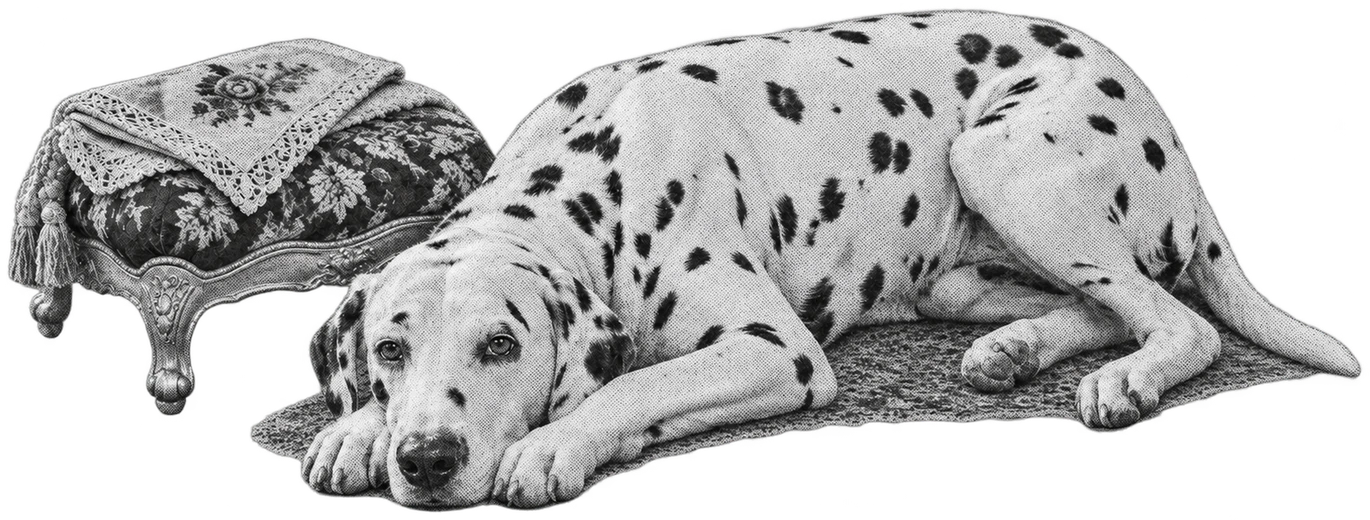
Five original generated photo-first editorial newspaper cutouts. These are not photographs documenting individual dogs or medical examples.
