
Breed guide / Cockalier
Living with a Cockalier
A Cockalier is usually a Cavalier King Charles Spaniel crossed with a Cocker Spaniel, though the label doesn’t tell you which Cocker or whether the mix is a generation further back. A walk with one can be a leisurely sniff or a full investigation of the hedge. The bits worth getting right are a way to call them off a scent, a check of the ears afterwards and knowing which health results belong to which parent. 12345
Jump to a section
The short version
Get them used to you looking at the outside of an ear before you need to check it in a hurry. Feel behind the ear and under the harness after a wet walk. If there’s a new smell or head shaking, don’t assume it’s just what happens when you’ve got ears like that. Speak to your vet. 6 7 8
Practise getting their attention when they’re interested in something easy, then reward them for coming all the way back. An interesting route doesn’t have to double as an audition for disappearing through the hedge. Use a lead or a suitable long line while you’re still working on it. 4 5 9
Cockalier notes / 01
Where to start
| Start here | One useful thing to do |
|---|---|
| After a walk | Check the ear edges and where the coat rubs. 6 7 |
| A sore or smelly ear | Ask the vet rather than trying to clean it with a cotton bud. 8 10 |
| Recall | Practise on easy ground and use a safe backup. 5 |
| Health records | Find out which parent is the Cavalier and which Cocker is documented. 1 2 3 |
Ask them to say which Cocker they mean
The Cockalier label links a Cavalier King Charles Spaniel with a Cocker Spaniel. In the UK that often means the English Cocker, including working or show lines, but the name is also used for a Cavalier crossed with an American Cocker. It can be used beyond the first cross too. The Royal Kennel Club lists those parent breeds separately and has no Cockalier breed standard. The King Charles Spaniel without “Cavalier” in the name is a different breed. 1 2 3 11 12
Cockalier notes / 02
Which Cocker?
The size on a parent breed page is not the size to buy
Adult build varies with documented parents and the individual. There’s no single written adult height or weight to apply to a Cockalier. Measure their chest for a harness and check whether it slides when they back up or lean forward. Feel for ribs and waist under the fur before deciding a spaniel has always looked a bit round. 1 2 3 13 14
Check travel gear and beds with the actual dog in them. A wider body and feathered legs can take up more room than a puppy picture suggests. For a dog that’s hesitant about getting in or out of the car, check the footing and ask about a noticeable change in how they move. 15 16 17
The ears don’t need a deep clean every time they look grubby
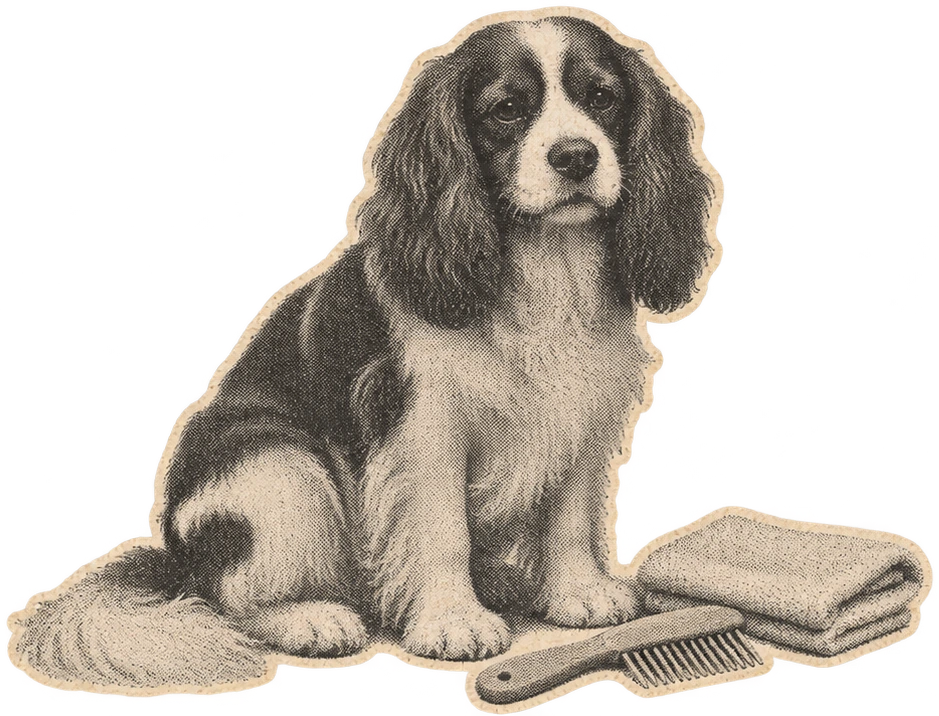
Longer ear hair and feathering can hang on to grass and water. Part the coat behind the ears and under the straps, then work through it a bit at a time. Check along the ends of the ears too, where you might find the last bit of dinner or something collected on a walk. For a tight mat, get help rather than putting scissors next to skin you can’t see. 6 7 18
Dry the outside of damp ears and look for redness, a smell, discharge or repeated head shaking. If an ear seems sore, let a vet take a look. Don’t put cotton buds down the canal or use whatever cleaner you’ve still got in the cupboard from last time. 8 10
Cockalier notes / 04
Keep ears comfy
Watch what gets their attention, not what the other half is meant to be like
A dog with Cocker ancestry can enjoy a lot of searching, but the label won’t tell you how this one settles or what sends them off. Look for the first pause, sniff or stare and turn away while there’s still room. If the dog can’t give you a glance where you are, start somewhere quieter. 1 4 5 19
If your dog moves closer whenever you leave the room, that alone doesn’t mean they’ll be distressed on their own. See what happens at a short separation they can cope with and build up gradually. Video can show the difference between a nap and a dog who’s pacing as soon as you go. 20 21
Cockalier notes / 05
Watch the reaction
| What you notice | What to try |
|---|---|
| Nose down and lead getting tight | Take an easier line before a cue is too hard. 4 5 |
| Avoiding touch at an ear or collar | Stop and consider soreness rather than trying to finish the job. 8 18 |
| Pacing or barking as you leave | Observe, reduce the difficulty and ask for help if needed. 20 21 |
The sniffing is the bit to use, not the bit to get rid of
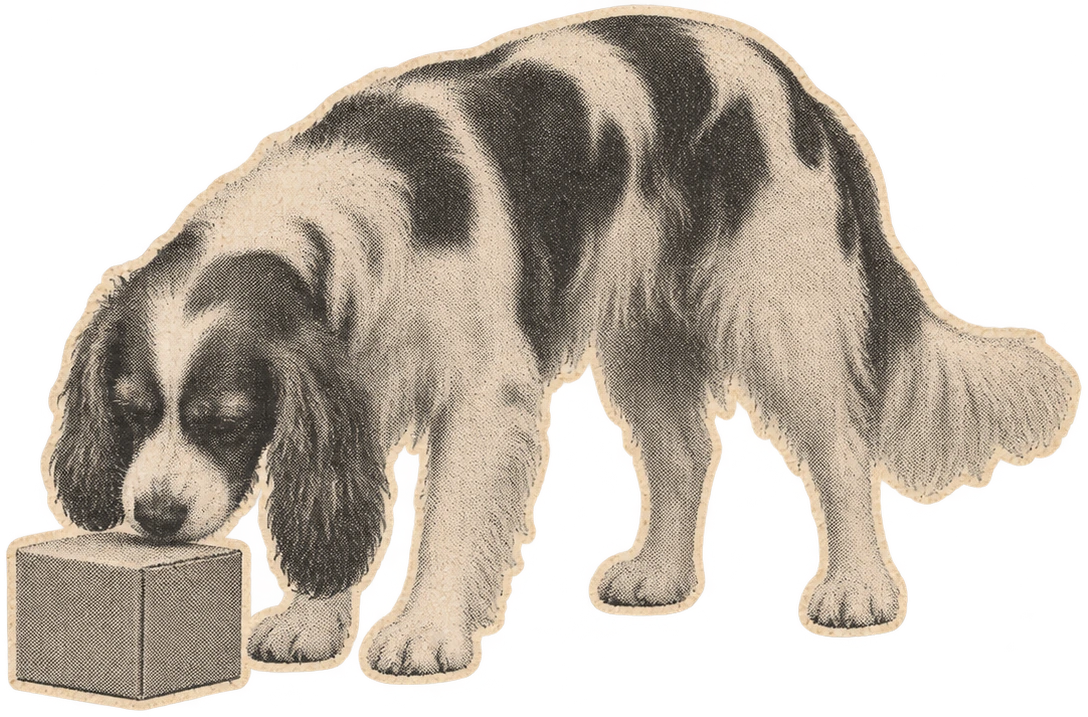
Hide a known toy somewhere close by and let them find it. Reward coming back to you after the find, then put the toy away and give them a chance to settle. Starting with an easy win makes a better game than hiding it in the hardest place you can think of and spending the evening pointing at a plant pot. 5 9 22
Practise a brief ear or paw check separately when they’re comfortable. Reward staying for one small touch, then let them go. It’s easier to build up to a proper check when the dog doesn’t already think hands around its ears mean trouble. 6 18
Set the distance by the dog, not by the Cocker name
Go somewhere they can sniff at their pace and practise disengaging. The amount of exercise that suits them depends on health, age and the individual, not a blend of two parent recommendations. Keep a lead on around livestock and use a secure space if you’re working on reliable recall. 4 5 23 24
Notice if the dog stops enjoying a route they normally like, repeatedly coughs or tires earlier than usual. Speak to your vet rather than assuming the pace is wrong for their mix. Difficulty breathing or sudden collapse is an emergency. In hot weather choose an easier or cooler outing. 17 25 26 27 28
Cockalier notes / 07
Walk at their pace
Have somewhere for the dog to dry off and another spot to switch off
Put a towel by the door and make it easy to check the ear hair outside the main traffic through the house. A quiet bed away from your drying routine can help. A dog shouldn’t have to lie with one eye open in case sitting down after a walk means the comb comes out again. 6 16 18 22
If your dog rushes out when the door goes, teach a calm wait with another barrier between them and the street. Give them space to move away from people after coming in. If they’re distressed when left, sort out shorter time apart first. 20 22 29
Let children play with the dog only while both are still enjoying it
Keep an adult near enough to step in, and ask children not to lift the dog or pull the ear hair. If the game starts getting fast or the dog turns away, give them somewhere separate. Keep toy swaps and mealtimes out of the children’s hands. 18 19 30
For cats or other dogs, make somewhere to feed and rest separately. Start with short managed meetings and let the animals move away. Ask how the actual dog has done before, rather than assuming a mix of spaniels will always be good company for a cat. 4 31 32
Health: three possible parent profiles, no merged checklist
The Royal Kennel Club lists Good Practice heart screening plus CC/DE and EF DNA tests for Cavaliers, with the clinical Eye Scheme under Best Practice. For English Cockers it lists prcd-PRA and AMS under Good Practice, alongside genetic diversity, with AON and FN DNA tests, eyes, gonioscopy and hips under Best Practice. For American Cockers it lists eyes and gonioscopy under Good Practice, alongside genetic diversity, and prcd-PRA and hips under Best Practice. These are separate parent-breed recommendations, not a Cockalier package. 2 3 33 34 35 36
A primary-care study in England recorded heart murmurs among Cavalier King Charles Spaniels. A separate UK study recorded outer ear inflammation in 10.09% of the English Cockers assessed for disorders in its study year. Those findings apply to the groups studied, not to a Cockalier or to American Cockers by proxy. A new cough, reduced exercise tolerance or a sore ear needs an individual check. 8 26 37 38
The 2024 Dogs Trust UK study gives a Cavalier median lifespan of 11.8 years and lists each Cocker breed separately at 13.3 years. Those are parent-breed results, not a range or a lifespan forecast for the cross. 39 40
Cockalier notes / 10
Health conditions and screening
| Topic | What you can use |
|---|---|
| Cavalier heart screening | Find the named parent’s heart result; don’t treat it as a guarantee for the cross. 2 33 36 |
| Cocker screening | Use the English or American list that fits the confirmed parent. 3 34 35 |
| Ears | Speak to the vet if there’s pain, smell, discharge or repeat head shaking. 8 10 |
| Lifespan | Don’t average the parent estimates and call it the cross’s lifespan. 39 40 |
| Breeding and screening | Ask for the actual record, date and dog for each test. 33 41 |
| Changes on walks | Mention a new cough or unusually poor recovery to your vet. 26 |
| Urgent conditions | Call the emergency vet for collapse or difficulty breathing. 27 28 |
Find out what the coat and the diary will cost you
Ask a groomer about this dog’s actual feathering and their approach if ear handling isn’t easy. Ask what you can realistically maintain between visits. If you need help with walks, explain which distractions matter and where the dog can safely be let off, if anywhere. 5 6 18 42
Get insurance quotes based on the actual dog. Check the wording for ongoing conditions, existing problems and dental illness, rather than guessing what an ear appointment or a heart check will be covered for. Budget for normal vet care even if you take out a policy. 26 43
Cockalier notes / 11
Price the week
| Cost | Check |
|---|---|
| Grooming | Quotes for the ears and feathering, and what you’ll do at home. 6 18 |
| Walker or sitter | How they handle recall, routes and quiet time. 5 42 |
| Insurance | Excess, existing issues, annual cover and exclusions. 43 |
| Routine vet care | Regular checks, not just a bill when something hurts. 8 26 43 |
Different spaniel histories, one newer label
Cavaliers have a companion-breed history. English and American Cocker Spaniels have their own written breed entries and histories as spaniels. The name Cockalier describes a combination of ancestry; it doesn’t tell you which kind of work your dog will take to or whether they’ll be ready to get back in the car first. 1 2 3
See the dog before you rely on the spaniel bit
If you’re adopting, ask how they are with ear checks, on a lead and when left. Find out where those things were observed and what’s actually known about their parentage. A dog can look settled in a foster home and need a little time to find the same rhythm in yours. 5 18 20 44
If you’re looking at a litter, see the pups with mum and ask for the actual health results for both parents. Start with the Cavalier heart result and the recorded Cocker breed. Watch an adult dog on a normal walk if you can. The puppy sleeping with its ears in the food bowl is probably not showing you its busiest ten minutes. 1 2 3 33 41 45
Cockalier notes / 13
Ask about normal days
| Ask | Why it’s useful |
|---|---|
| Which Cocker ancestry is documented? | Connects you to the correct screening list rather than a guess. 1 3 |
| What were the parent health results? | Gives your vet specifics, including on the Cavalier heart scheme. 2 33 41 |
| How do they cope with ear care? | Helps you work out where to start. 8 18 |
| Where do they settle after a walk? | An ordinary routine you may be able to carry over. 22 44 |
Sources
- S1Purina UK descriptive Cockalier parent pair, possible American Cocker and later generationsSource · checked 21 November 2026
- S2Royal Kennel Club separate Cavalier King Charles Spaniel breed and health adviceSource · checked 21 November 2026
- S3Royal Kennel Club central parent-breed Health Standard and separate Cocker entriesSource · checked 21 November 2026
- S4Dogs Trust managing a dog's chase and attention to movementSource · checked 21 November 2026
- S5Dogs Trust teaching recall and using a safe long lineSource · checked 21 November 2026
- S6PDSA veterinary dog grooming adviceSource · checked 21 November 2026
- S7PDSA checking coat, feet and ears at homeSource · checked 21 November 2026
- S8PDSA veterinary ear infection signs and what to doSource · checked 21 November 2026
- S9Dogs Trust scent games and enrichmentSource · checked 21 November 2026
- S10PDSA veterinary ear-care advice including avoiding cotton budsSource · checked 21 November 2026
- S11Royal Kennel Club separate King Charles Spaniel profileSource · checked 21 November 2026
- S12Royal Kennel Club current written breed standards directorySource · checked 21 November 2026
- S13Dogs Trust properly fitting and introducing a harnessSource · checked 21 November 2026
- S14PDSA checking body conditionSource · checked 21 November 2026
- S15Dogs Trust safe dog travelSource · checked 21 November 2026
- S16Canine Arthritis Management veterinary safe footing and accessSource · checked 21 November 2026
- S17PDSA veterinary advice about limping and discomfortSource · checked 21 November 2026
- S18Dogs Trust gentle handling and groomingSource · checked 21 November 2026
- S19Dogs Trust reading dog body languageSource · checked 21 November 2026
- S20Dogs Trust getting a dog used to being aloneSource · checked 21 November 2026
- S21Dogs Trust recognising separation distressSource · checked 21 November 2026
- S22Dogs Trust teaching a dog to settleSource · checked 21 November 2026
- S23PDSA tailoring exercise to age and conditionSource · checked 21 November 2026
- S24Natural England countryside code around livestockSource · checked 21 November 2026
- S25Dogs Trust hot-weather walking safetySource · checked 21 November 2026
- S26PDSA veterinary information on mitral valve disease and clinical signsSource · checked 21 November 2026
- S27PDSA emergency veterinary advice on difficulty breathingSource · checked 21 November 2026
- S28PDSA emergency veterinary advice on collapseSource · checked 21 November 2026
- S29Dogs Trust preparing safe arrivals and visitorsSource · checked 21 November 2026
- S30Dogs Trust child and dog supervisionSource · checked 21 November 2026
- S31Dogs Trust dogs and cats living togetherSource · checked 21 November 2026
- S32Dogs Trust introductions to another dogSource · checked 21 November 2026
- S33Royal Kennel Club parent-breed heart scheme for CavaliersSource · checked 21 November 2026
- S34Royal Kennel Club English Cocker parent profile and current test listSource · checked 21 November 2026
- S35Royal Kennel Club American Cocker parent profile and different test listSource · checked 21 November 2026
- S36British Veterinary Association clinical eye schemeSource · checked 21 November 2026
- S37Summers et al. original primary-care Cavalier population in EnglandSource · checked 21 November 2026
- S38Original English Cocker Spaniel UK primary-care cohort and otitis findingsSource · checked 21 November 2026
- S39McMillan et al. original UK breed longevity studySource · checked 21 November 2026
- S40Dogs Trust original UK lifespan results with three separately listed parent breedsSource · checked 21 November 2026
- S41Royal Kennel Club individual dog health screening lookupSource · checked 21 November 2026
- S42Dogs Trust how to select a suitable walkerSource · checked 21 November 2026
- S43PDSA ownership costs and the need to check individual insurance coverageSource · checked 21 November 2026
- S44Dogs Trust settling a rehomed dogSource · checked 21 November 2026
- S45RSPCA puppy visits and breeder checksSource · checked 21 November 2026
