Breed guide / Cairn Terrier
Living with a Cairn Terrier
A Cairn Terrier is a small, rough-coated Scottish terrier bred to work among rocks and cover. Yours might be perfectly happy on a cushion until something rustles in the hedge. Give them a place they’re allowed to dig, practise getting them back before you rely on it and get them comfortable with a brush in small doses. It’s easier than spending every walk explaining why the hedge is out of bounds. 12345
Jump to a section
The short version
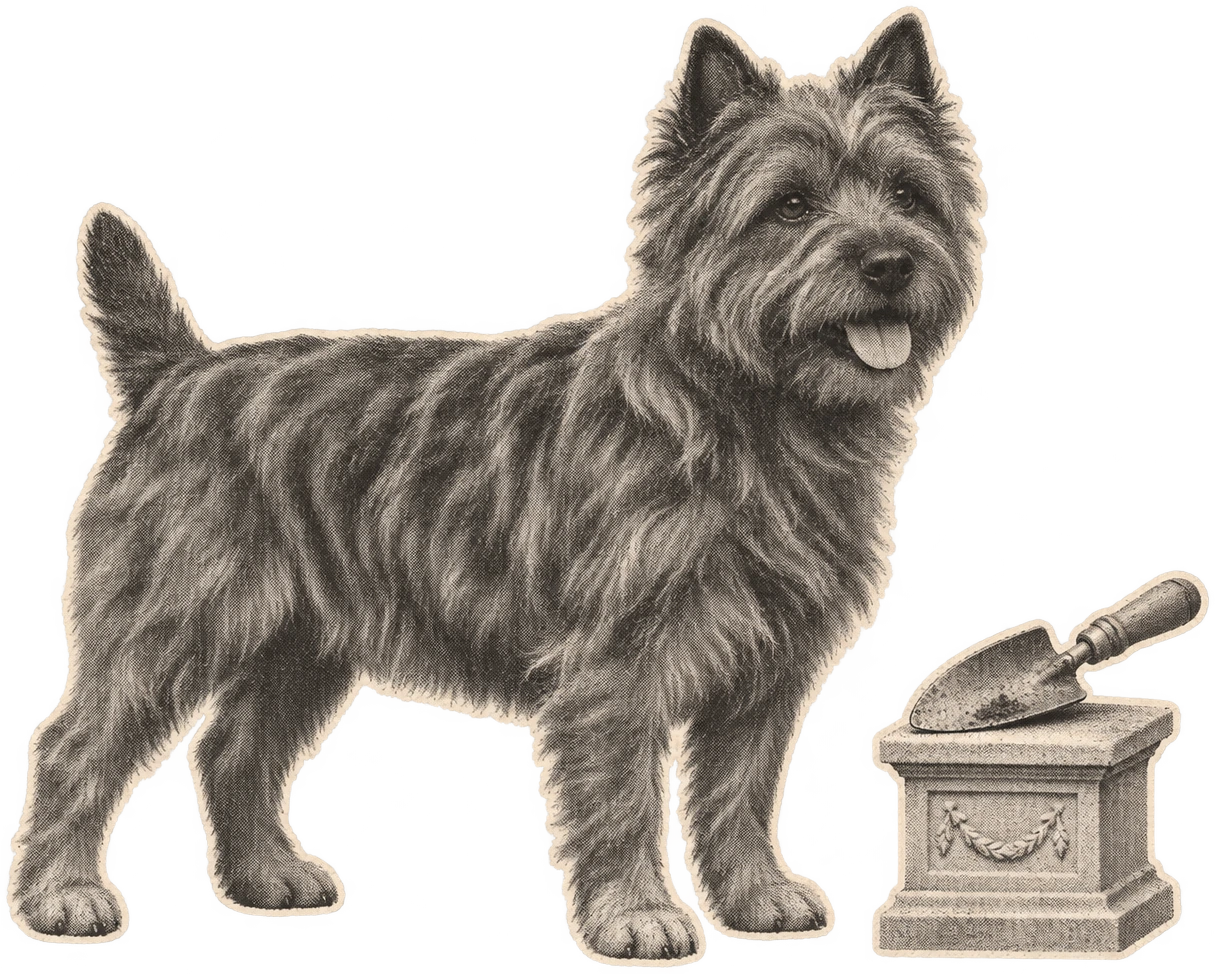
Give a Cairn that likes digging a spot where it’s allowed. Start with a safe box or patch and make the first find easy. Fence off the bit that matters to you rather than hoping a freshly turned flowerbed will stop being interesting. 3 4 6
Take a lead into situations where a good recall hasn’t been proved. Try short practice on a quiet route and make checking in worthwhile. At home, notice how your dog responds to you reaching for a foot or comb before you try to do everything in one go. 5 7 8
Cairn Terrier notes / 01
Start with the useful bits
Which Scottish terrier?
The Royal Kennel Club groups the Cairn with the terriers and describes a shared historic ancestry with the Skye, Scottish and West Highland White terriers. They are separate breeds now. The Cairn’s rough double coat can be wheaten, red, grey or close to black, with brindling in shades the standard describes. Colour alone doesn’t identify the dog. 1 2 10
Cairn Terrier notes / 02
The Scottish terriers
Small enough to get under things
The written UK standard says approximately 28–31 cm at the shoulder and an ideal 6–7.5 kg in proportion. Don’t feed towards that range by default. Use how your dog feels over the ribs and waist, and ask the vet to show you the difference between a sturdy little dog and one carrying extra weight. 2 12
Measure their own chest for the harness and check the straps with the dog standing and moving. Their size also makes a gap under the side gate worth a look. A little dog only needs to find the one part of the fence you’ve never checked. 6 13
Rough coat, gentle hands
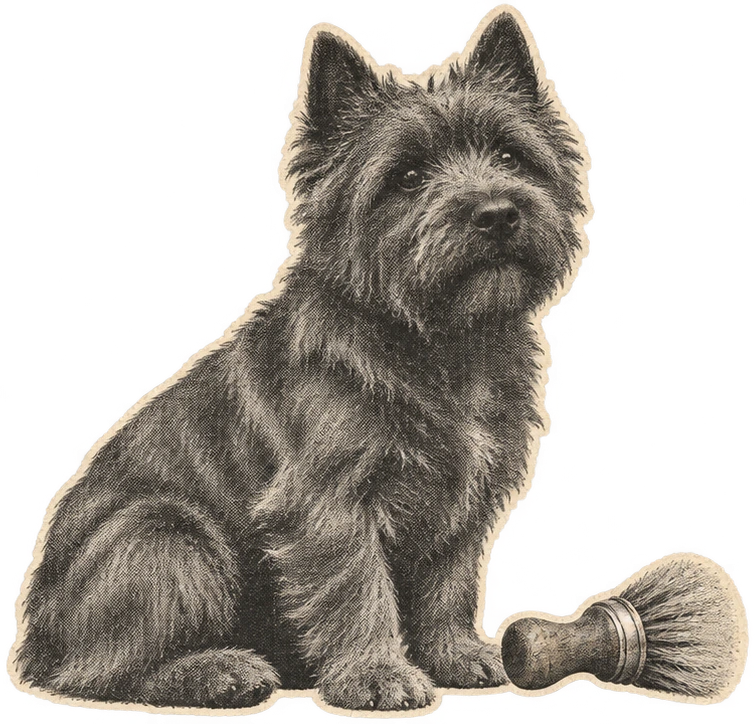
The weather-resistant coat has a harsher outer layer and a short, soft undercoat. Work through it in little sections when they’re comfortable. Check behind the ears and where the harness sits. A groomer who understands terrier coats can show you what this one needs. You don’t have to learn it on the dog halfway through a knot. 2 7 8
Get them used to foot checks while nobody is in a hurry. Touch briefly, reward and stop before it becomes a tussle. If a dog who’s usually fine with handling suddenly doesn’t want a foot touched, check for soreness rather than assuming they’ve decided to be difficult. 7 8 14
Cairn Terrier notes / 04
Gentle coat checks
| Where | Do this |
|---|---|
| Behind ears and straps | Separate the coat gently and check for hidden tangles. 7 |
| Undercoat | Ask which brush suits this dog and don’t drag it through mats. 2 7 |
| Feet | Look for debris and signs of discomfort, particularly after rough ground. 7 14 |
| Eyes | Notice new redness, cloudiness or holding an eye shut. 9 |
Give them room to notice things
If your dog barks as people go past, watch what happens before they start. Try moving their resting spot away from the front window and reward them for noticing a sound without rushing over. If a bark is coming from fear, give them distance rather than asking them to sit closer to the thing they’re worried about. 15 16 17
A dog can be good company and still dislike being picked up or greeted by everyone. Let them choose to come closer. Put them down or stop the handling before they have to squirm to get away. 8 16
Cairn Terrier notes / 05
Room to notice
Let them dig something you don’t mind
A shallow cardboard box with loosely scrunched paper and a toy can be a good supervised search if the dog won’t eat the paper. Outside, a dedicated digging patch is another option. The first toy can sit on top. There’s no need to bury it like you don’t want it found. 4 19
Practise “come” away from real wildlife and pay for every return at first. Use a long line on a suitable harness in safe space when you’re building range. If a short spin in the kitchen is the only time they’ve ever heard the cue, don’t make a squirrel the next test. 5 13 18
Get outside without making it a race
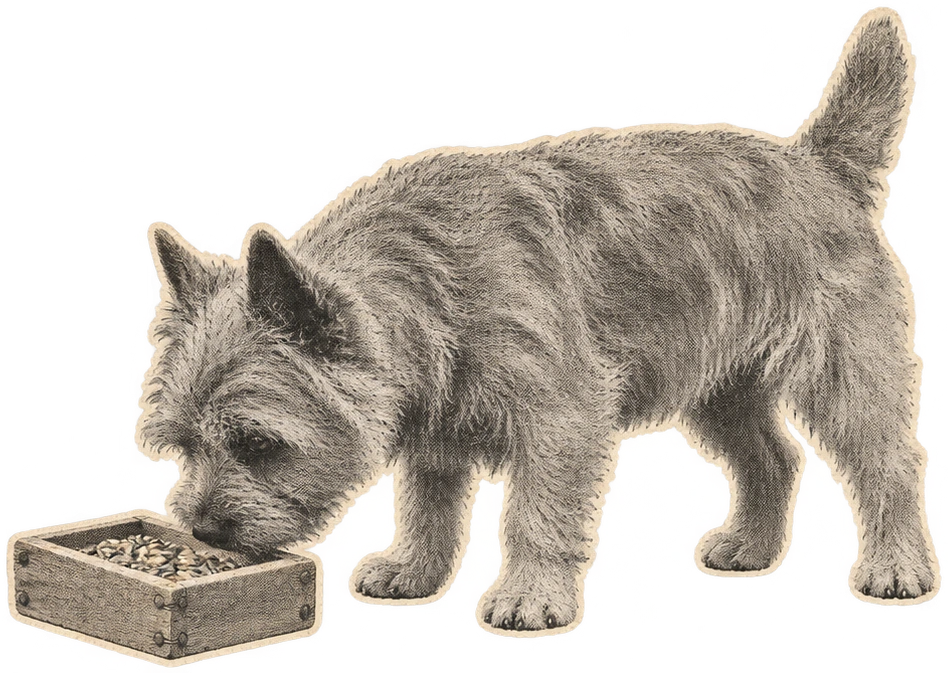
A healthy adult Cairn can enjoy a proper walk. Break it up with places to sniff, look about or find a toy. Adjust the outing to weather, age and how the dog is moving. Small isn’t the same thing as fragile, but it doesn’t give them an exemption from getting tired, sore or too warm. 3 19 20 21
Notice a new hop or a leg held up more than once. Something in a paw, an injury or a joint problem can all change how they walk. Get it checked if it persists or keeps happening; there’s no prize for guessing which one it is. 14 22
Teach them what happens when nothing happens
Choose a bed away from the front window or busy doorway. Reward your dog when they settle there of their own accord, while you’re doing something ordinary. Practising when the house is quiet is easier than trying to introduce the whole idea while the doorbell goes. 15 17
Set up short periods apart at a pace the dog can cope with. If they can’t settle, make it easier rather than waiting longer for them to stop making a noise. Keep any food used in games or training inside the portion plan. 12 23 24
Save the dog a way out
Teach children to invite the dog over rather than carrying them round. Supervise time together and separate them if you can’t watch. Children can help hide a toy at floor level; the dog doesn’t have to have someone’s face in theirs for that to be fun. 4 8 25
Ask about the individual dog’s history with cats or small pets. Give animals a way to get away from each other and keep them physically separated if that’s what’s safe. Not chasing once around a barrier is not proof the dog can be left alone with a rabbit. 3 26 27
Know what needs checking sooner
Ring the vet promptly if an eye is suddenly cloudy, red and painful, enlarged or held shut. Glaucoma, which is raised pressure inside the eye, can be painful and threaten sight. Cairns are one breed in which vets have studied ocular melanosis, a build-up of pigment that can lead to secondary glaucoma. You can’t diagnose it from the colour of the eye at home. 3 9 28 29 40
One UK eye study examined 93 adult Cairns and saw changes consistent with ocular melanosis in nine. Most of the dogs in that study were over seven, and none showed the most advanced stages. That’s a finding in that examined group, not a forecast for yours. The authors discussed ways of examining breeding dogs. The current Royal Kennel Club row separately lists the clinical eye scheme under Best Practice, with no listed Good Practice test. 29 30 31
PDSA also lists portosystemic shunt, a problem with blood flow bypassing the liver, among conditions seen in the breed. That’s a different issue, not an eye test result or an extra RKC tier. The UK breed club also provides separate owner health information. UK longevity researchers estimated a median of 14.0 years in their 2,585 Cairns. That tells you about the cohort, not the age your dog will reach or how long they’ll stay well. 3 30 32 33 39
Cairn Terrier notes / 10
Health conditions and screening
| Issue | Useful next step |
|---|---|
| Painful or suddenly cloudy eye | Contact the vet urgently. 9 28 |
| Ocular melanosis | Ask the vet what to watch for and whether specialist assessment is appropriate. 29 |
| Eye screening | Clinical BVA/RKC/ISDS Eye Scheme under RKC Best Practice. 30 31 |
| Liver shunt | Discuss relevant family history with a breeder or vet; not part of the published eye scheme. 3 30 |
| Recurrent limping | Veterinary examination, not a diagnosis based on breed. 14 22 |
| Existing dog | Ask how to check eyes and movement as part of their own health reviews. 9 14 |
| Lifespan | 14.0 years in that UK cohort, not an individual forecast. 32 33 |
Buy for the dog, not the size category
Price grooming based on the coat you have and whether you need someone to show you how to look after it. An hour of your time still counts. Get proper quotes for food and routine vet care, and compare the exclusions and excess on insurance instead of just the monthly number. 7 24 34
Ask a walker how they manage the lead around animals and which routes they use. A smaller dog who’s quick under a gate is not less work to bring home than a larger dog who never goes near it. 5 6 35
A name from the Scottish stone piles
The Royal Kennel Club places the breed’s working history in the Western Highlands and the Isle of Skye. A cairn is a mound or outcrop of stones, the kind of place where a compact terrier could work. That’s an explanation for the name and some of the build, not proof that every modern Cairn will dig up the same corner of your garden. 1 2 4
Ask where they’re easy to live with
For an adult, find out how they react to the front window, what they do around cats and how they cope with the brush. Ask how people get them back on a walk. If you’re going to bring a puppy home, meet them with their mum where they were raised and ask for named eye-screening results and any relevant health history. 5 7 15 30 36 37 38
Get a lead that fits, a quiet bed and somewhere safe to dig if they want it. For the first week, find out what helps them settle before you plan introductions or take them on the longest walk in the neighbourhood. 4 13 17 36
Cairn Terrier notes / 13
Ask about the routine
| Ask or arrange | What you want |
|---|---|
| Health | Actual results and relevant family history, not “fully checked”. 30 38 |
| Handling | How the dog responds to brushes, paws and harnesses. 7 8 13 |
| Walks | A straightforward first route and any known triggers. 5 36 |
| At home | Gates, a place to settle and easy things to do. 4 6 17 |
Sources
- S1Royal Kennel Club Cairn Terrier profile and Scottish working historySource · checked 21 November 2026
- S2Royal Kennel Club Cairn Terrier written standard, coat and sizeSource · checked 21 November 2026
- S3PDSA veterinary Cairn Terrier breed profile and health contextSource · checked 21 November 2026
- S4Dogs Trust supervised digging enrichmentSource · checked 21 November 2026
- S5Dogs Trust recall and safe long-line useSource · checked 21 November 2026
- S6Dogs Trust leaving a safe distance and preventing escapesSource · checked 21 November 2026
- S7PDSA grooming and skin checksSource · checked 21 November 2026
- S8Dogs Trust low-pressure handlingSource · checked 21 November 2026
- S9PDSA veterinary advice on eye pain and holding an eye shutSource · checked 21 November 2026
- S10Royal Kennel Club West Highland White Terrier written standardSource · checked 21 November 2026
- S11Royal Kennel Club crossbreed name scope and variable inheritanceSource · checked 21 November 2026
- S12PDSA checking a dog's body conditionSource · checked 21 November 2026
- S13Dogs Trust introducing and fitting a harnessSource · checked 21 November 2026
- S14PDSA limp and pain in dogsSource · checked 21 November 2026
- S15Dogs Trust recognising barking triggers and keeping space at windowsSource · checked 21 November 2026
- S16Dogs Trust reading body languageSource · checked 21 November 2026
- S17Dogs Trust mat and settle trainingSource · checked 21 November 2026
- S18Dogs Trust reward-based focus trainingSource · checked 21 November 2026
- S19Dogs Trust enrichment and search gamesSource · checked 21 November 2026
- S20PDSA exercise by age, comfort and conditionSource · checked 21 November 2026
- S21Dogs Trust safety in hot weatherSource · checked 21 November 2026
- S22PDSA luxating patella and checking a repeated skipSource · checked 21 November 2026
- S23Dogs Trust practising time alone graduallySource · checked 21 November 2026
- S24PDSA practical dog feeding and treatsSource · checked 21 November 2026
- S25Dogs Trust child and dog supervisionSource · checked 21 November 2026
- S26Dogs Trust cat and dog introductionsSource · checked 21 November 2026
- S27Dogs Trust dog-to-dog introductionsSource · checked 21 November 2026
- S28PDSA veterinary guidance for glaucoma including urgent assessmentSource · checked 21 November 2026
- S29Margetts, Mellersh and Smith, original UK ocular melanosis Cairn Terrier cohortSource · checked 21 November 2026
- S30Royal Kennel Club central Health Standard, Cairn Terrier rowSource · checked 21 November 2026
- S31British Veterinary Association clinical Eye SchemeSource · checked 21 November 2026
- S32McMillan et al. original UK dog longevity cohort, methods and supplementary breed estimatesSource · checked 21 November 2026
- S33Dogs Trust original UK longevity results, Cairn Terrier data rowSource · checked 21 November 2026
- S34PDSA dog ownership costs and insurance considerationsSource · checked 21 November 2026
- S35Dogs Trust guidance on finding a walkerSource · checked 21 November 2026
- S36Dogs Trust settling a rehomed dogSource · checked 21 November 2026
- S37RSPCA advice on selecting and visiting a breederSource · checked 21 November 2026
- S38Royal Kennel Club individual health results finderSource · checked 21 November 2026
- S39The Cairn Terrier Club UK breed health and wellbeingSource · checked 21 November 2026
- S40Petersen-Jones, Forcier and Mentzer, original Cairn ocular melanosis clinical descriptionSource · checked 21 November 2026