
Breed guide / Bull Terrier
Living with a Bull Terrier
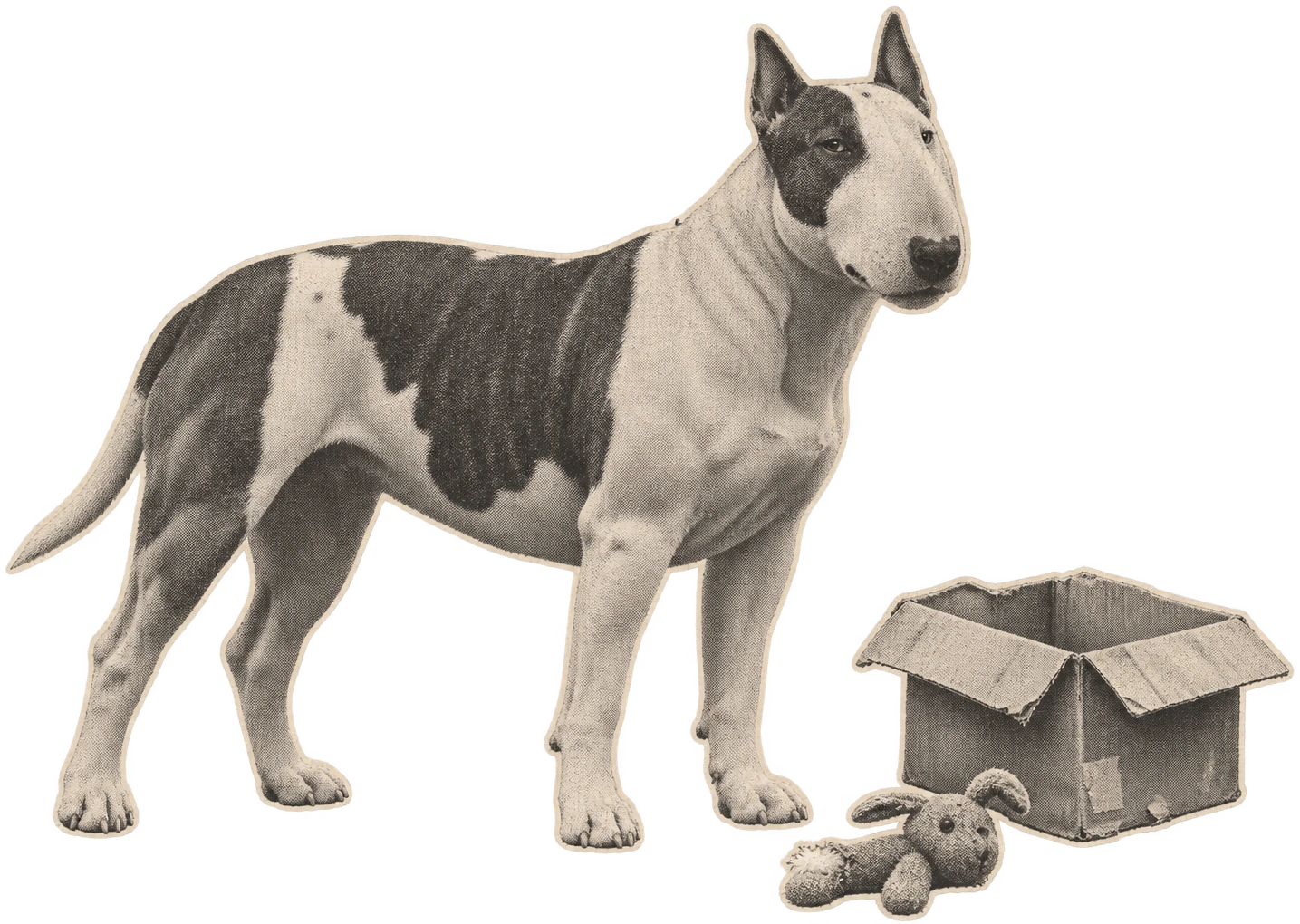
The Bull Terrier is a solidly built English terrier with an egg-shaped head, small upright ears and a short coat. Here we mean the Bull Terrier, not the separate Miniature Bull Terrier. The jobs you’ll get the most out of are teaching them to give way at a door, swapping something they’ve nicked without starting a game and learning which cues they can hear or see in different places. You don’t have to make opening the front door a full-contact sport. 12345
Jump to a section
The short version
Teach the dog to move away from the front door before you even touch the handle. Give them a place to wait, and use an inside gate if you need it. Reward a turn or a bit of space rather than trying to get past a dog who’s already got their shoulders through. 6 7 8
Get the actual hearing result if one exists. If you’re not sure they hear you reliably, ask the vet about checking and use a visual cue they already know when they’re looking at you. Don’t test recall in an unsafe place to find out. 5 9 10
Bull Terrier notes / 01
Where to start
| Start here | What to do |
|---|---|
| At the door | Practise a quiet wait inside, with a barrier as backup. 6 8 |
| Carrying off a toy or sock | Teach a swap away from the excitement. 11 |
| Not responding to sound | Check the hearing history and speak to your vet. 5 9 |
| Walks | Make the turn easy to follow and reward coming with you. 7 |
Bull Terrier, Miniature and Staffie aren’t interchangeable
The Royal Kennel Club lists Bull Terrier and Bull Terrier (Miniature) separately. The Staffordshire Bull Terrier is another breed with its own UK standard. “English Bull Terrier” is a common name for the breed on this page, but a broad description such as “bull breed” or a guessed look isn’t a way to establish ancestry. 1 2 3 4 12
Bull Terrier notes / 02
Read the whole name
Measure them instead of guessing from the name
The UK Bull Terrier standard has no weight or height limits. The separate Miniature standard says height should not exceed 35.5 cm. That’s a standard for the Miniature, not a cut-off for identifying a dog you’ve just met. Use the actual dog’s chest measurement and check ribs and waist rather than aiming for a particular number. 2 3 14 15
Try the harness while the dog walks and turns. A fit that looks fine from above can shift as soon as they lean into it. Check your car restraint and the bed in the same way, with the dog actually using them. 14 16
Bull Terrier notes / 03
Fit for this dog
The coat’s short. There’s still skin underneath it.
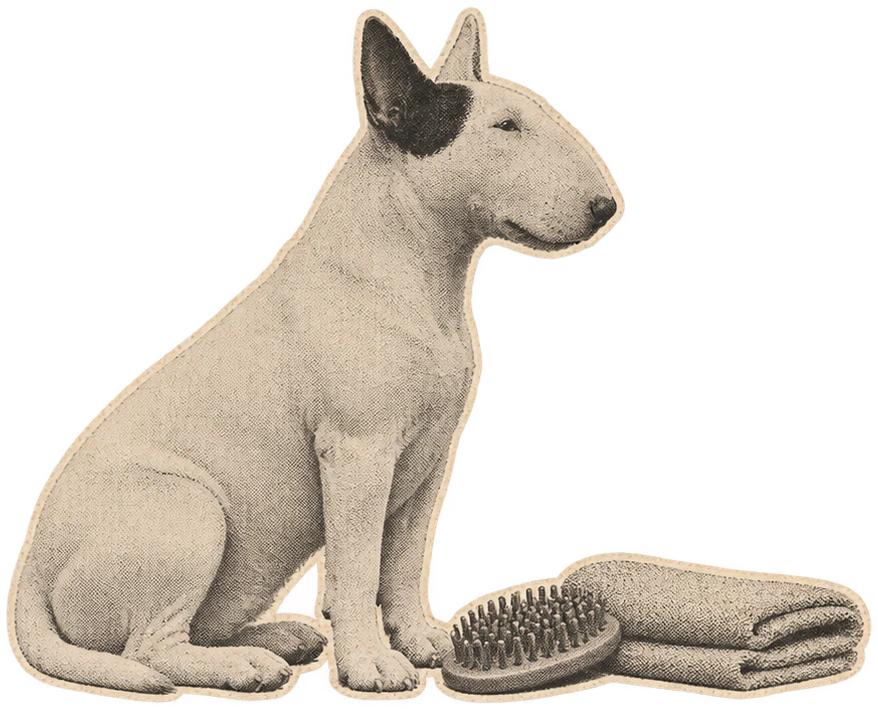
Brush lightly and check where the collar or harness rubs. Look at paws and skin after rough ground, especially if they’re licking the same bit of foot or getting a strap-shaped patch of redness. If skin is sore or itchy, don’t get more enthusiastic with the brush. 2 14 17 18 19
Practise a brief paw or ear check while they’re relaxed and can walk away. A new smell in an ear, head shaking or a dog suddenly objecting to you touching a familiar spot is worth paying attention to. If they stop responding to sounds they used to notice, don’t assume it’s training or that they’ve “always been a bit deaf”. 9 18 20 21
Bull Terrier notes / 04
Check under straps
Work out what winds your dog up without making it their personality
An individual Bull Terrier may jump into a game or hang back and watch. If your dog gets excited by hands, feet or a toy, try a break before it turns into a wrestling match. If they stiffen around an item, give them space and don’t reach in to prove a point. A useful response depends on what the dog is actually doing. 4 11 22 23
If a dog that used to greet people easily starts backing away or reacting to a hand coming towards its face, be curious about discomfort or being startled. If it’s new or you’re worried, get advice rather than making everyone do more greetings until it works. 9 21 22 24
Bull Terrier notes / 05
Watch what changes
Teach a swap before you need the sock back
Start with something the dog isn’t particularly bothered about. Offer a better reward, let them choose to let go and pick it up after they’ve moved away. On some practices, give the safe thing back. Then “drop” doesn’t always mean you’re coming over to nick what they were enjoying. If they’re guarding things or anyone’s at risk, get help instead of taking things by force. 11 25
For a dog with hearing loss, use simple hand cues they can see. Teach them to check in visually and practise with a lead or in a secure area. Don’t startle them awake or rely on yelling from behind. 9 10 26
A good walk doesn’t have to be a contest with the lead
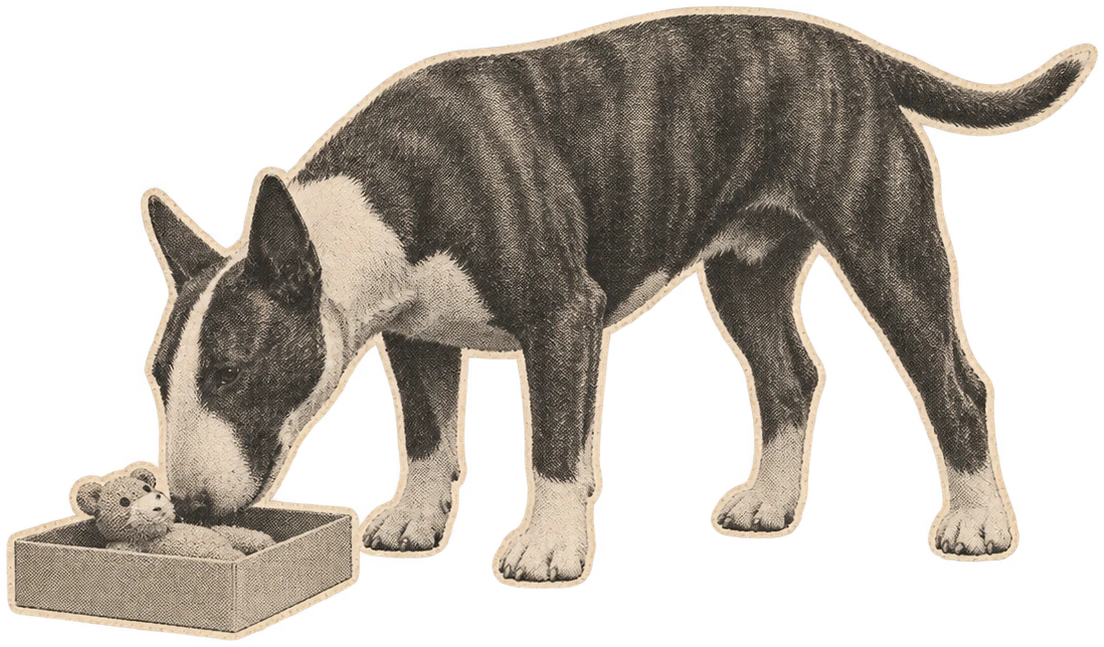
Choose a route where you can move away from what’s going on and let the dog sniff and explore. If they’re hard to steer on a narrow pavement, practise a wide turn somewhere quiet. Keep them on a lead around livestock. For a dog that can’t reliably hear recall, stick to a lead or secure places rather than assuming they’ll see you in time. 7 9 10 27 28
Make the walk shorter or go out in cooler hours when it’s hot. If they start tiring more than usual or get a repeat limp, get it checked rather than asking them to push through it. That’s especially useful to remember when the dog would still set off after a ball if you threw one. 27 29 30
Bull Terrier notes / 07
Walk at their pace
| Situation | Useful choice |
|---|---|
| Easy route | Give them time to sniff and reward checking in. 26 27 |
| Limited hearing or recall | Use a lead or reliable enclosure. 9 10 |
| Livestock nearby | Keep the lead on and give the animals room. 28 |
| Warm day or new soreness | Reduce effort, and ask the vet about ongoing symptoms. 29 30 |
Set up the space before everyone’s at the door
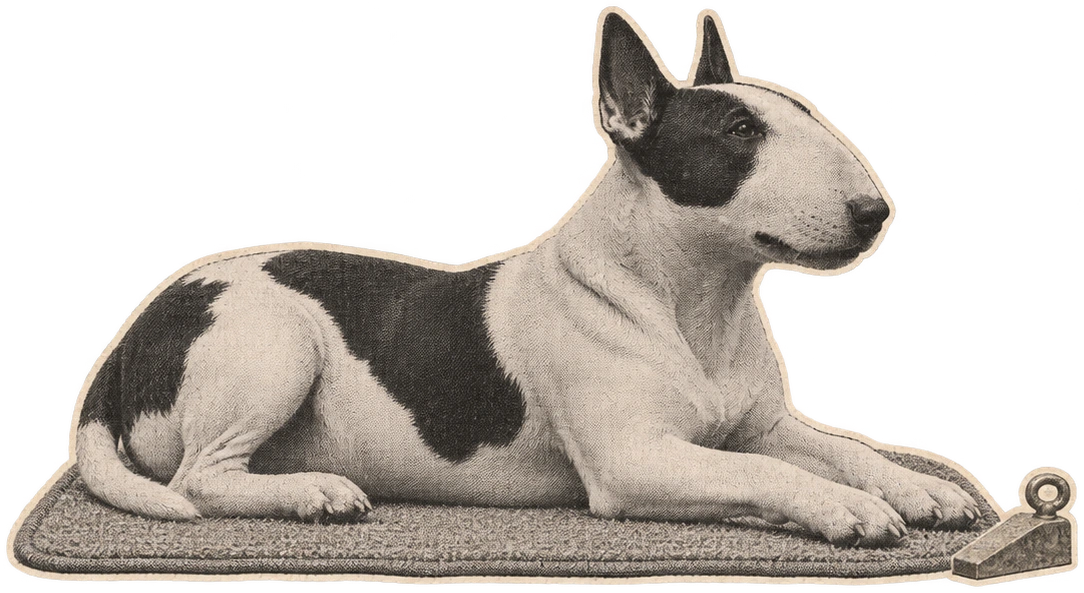
Put a bed or mat somewhere they can lie without being stepped over. A grippy runner can make the turn into the hall easier. If the dog likes carrying things off to the bed, keep shoes, batteries and small toys out of reach and give them something suitable they can have instead. 8 11 31 32
Keep greetings calm and give the dog space to back away. For a dog that startles when touched from behind, ask people to get into view first rather than reaching down over them. If they’re distressed on their own, work on manageable periods apart and get support before you stretch the time. 6 9 33 34
Keep meetings easy instead of putting the dog in the middle
An adult should stay close enough to manage visits with children. Separate the dog from fast games if it gets too much and leave them alone when they’re eating or sleeping. Don’t give a child anything to take from the dog, even if the dog has been fine with adults doing it. 11 23 35
With cats or other dogs, make a route away for both and introduce them in stages. Feed separately and manage toys while they get used to each other. An individual history is useful, but the breed name isn’t enough to predict what happens with a new pet. 4 36 37
Hearing, heart and kidneys: check which tests were done
The Royal Kennel Club’s Bull Terrier page puts genetic diversity under Good Practice and BAER hearing testing, including litter screening, under Best Practice. Heart and kidney screening are signposted separately through the breed club scheme. The Miniature’s official Best Practice list includes the primary lens luxation DNA test and clinical eye screening; don’t copy that list across to the Bull Terrier. 1 5 13 38 39 40
A UK study of 1,060 Bull Terrier puppies from 209 litters found congenital deafness in one or both ears in about 10% of that tested sample. It’s not a current nationwide rate, and coat colour can’t tell you how well an individual hears. A dog that hears in one ear can still respond to you at home. Ask about the BAER result for each ear. 5 41
Talk to your vet about a new change in hearing, exercise tolerance, drinking or urination. These signs have several possible causes. Sudden collapse or difficulty breathing needs emergency veterinary advice. In the Dogs Trust 2024 UK study the Bull Terrier median lifespan was 12.0 years; that’s a group estimate, not an individual prediction. 9 20 42 43 44 45 46 53
Bull Terrier notes / 10
Health conditions and screening
| Topic | What you can use |
|---|---|
| Hearing | Ask for the named BAER record and results for each ear, not a clap test in the kitchen. 5 41 |
| Heart and kidney | Ask which checks were done and when. Get new symptoms assessed. 39 40 42 |
| Miniature comparison | The Miniature list isn’t the formal list for this breed. 1 13 |
| Lifespan | UK median 12.0 years, not a forecast for one dog. 44 45 |
| Screening | Match the records and the dog they belong to. 1 47 |
| Breeding | Ask how the breeder considered relatedness as well as health results. 1 38 |
| Urgent conditions | Call an emergency vet about collapse or difficulty breathing. 43 46 |
Think about who’ll actually manage a normal day
Tell a walker how the dog is around doors, with fast games and around other dogs. If you use visual instructions or have a clear routine for getting the lead on, run through it together before they take the dog out. Ask about the route and how many dogs are in the group. 6 9 14 48
When getting insurance prices, read the terms rather than accepting a broad promise about ongoing problems. Ask what is covered for inherited conditions and existing diagnoses, and make room for routine health checks even if you’re insured. The basic brush might be cheap; it isn’t the whole budget. 17 49
Bull Terrier notes / 11
Price the week
| Cost | Question to ask |
|---|---|
| Walker or sitter | How do they handle leads, doors and any visual cues? 6 9 48 |
| Insurance | Are there limits, exclusions or excesses on ongoing care? 49 |
| Routine vet checks | What would your own vet want to keep an eye on? 39 40 49 |
| Kit | Does the harness fit the dog and will the flooring stay put? 14 31 |
An English breed shaped in Birmingham
The Royal Kennel Club credits Birmingham breeder James Hinks with helping establish the breed’s type, and the written standard describes the distinctive head and strong build. Earlier ancestry is less certain than some neat origin stories make it sound. That history doesn’t tell you how likely the dog on the rug is to give up a sock. 1 2 50
Ask to see the dog when it isn’t all about visitors
If you’re adopting, find out what they do when they have a toy, hear the door or need to settle in another room. If hearing is uncertain, ask what was tested and what has just been noticed. Where those observations were made matters: a kennel and somebody’s kitchen aren’t the same place. 5 9 11 33 51
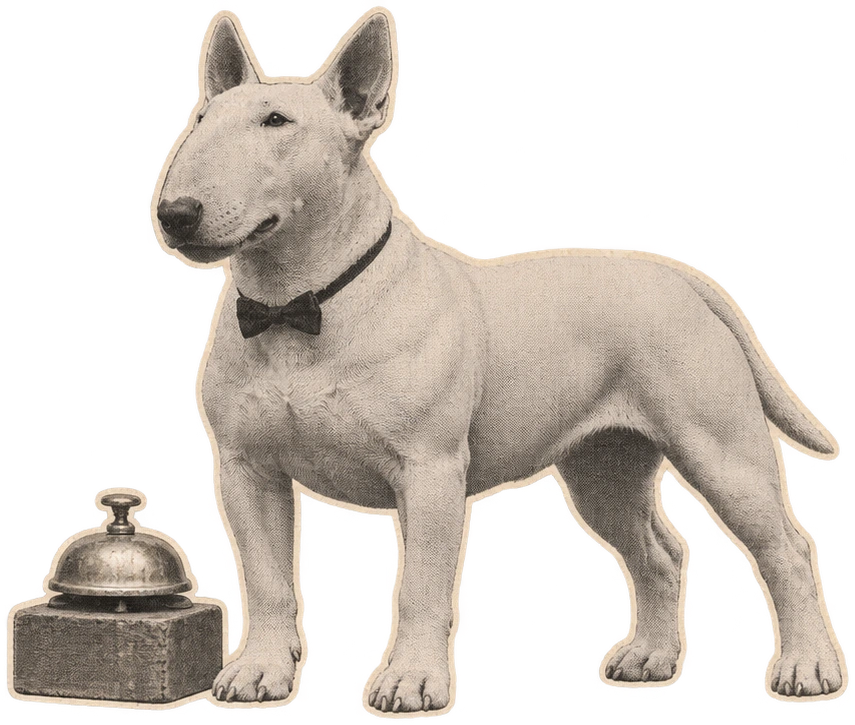
If you’re seeing puppies, meet them with their mum and check the actual screening documents. Ask which puppies and parents have hearing records and whether there are any heart or kidney results. See an adult Bull Terrier walk on a lead and settle if you can. The photo won’t tell you how you’ll both fit through the doorway. 1 5 39 40 47 52
Bull Terrier notes / 13
Ask about ordinary days
| Ask | Why it matters |
|---|---|
| What are the hearing results for this dog? | Helps you set up cues and safer walks. 5 9 |
| What’s the dog like with toys and everyday interruptions? | Helps plan for hands, visitors and a busy household. 6 11 |
| Can I see the named parent records? | Confirms what was screened and when. 1 39 40 47 |
| Where do they go when they’ve had enough? | Something you can build into their first days at home. 8 51 |
Sources
- S1Royal Kennel Club Bull Terrier individual breed profile and screening adviceSource · checked 21 November 2026
- S2Royal Kennel Club written Bull Terrier standardSource · checked 21 November 2026
- S3Royal Kennel Club separate Bull Terrier (Miniature) written standardSource · checked 21 November 2026
- S4PDSA veterinary English Bull Terrier breed and owner guideSource · checked 21 November 2026
- S5Royal Kennel Club BAER programme, each-ear hearing and litter screeningSource · checked 21 November 2026
- S6Dogs Trust setting up for visitors and safe accessSource · checked 21 November 2026
- S7Dogs Trust loose-lead walking and changing direction trainingSource · checked 21 November 2026
- S8Dogs Trust teaching a calm settleSource · checked 21 November 2026
- S9Dogs Trust living with a deaf or blind dogSource · checked 21 November 2026
- S10Dogs Trust recall, lead and safe practiceSource · checked 21 November 2026
- S11Dogs Trust resource guarding, trade and safe managementSource · checked 21 November 2026
- S12Royal Kennel Club separate Staffordshire Bull Terrier written standardSource · checked 21 November 2026
- S13Royal Kennel Club separate Bull Terrier (Miniature) breed profile and screeningSource · checked 21 November 2026
- S14Dogs Trust fitting and introducing a harnessSource · checked 21 November 2026
- S15PDSA assessing dog body conditionSource · checked 21 November 2026
- S16Dogs Trust dog travel safetySource · checked 21 November 2026
- S17PDSA practical dog grooming and checksSource · checked 21 November 2026
- S18PDSA guidance on dog home health checksSource · checked 21 November 2026
- S19PDSA veterinary guidance on itchy skinSource · checked 21 November 2026
- S20PDSA veterinary guidance on dogs with ear problemsSource · checked 21 November 2026
- S21Dogs Trust comfortable handlingSource · checked 21 November 2026
- S22Dogs Trust reading canine body languageSource · checked 21 November 2026
- S23Dogs Trust overexcitement and helping dogs settleSource · checked 21 November 2026
- S24Dogs Trust advice for finding dog behavioural and training supportSource · checked 21 November 2026
- S25Dogs Trust reward-based training principlesSource · checked 21 November 2026
- S26Association of Pet Behaviour Counsellors on visual cuesSource · checked 21 November 2026
- S27PDSA tailoring exercise by age and conditionSource · checked 21 November 2026
- S28Natural England countryside code and livestockSource · checked 21 November 2026
- S29Dogs Trust hot-weather safetySource · checked 21 November 2026
- S30PDSA veterinary advice on limpingSource · checked 21 November 2026
- S31Canine Arthritis Management veterinary home footing and accessSource · checked 21 November 2026
- S32PDSA veterinary advice on hazards and swallowed itemsSource · checked 21 November 2026
- S33Dogs Trust establishing manageable periods aloneSource · checked 21 November 2026
- S34Dogs Trust identifying and managing separation distressSource · checked 21 November 2026
- S35Dogs Trust keeping children and dogs safeSource · checked 21 November 2026
- S36Dogs Trust dogs and cats living togetherSource · checked 21 November 2026
- S37Dogs Trust introductions to another dogSource · checked 21 November 2026
- S38Royal Kennel Club how to maintain genetic diversitySource · checked 21 November 2026
- S39Royal Kennel Club central Health Standard and separate club screening linksSource · checked 21 November 2026
- S40Veterinary Cardiovascular Society heart screening information for Bull Terrier and MiniatureSource · checked 21 November 2026
- S41De Risio et al. original English Bull Terrier BAER cohort of 1,060 puppiesSource · checked 21 November 2026
- S42PDSA veterinary advice on drinking and weeing moreSource · checked 21 November 2026
- S43PDSA emergency veterinary first aid for collapseSource · checked 21 November 2026
- S44McMillan et al. original UK breed longevity researchSource · checked 21 November 2026
- S45Dogs Trust original UK breed lifespan table and separate Bull Terrier rowSource · checked 21 November 2026
- S46PDSA emergency advice for a pet struggling to breatheSource · checked 21 November 2026
- S47Royal Kennel Club named-dog recorded health resultsSource · checked 21 November 2026
- S48Dogs Trust choosing a dog walkerSource · checked 21 November 2026
- S49PDSA dog ownership costs and insuranceSource · checked 21 November 2026
- S50Bull Terrier Club of America original breed history, cross-checked against RKC for HinksSource · checked 21 November 2026
- S51Dogs Trust settling a rescue dogSource · checked 21 November 2026
- S52RSPCA breeder checks and meeting the litter with its motherSource · checked 21 November 2026
- S53PDSA veterinary information on canine heart disease, signs and when to seek adviceSource · checked 21 November 2026
