
Breed guide / Brittany
Living with a Brittany
A Brittany is a compact French gundog bred to find game, stand still to show you where it is, then bring it back when asked. That combination explains quite a lot about life with one. On a walk, you’ll see the dog pull up at a patch of grass that looked empty to you. To the Brittany it’s apparently the most interesting thing that’s happened all week. 1 2 3 5
Jump to a section
Get the walk right before you make it longer
Already have a Brittany? Watch how the walk starts. If they spend the first ten minutes dragging you straight to the patch where the pigeons sit, moving the route can be more useful than buying another lead. Begin somewhere they can sniff and notice you without being right on top of the action. Practise calling them off easy scents first. 11 19 26 27
Pick a fixed time for the quick check afterwards. Run your fingers through the ears and feathering, look between the toes and watch how they stand up after a rest. A dog who kept going out of enthusiasm can still come home sore. 2 7 15 21 32
Brittany notes / 01
Short version
| Start with | Try this |
|---|---|
| Straight to the action | Use a quieter approach to the walk and reward voluntary check-ins. 11 26 |
| Recall disappears near cover | Rehearse away from wildlife first and use appropriate lead management. 27 30 |
| Bits of hedgerow come home too | Check feet, ears and feathering before the dog gets on the sofa. 7 15 21 |
| Suddenly slower after exercise | Stop pushing on and discuss persistent or painful stiffness with the vet. 32 |
Yes, Brittany Spaniel means this dog
The UK Royal Kennel Club name is Brittany. In French it’s Épagneul Breton, and the FCI uses Brittany Spaniel in English. In the UK it’s a Gundog in the hunt, point and retrieve tradition; an English Springer Spaniel and an English Setter are separate breeds. Most owners only need the distinction when comparing advice or trying to explain the moment their dog goes suddenly still halfway across a field. 1 3 5 9
Some Brittanys are born with a short tail, some with a long one. A short tail does not by itself tell you the dog’s breeding background or how they’ll work. Read the dog’s whole posture if you’re judging how comfortable they are, not just the back end. 1 2 13 14
Compact doesn’t mean built for short walks
The UK standard gives ideal heights of 48–51 cm for males and 47–50 cm for females. It describes a compact, athletic body. Use those numbers to get a sense of scale, not to judge whether an individual dog ought to be taller. Assess body condition and how your dog moves rather than assuming you can tell everything through the feathering. 2 18
Fit the harness with the dog moving and sniffing, not just posing nicely in the kitchen. If the strap slides into the leg when they lower their head, change the fit. A secure travel restraint needs its own setup. 19 20
Check where the field gets caught
The coat is finer and flatter over the body, with feathering rather than a heavy woolly undercarriage. Check the ears, fringe, armpits and gaps between the toes after brushing through dry grass. Pressure from a mat is one thing; sudden head shaking or persistent licking of one foot after a walk could be something you want your vet to see. 2 7 15 16 21 22
Keep brushing sessions short if the dog finds them difficult. Start somewhere they’re happy to be touched, then build up. A tangled ear is never improved by making the dog think the brush announces ten unpleasant minutes. 13 16 17
Brittany notes / 04
Coat and grooming
Make room for a dog who finds things interesting
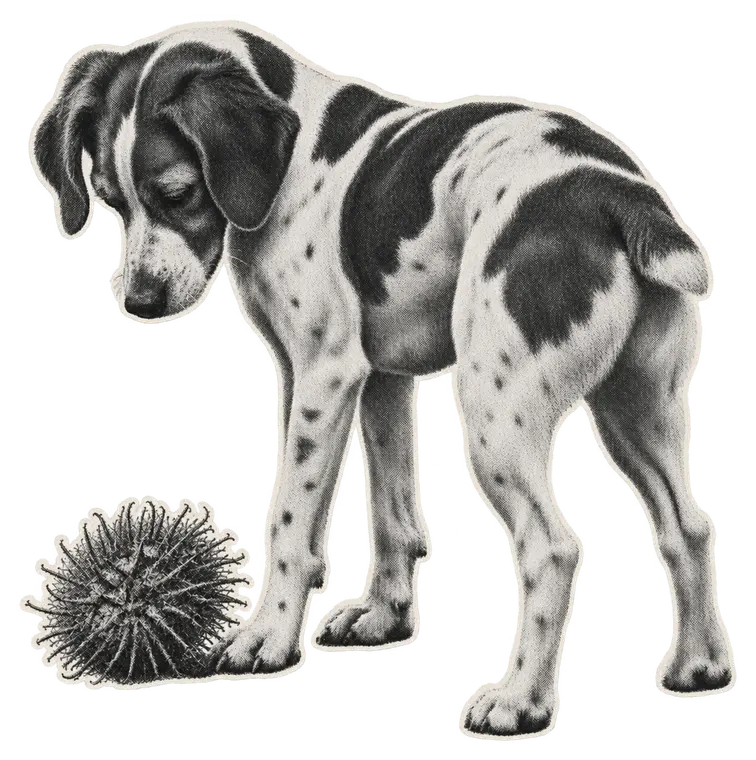
A Brittany who likes being close on the sofa can still disappear from your attention the instant the interesting smell arrives. That doesn’t make them wilful. Plan the situation so they can notice what matters to them and still give you a moment of attention. A bit of distance outside can achieve what saying their name louder won’t. 1 11 26 27
At home, make a quiet place and practise the dog settling when there’s nothing exciting on. Teach short departures separately. If being alone causes distress, make the training easier and get help rather than trying to wear them out beforehand. 12 23 24 25
Brittany notes / 05
Temperament
| Moment | Helpful first change |
|---|---|
| Nose is glued to a trail | Increase distance before asking for something difficult. 11 27 |
| Hovering when you get up | Reward a relaxed settle while you move a little nearby. 12 |
| Pacing or barking when left | Check a recording and get appropriate support if they can’t settle. 23 24 25 |
Two recalls: the easy one and the one you haven’t earned yet
Build the easy one first, away from cover, other dogs and roads. Reward the return and sometimes let the dog go back to safe sniffing instead of always ending their fun. For a dog still learning around wildlife, use a long line with an appropriate harness in a suitable open area. Don’t trail one through thick scrub or near wheels. 11 19 26 27 30
If your dog points or hesitates at scent, that’s your chance to work with them before things move. Practise an easy turn away before the bird takes off, not in the middle of the chase. For a job you can both finish, hide a soft toy, let them search and mark the end with a quiet rest. 1 5 11 12 28
Brittany notes / 06
Training
Give them enough to do without turning it into a race
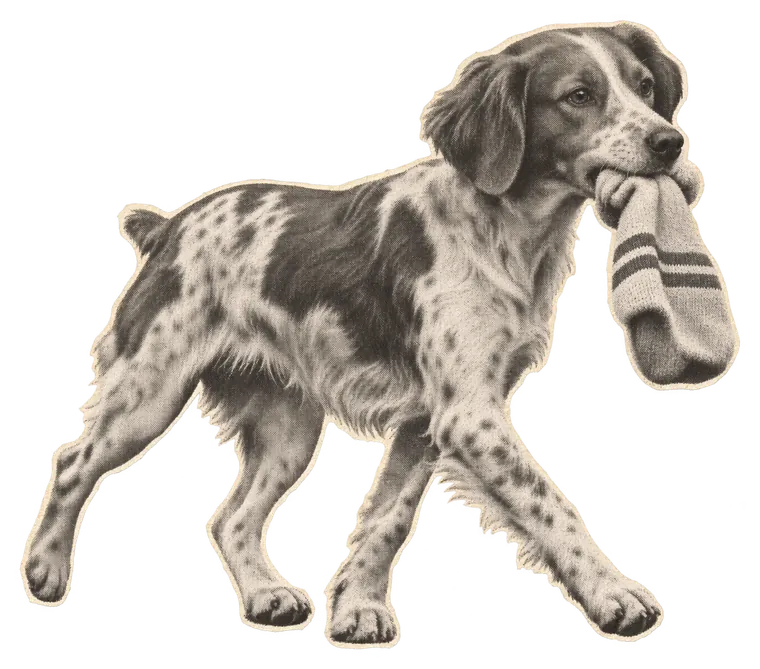
This is an active breed. Start with a pattern that allows meaningful walks, sniffing and calm exploration, but adjust for growth, age, heat and mobility. An adult who goes for an energetic walk in cool weather doesn’t owe you the same route in summer or when stiff. For a growing dog or one returning after injury, ask the vet how to build up safely. 1 29 31 32
Protect wildlife and livestock rather than hoping a training cue will carry the whole outing. Check access and local signs, put the lead on early and choose a different route if needed. Excitement and wildlife are two good reasons not to see how well a brand-new recall works today. 11 27 30
Brittany notes / 07
Exercise
| Condition | Change the outing |
|---|---|
| Young, older or stiff dog | Match the work to the dog, not an exercise number found online. 29 32 |
| Hot weather | Choose safer cool times or swap the walk for a quiet indoor activity. 28 31 |
| Livestock or wildlife | Use the lead and respect the local rules. 30 |
| Confidence is patchy | Make the next outing easier rather than letting them rehearse chasing. 11 27 |
Find somewhere that doesn’t feel like a lookout post
A garden helps with the last wee, but it doesn’t replace a walk where the dog can actually stop and investigate. Likewise, a chair by the window can become a full-time birdwatching shift. If you’re getting a commentary on every pigeon, move the bed out of the main sightline and practise a settle somewhere quieter. 12 14 28 29
If you share walls or walk straight out on a busy road, plan the transition. Get the lead on before opening the door and practise a quiet wait there before doing it with shopping bags in both hands. Keep a dry bed and a separate towel spot so coming in wet isn’t another game. 12 19 26

Have a plan for the actual children and cats
Don’t decide from the breed name whether a particular dog is fine around a visiting child or a sprinting cat. Let adults set up calm contact, and keep running games apart from the dog if they get fixated on movement. Give everybody a route away. Separate whenever an adult can’t actively supervise children with the dog. 11 13 34 35
For other dogs, make the early meetings low-pressure and avoid expecting them to share high-value chews. If the dog cannot disengage from another pet, ask for help instead of repeating the introduction in the same cramped hallway. 25 33 35 36
Health: what a hip score can and can’t tell you
For pre-breeding screening, the Royal Kennel Club’s Brittany profile asks breeders to prioritise genetic diversity under Good Practice; the central row lists no named Good Practice test. BVA/RKC hip scoring is Best Practice. Ask for each parent’s actual result. It is based on radiographs and can inform breeding decisions, but none of those numbers tells you why your adult dog has suddenly gone stiff or guarantees their future health. 1 6 32 37 42
A historical research colony of Brittanys had inherited deficiency of a part of the immune system called C3. That is real breed research, but it doesn’t show how common it is in present-day pet Brittanys or establish a routine RKC test for every litter. For the dog in front of you, report a new limp or refusal to move to your vet. A seizure can have many causes in dogs, and it’s a reason to call your vet, even if they appear to recover. 8 10 32 37
Brittany notes / 10
Health
| What you’re looking at | What it does and does not tell you |
|---|---|
| RKC Best Practice | BVA/RKC hip scoring; ask to see both named parents’ results. 1 6 37 |
| RKC Good Practice | The breed profile highlights genetic diversity; the named-test column is blank for Brittany. 1 37 |
| Eye checks or DNA certificates | Don’t mistake another registry’s guidance or a commercial panel for current UK breed-tier requirements. 1 37 |
| Historical C3 report | Evidence from one research colony, not a UK population estimate or tier recommendation. 8 37 |
| Stiffness or lameness | Tell the vet when it occurs and whether it followed a change in activity; don’t self-diagnose from a hip certificate. 32 |
| Seizure | Call your vet for a first seizure and seek urgent advice if it continues or repeats. Keep the area safe and follow the vet’s instructions. 10 |
| Lifespan | The 2024 UK study’s Brittany estimate was a median 11.1 years, 95% confidence interval 10.9–11.3, with 734 recorded deaths in the breed table. It’s a cohort estimate, not a prediction for your dog. 38 39 |
Budget for the things they actually do
If work means someone else handles a couple of outings, ask how that walker avoids trouble around cover, wildlife and livestock before deciding on a group outing. Factor in the bits that do wear out: a properly fitted harness, a safe dog travel setup and the seemingly bottomless supply of towels. 19 20 30 40
Read insurance terms rather than assuming the name of a condition is the same thing as cover. Keep an emergency fund or a plan for paying the bill because an excess, exclusions and annual limits can each change your costs. 41
Brittany notes / 11
Costs
| Budget item | Check |
|---|---|
| Walker or sitter | Management near wildlife and how they handle recall and leads. 27 30 40 |
| Coat | The tools and occasional help your dog actually tolerates. 13 16 |
| Travel | A suitably sized restraint and a setup that works with your boot. 20 |
| Health costs | Exclusions, renewal and an out-of-hours payment plan. 41 |
A little pointing dog with a French address
The breed came from Brittany in France, and the FCI keeps its French name. The reason the UK description says hunt, point and retrieve is that the dog historically did more than flush birds from cover: finding the scent and holding a point are part of the work. That also explains the small statue you occasionally find at the far end of your lead. 1 3 4 5
There’s no requirement to shoot over a dog to give them something satisfying to do. Finding a cloth dummy, coming back with it and getting to have a sniff afterwards is a decent bit of teamwork. If you want more, look for an experienced class using rewards and sound lead management. 5 25 26 28

Before you bring one home
Meet adult dogs and ask how they walk on a lead, settle after exercise and react when they notice wildlife. If you’re seeing a litter, see the mother with the puppies and check both parent hip records. With a rescue, ask what the dog has demonstrated so far and what the team hasn’t yet had a chance to see. 6 13 27 42 43
Think through a normal damp week, not the summer photo where you’re both looking good in a field. Where would you walk when the local field is full of sheep? What would you do when it’s too hot for the afternoon outing? The right answer can be quite ordinary. The hard bit is having it ready when you need it. 28 29 30 31
Brittany notes / 13
Bringing one home
| Ask | What a useful answer sounds like |
|---|---|
| How do they settle? | A recent example before and after a walk. 12 |
| What do the parent records say? | Named results and dates, not only “health checked”. 6 37 42 |
| What happens around wildlife? | An honest observation plus a lead and training plan. 11 27 30 |
| Can we practise daily care? | A short, calm attempt to handle feet or run a brush through the coat. 13 16 |
Sources
- S1Royal Kennel Club Brittany UK breed profile and screeningSource · checked 21 November 2026
- S2Royal Kennel Club official Brittany breed standardSource · checked 21 November 2026
- S3FCI original Brittany Spaniel / Epagneul Breton nomenclatureSource · checked 21 November 2026
- S4French breed club publication of the official Brittany standardSource · checked 21 November 2026
- S5Royal Kennel Club explanation of hunt, point and retrieve field trialsSource · checked 21 November 2026
- S6Royal Kennel Club hip scoring, interpretation and limitationsSource · checked 21 November 2026
- S7PDSA veterinary guidance on checking for ticksSource · checked 21 November 2026
- S8Cork et al. original C3 deficiency report in a Brittany colony, not population evidenceSource · checked 21 November 2026
- S9Royal Kennel Club UK standards directory, separate spaniels and pointersSource · checked 21 November 2026
- S10PDSA veterinary guidance on seizures in dogsSource · checked 21 November 2026
- S11Dogs Trust preventing or managing chasingSource · checked 21 November 2026
- S12Dogs Trust settling practiceSource · checked 21 November 2026
- S13Dogs Trust comfortable handlingSource · checked 21 November 2026
- S14Dogs Trust reactivity and spaceSource · checked 21 November 2026
- S15PDSA vet guidance on home health checksSource · checked 21 November 2026
- S16PDSA vet guidance on groomingSource · checked 21 November 2026
- S17Blue Cross general grooming supportSource · checked 21 November 2026
- S18PDSA vet guidance on body conditionSource · checked 21 November 2026
- S19Dogs Trust harness fittingSource · checked 21 November 2026
- S20Dogs Trust safe travelSource · checked 21 November 2026
- S21PDSA vet guidance on grass seedsSource · checked 21 November 2026
- S22PDSA vet guidance on ear symptomsSource · checked 21 November 2026
- S23Dogs Trust introducing time aloneSource · checked 21 November 2026
- S24Dogs Trust recognising separation distressSource · checked 21 November 2026
- S25Dogs Trust sourcing behaviour supportSource · checked 21 November 2026
- S26Dogs Trust positive reinforcementSource · checked 21 November 2026
- S27Dogs Trust recall and long lineSource · checked 21 November 2026
- S28Dogs Trust enrichment and search gamesSource · checked 21 November 2026
- S29PDSA vet guidance on exerciseSource · checked 21 November 2026
- S30Natural England keeping dogs under control in the countrysideSource · checked 21 November 2026
- S31Dogs Trust warm-weather careSource · checked 21 November 2026
- S32PDSA vet guidance on stiffness and limpingSource · checked 21 November 2026
- S33Dogs Trust resource guardingSource · checked 21 November 2026
- S34Dogs Trust supervising dogs around childrenSource · checked 21 November 2026
- S35Dogs Trust introducing dogs and catsSource · checked 21 November 2026
- S36Dogs Trust introducing dogsSource · checked 21 November 2026
- S37Royal Kennel Club central Health Standard, Brittany rowSource · checked 21 November 2026
- S38Dogs Trust original UK breed lifespan tableSource · checked 21 November 2026
- S39McMillan et al. original lifespan study and methodsSource · checked 21 November 2026
- S40Dogs Trust finding a dog walkerSource · checked 21 November 2026
- S41PDSA costs and insuranceSource · checked 21 November 2026
- S42Royal Kennel Club Health Test Results FinderSource · checked 21 November 2026
- S43RSPCA buying a puppy and seeing the motherSource · checked 21 November 2026
