
Breed guide / Boxer
Living with a Boxer
A Boxer can put both front feet on a visitor before you’ve found your keys. Here’s how to give a big, lively dog an easier time at the door, on walks and when you need to spot a change in their health.
Jump to a section
Thirty kilos of greeting
A Boxer can cross the hall and put both front feet on your visitor before you’ve got the key out of the lock. They’re active, broad-chested dogs, and even a happy greeting can knock someone over. Teach them how to meet people on the floor, set up a place where they can properly switch off, and make time for walks they can do without struggling for breath. 1512132628
If you’re getting one, ask about the parents’ hearts and breathing, then spend some time with an adult who isn’t busy saying hello. If you’ve already got one, get to know what normal breathing, recovery after walks and skin look like on your own dog. It’s easier to spot a change once you know the dog’s usual routine. 891213161819
Boxer notes / 01
Living with a Boxer in an ordinary home
Give the paws something to do before the door opens.
| Adult size | UK 2019 VetCompass median 30.3 kg. Plan for an adult dog you can manage safely, not the pup on the sofa. 5 |
|---|---|
| Main practical jobs | Calm greetings, regular enjoyable exercise and rest, plus checking breathing, eyes, skin and the mouth. 13161819212226 |
| Health priority | Know who to call out of hours for collapse, breathing distress or possible bloat. Ask for actual heart and other screening results. 38161724 |
| Who it may suit | People who like a physical dog and can give them room to move, calm routines and attention to breathing in warm weather. 13152630 |
Fawn, brindle or white, still a Boxer
The UK registry has one Boxer breed. Fawn and brindle are colour descriptions; white Boxers also appear in UK vet records. Don’t assume a white dog can’t hear or that a coloured dog can. If you’re concerned, ask for a documented hearing check rather than judging how the dog responds to a footstep while it’s watching somebody’s sandwich. 12425
Boxer notes / 02
Breed labels, markings and health claims
The colour of a dog and the useful things you know about it are two different lists.
| Boxer | The RKC lists a Working-group breed, with its own conformation standard and screening profile. 123 |
|---|---|
| Colour words | Fawn, brindle, and white describe what you see. Check the current registry if you need registration details; they are not health grades. 124 |
| White Boxers in UK records | 10.71% recorded white in the 3,219-dog 2016 Boxer study; not a representative estimate of deafness. 4 |
| Hearing | Hearing concerns deserve a vet conversation. BAER is an objective test; don’t infer hearing by coat or by testing at home with a sudden noise. 425 |
| “European” or “American” | Ask which dogs are actually in the family and what their test records show. These aren’t alternate UK registry breeds with guaranteed traits. 123 |
| “Mini Boxer” | No Boxer size variety in the RKC standard; find out what the actual parentage is rather than assuming a small pedigree. 1233 |
| Boxer cross | A different group from dogs recorded as Boxers in these cohorts; do not transfer their risk or size estimates without evidence. 45 |
Get the harness right before the dog needs it
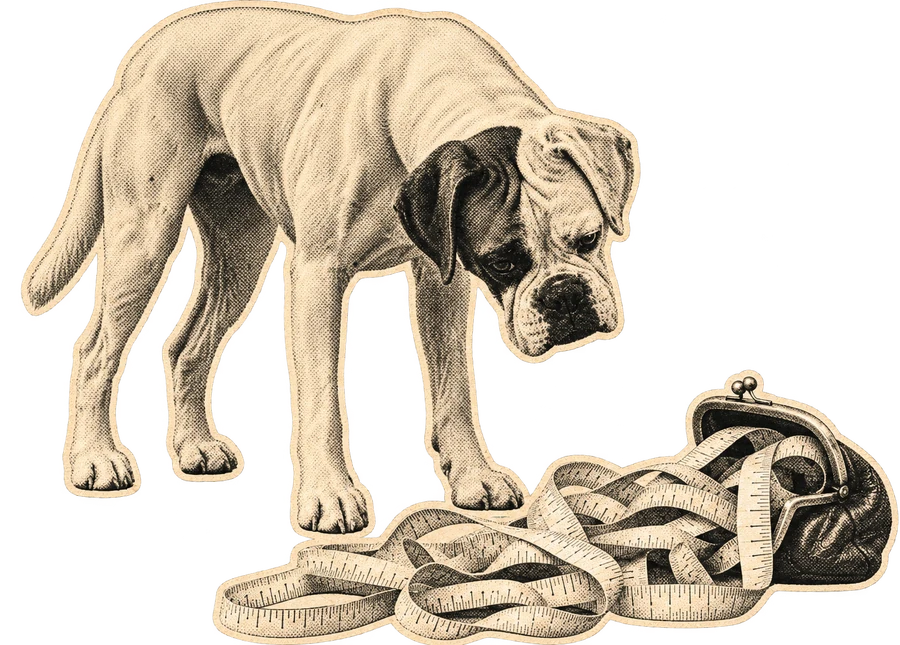
Put the tape round the actual dog when they’re calm. The Boxer’s broad chest and waist are a good reason to check fit rather than buy from a breed chart. Keep an eye on their condition as they age and speak to the practice if their appetite, weight or ability to move changes. 15132734
Boxer notes / 03
Bodyweight, height and build
A wide chest is worth measuring, particularly if you’re about to pay for delivery twice.
| UK measured adult medians | 2019 VetCompass: 30.3 kg overall, 27.9 kg female, 32.7 kg male. 17,572 is the all-age Boxer cohort, not the adult weighing denominator. 5 |
|---|---|
| Earlier UK study | 2016 Boxer study adult mean 30.43 kg (SD 5.73 kg), not the same statistic as the median. 4 |
| RKC show heights | 57–63 cm male; 53–59 cm female. Show-standard ranges, not a measured population interval. 1 |
| Individual condition | Feel ribs and check waist; WSAVA’s general target is 4–5/9. Ask a vet team member to demonstrate it. 34 |
| Practical fit | Measure chest, require a secure fit, and ask for help if a dog pulls hard or has symptoms with exercise. 131627 |
Short hair, long list of things to notice
The coat’s straightforward to brush, which is handy because a bit of time at floor level gives you a better view of the eyes, feet and bits where skin touches skin. Note new lumps and book a check. A lump doesn’t become harmless because it’s small, and it doesn’t become cancer because your dog is a Boxer. 413181921
Boxer notes / 04
Skin, folds and the lumps you find while brushing
A quick brush gives you a chance to check more than the hair.
| Coat | Short and close. Brush gently and expect some shedding. 113 |
|---|---|
| Skin contact points | If there are folds, check for rubbing, moisture, odour and soreness. Ask the practice how to clean safely if needed. 1319 |
| Lump check | Note location and date, and ask the vet to examine any new or changing lump, including in the mouth. Photos can help record a change, not diagnose it. 41822 |
| Ears | Persistent smell, head shaking, discharge or pain needs a check. Don’t put cotton buds or old drops in the ear. 23 |
| Eyes | Squinting, rubbing, redness or a cloudy, sore eye needs veterinary advice, urgently if painful or sudden. 2021 |
| Feet and equipment | Inspect where harness or lead equipment rubs. Stop handling if the dog has new pain or won’t let you near the area. 13193031 |
| Screening isn’t a grooming check | An earlier normal eye-screen result does not tell you whether the dog has injured an eye today. 2135 |
Give the excitement somewhere to go
A Boxer who wants to get close isn’t automatically settled or ready to meet everybody. Give them a little room, then watch whether they can come down from the excitement and pick a spot to lie in. If they keep going back for another lap of the room, help them out with a quieter space or a smaller greeting next time. 13262830
Boxer notes / 05
Lively greetings, confidence and recovery
The bit to pay attention to is what happens once you’ve sat down.
| Strong and lively | UK welfare guidance describes energetic, sometimes boisterous dogs. Neither size nor breed label predicts how a particular dog will greet. 1330 |
|---|---|
| Recovery | Ask how long they take to settle after play, a visitor or a busy walk. Try the normal version of a home visit rather than only watching the initial greeting. 2630 |
| Confidence and space | Give an exit, allow the dog to approach if they want, and stop the interaction if you see tension or avoidance. 3031 |
| New behaviour | A sudden change can follow pain or illness. Discuss concerns with a vet and seek qualified help for repeated guarding or distress. 162131 |
Keep the front feet on the floor
Teach the easy bit when nobody’s at the door. Reward four paws down, or settling on a mat, and use a gate when the real arrival would be too exciting. Tell guests what to do before they’re in the hall. Holding the dog upright by the collar while three people tell it to sit is not a training plan that improves with repetition. 13262830
Boxer notes / 06
Calm arrivals, recall and looking after a big young dog
Practise before there’s a visitor in one hand and a takeaway in the other.
| Greetings | Reward calm on the floor or on a mat. Manage access first rather than asking the dog to get everything right at once. 2628 |
|---|---|
| Recall | Reward an early turn towards you in a quiet place; add distractions gradually and use a lead where off-lead is unsafe. 27 |
| Handling | Practise brief hands-near-ears and hands-near-feet sessions while comfortable. Stop if there’s new pain. 212330 |
| Strong puller | Use secure, well-fitted equipment and work at a manageable distance. Get help if you cannot safely hold them or if movement makes them struggle to breathe. 131627 |
Stop while the dog’s still got something left
PDSA suggests at least two hours of daily exercise, in a few walks, as general Boxer guidance. That’s not a target for an unfit, young, old or symptomatic dog. Mix walks with sniffing and play, and make changes gradually. A dog pulling towards the next ball can still need you to end the game. 13162729
Take shorter, cooler routes when it’s warm and don’t make hard exercise the default. If they struggle for breath, collapse or show signs of heat illness, stop and contact the vet immediately. An easy route with shade is a better day out than a planned distance they can’t comfortably do. 121314151617
Boxer notes / 07
Walking, play and recovery in warm weather
Enthusiasm isn’t a breathing test.
| Healthy adult plan | Regular walks, safe sniffing and work at a pace they recover from. PDSA’s general two-hour figure isn’t an individual prescription. 1329 |
|---|---|
| Hot or humid conditions | Choose cooler times and ways to rest in shade; have water available and don’t push vigorous exercise. 1315 |
| Heat evidence | Hall’s UK analysis estimated Boxer odds of recorded heat illness at 2.26 relative to Labrador (95% CI 0.95–5.34). The interval includes 1; not a reliable increased-odds finding by itself. Follow heat precautions regardless. 1415 |
| Returning normally | Notice prolonged panting, a new respiratory noise, walking much slower or not recovering normally. Speak to a vet; distress or collapse is urgent. 121617 |
| A lighter day | Quiet scent work and comfortable lead time can replace strenuous work when conditions aren’t suitable. 131529 |
A corner that’s out of everyone’s way
Set up the bed where the dog can see you but people won’t walk straight across it. Give them non-slip footing if they skid on the way to the door, and keep a gate handy when arrivals are hectic. Try a few moments of leaving while they’re comfortable; if they spend the whole time pacing, make a different plan for the longer outing. 13262830
Boxer notes / 08
Space, stairs, visitors and time apart
They can live in the room with you without standing in the doorway.
| Rest space | Give them a bed away from feet and children’s play; reward calm rather than repeatedly calling them up. 2630 |
|---|---|
| Door and hall | Use a gate or a lead if there’s not enough space for safe, calm arrivals. 28 |
| Being left | Build gradually and note how they cope. Arrange company or care if they can’t manage the planned absences. 1330 |
| Cooling | Provide shade, ventilation and water, and don’t leave a dog in a hot car or confined hot space. 1516 |
| Safe footing | Use a secure runner where they skid and aim for calm movement through tight spaces. 132830 |
| Help when needed | Ask a vet or behaviour professional about distress, guarding or sudden changes rather than escalating correction. 3031 |
A happy collision is still a collision
Children and a Boxer may both enjoy a game, but an adult needs to decide when it’s getting too big for the room. Play with a toy supervised, give the dog a place to stop away from the children, and don’t let them practise bouncing off a toddler in the hallway. Ask a rescue about interactions over time rather than whether the dog passed a single greeting. 13293031
Boxer notes / 09
Children, other dogs and small pets
Start with enough room for the dog to turn round and leave.
| Children | Actively supervise; avoid wrestling, chasing and disturbing dogs who are eating or resting. 1330 |
|---|---|
| Other dogs | Start with room and a chance to disengage; take a break if play gets rough or one dog can’t get away. 3031 |
| Cats and small animals | Ask for observed home history and use secure separate areas or exits. Do not assume a breed-wide result. 3031 |
| Warnings | Stiffening, backing away or guarding means create distance. Repeated concerns or changes deserve qualified help. 3031 |
Give their breathing, eyes and skin a proper look
A Boxer who suddenly collapses, struggles to breathe, or repeatedly tries to be sick without bringing anything up needs immediate veterinary advice. Use the out-of-hours number if your practice is shut; don’t send them on another short walk to find out whether it happens again. You don’t need an explanation for a symptom before you call. 161724
Be just as practical with the quieter changes. Make a note of a new skin or gum lump, ask how soon to have it checked and pay attention to a painful eye. Ask the vet which heart tests they mean if they mention screening. A stethoscope result that helps assess one condition doesn’t clear the dog of every other heart problem. 4891011182122
Boxer notes / 10
Lifespan, veterinary evidence and breeding checks
A heart-murmur code doesn’t tell you which heart condition a dog has.
Lifespan and what UK vets recorded
| Dogs Trust survival | 11.3 years median in the 2024 cohort table (95% CI 11.3–11.5). It’s a group estimate, not a forecast for your dog. 6 |
|---|---|
| VetCompass life table | Teng et al.: 10.04 years life expectancy at birth (95% CI 9.85–10.21), 836 Boxer records in Table 3. Different measure and data from median survival. 7 |
| Observed age at death | In the separate 2016 UK Boxer study, 10.46 years median age at death (IQR 9.00–11.98), 346 deaths. Not a puppy’s life expectancy. 4 |
| Ears, gums and eyes | The 3,219 UK Boxers in the 2016 study had recorded otitis externa 7.15% (230), epulis or certain gum growths 5.84% (188), corneal ulcer 5.00% (161), gum disease 4.63% (149). All are recorded in that cohort, not individual lifetime risks. 4 |
| Lumps and heart noises | Skin disorder group 17.74% (571) and neoplasia group 14.20% (457) in the same cohort. A skin mass code and a heart murmur code were each 4.29% (138). Neither code tells you the specific diagnosis, and neoplasia includes growths that are not malignant. Don’t add overlapping groups. 4 |
| Eye cross-check | A separate study of 104,233 dogs under English primary care in 2013 found corneal ulcers in 4.98% of its Boxer group, compared with 0.80% across that study overall. Cohorts and purposes differ; neither estimate diagnoses today’s red eye. 20 |
Official screening and additional Boxer heart checks
| RKC tier | Good Practice is blank for Boxer at the time checked. Best Practice lists elbows, clinical eyes and hips. Blank is not an endorsement of skipping checks. 233536 |
|---|---|
| Breed-council heart screening | The RKC lists heart testing separately under breed-club schemes. UK Veterinary Cardiovascular Society advice starts at one year and focuses on subaortic stenosis and other congenital problems; the specialist may consider imaging depending on findings. Ask for the dated result and what was examined. 38910 |
| ARVC isn’t the same test | Boxer arrhythmogenic right ventricular cardiomyopathy affects rhythm. A specialist can advise whether longer ECG monitoring is appropriate; a similar name or earlier murmur-screen result does not rule it out. 81011 |
| Breathing | Boxers are eligible for RKC/Cambridge respiratory grading, but it is not currently listed in the Boxer Good/Best tier row checked here. Ask about breathing at rest and on movement and actual grading where done. 231213 |
| Hearing | Ask a vet about BAER if appropriate, including where there is concern about congenital deafness. Don’t use a coat colour as a diagnosis. 425 |
| Read the certificates | Check identity, date and which scheme is on each result. Hip, elbow, eye, heart, respiratory and hearing checks answer different questions. 3812253536 |
Conditions and what to do
Heart symptoms or collapse
Ask a vet about new exercise intolerance, unexplained weakness or fainting. Collapse or current breathing difficulty is an emergency; even a dog who seems to recover after a collapse needs veterinary advice. A murmur alone does not establish aortic stenosis, and rhythm problems need separate assessment. 4810111617
Noisy or difficult breathing, heat illness
Ask about new or persistent breathing noise or exercise intolerance rather than dismissing it as the dog’s shape. Struggling to breathe, collapse or suspected heatstroke needs immediate veterinary advice. Get them away from heat and follow the practice’s first-aid instructions. 12131516
New or changing skin lump
Ask the vet to examine it, including when it is small or looks like a simple tag. Track location and change if helpful. You cannot tell by look or feel whether a new lump is benign. 418
Sore skin or folds
Redness, rubbing, moisture or a new smell merits a check. A practice can show you how to clean and dry skin safely where needed; don’t apply human creams to an unexplained sore area. 1319
Painful or cloudy eye
Squinting, holding an eye closed, rubbing or sudden cloudiness can be signs of a painful ulcer or another eye problem. Contact the vet urgently for a painful eye or a sudden change in sight. Don’t use old drops. 2021
Ear trouble
New discharge, head shaking, soreness or a strong smell merits veterinary advice. Don’t probe the canal or use old treatment, especially if pain or balance changes have appeared. 23
Gum growths and dental pain
An enlarging growth, bleeding, bad breath or chewing differently deserves examination. The study’s epulis category is not a way to identify a visible lump yourself. Ask about routine tooth care once any painful problem has been checked. 422
Possible bloat or GDV
Repeated dry retching, pacing, an enlarged or uncomfortable belly or sudden weakness can be warning signs. Contact an emergency vet immediately if you suspect it. Don’t wait until all the signs are present. 24
Price the big dog, not the puppy
Price food, equipment and care for the adult dog, then check what happens when the bill is well outside the routine month. Ask about the cost of a vet visit out of hours and what you’d need to pay before the insurer pays its part. If a policy has a limit by condition or exclusions for existing symptoms, keep those next to the premium on the comparison. 41332
Boxer notes / 11
Routine budget, insurance and emergency plans
A Boxer-sized harness is the easy expense to see coming.
| Large dog comparator | PDSA’s costs calculated in 2024: £560 set-up, £116/month routine minimum, modelled life cost £8,200–£18,800. Not a Boxer price forecast. 32 |
|---|---|
| What is included | Basic equipment, food, preventive veterinary care and a budget for insurance. 32 |
| What isn’t included | Acquisition, illness and injury bills, special diets, classes, grooming, walkers, day care and boarding. 32 |
| Cover questions | Ask about cardiac diagnostics, breathing, eye illness, existing lumps and referral care, including excess, limits and how claims work. Don’t presume a policy covers a test. 81112182132 |
| Local quote | Budget for the right-sized equipment, handling/training help if needed and someone to cover absences. 132732 |
| Unverified | No representative Boxer-specific national premium or purchase price used. Get actual local prices and cover terms. 133233 |
The working dog under the silly face
The Boxer developed in Germany from working and hunting dogs. The RKC puts them in its Working group, and UK records are of a sturdy medium-to-large dog, not just a face you’ll recognise on the biscuit tin. The history doesn’t tell you whether yours will reliably wait at the front door. That’s work for both of you. 124528
Boxer notes / 12
German roots and the modern Boxer
Their build and energy make more sense when you know they weren't bred as lap dogs.
| Origin | Late nineteenth-century development in Germany, with Bullenbeisser ancestry discussed in the UK breed study. No one exact parent recipe asserted here. 24 |
|---|---|
| Modern UK group | Working. The standard describes a strong, balanced dog and cautions against unhealthy exaggeration. 12 |
| Industry label versus care | Registry groups and historical work don’t predict individual needs, attachment, behaviour or fitness. 2413 |
| A job they can do today | Brief searches, play and calm training can make good activities, alongside exercise the individual can comfortably recover from. 132629 |
See how a grown dog gets on
Meet a pup with their mother where they live. Ask for both parents’ dated results and what they mean, then watch an adult moving at a pace that suits them. A lot of noise and effort breathing aren’t signs of an athletic dog. If adopting, ask how the dog has coped with visitors, warm walks, other pets, being left and trips to the vet. 381213163033
At home, start with a quiet route outdoors and a gate you can use when walks or visitors get complicated. Learn the dog’s breathing when asleep and how they normally recover from a walk. Arrange the first vet check and save the emergency number before you need it. A couple of easy days will tell you more than having everyone round to see the new dog. 131617262830
Boxer notes / 13
Buying, adopting and the first couple of weeks
See the dog move, breathe and come down from the excitement before you decide.
| Meet a puppy responsibly | See mother and puppy where they live. Read the written records, chip details and sales terms before agreeing. 33 |
|---|---|
| Specific breeder questions | Ask about aortic screening, family fainting or sudden deaths, breathing/RFG, hip/elbow scores and dated eye checks, plus known lumps or eye trouble in relatives. 3481012213536 |
| Specific rescue questions | Ask about calm lead walking, recovery and breathing after ordinary activity, company/alone behaviour, known test results, regular medication and follow-up. Unknown is better than guessed. 1316262730 |
| First days | Set up non-slip flooring and a safe rest area, practise a calm entrance and leave enough time for toileting and sleep. 262830 |
| Reasons to walk away | Pressure to buy, uncheckable paperwork or obvious health problems passed off as a breed trait. Buy or adopt based on welfare, not exaggeration. 112131633 |
Sources
- S1Royal Kennel Club: Boxer standardUK registry · checked 20 November 2026
- S2Royal Kennel Club: Boxer profileUK registry · checked 20 November 2026
- S3Royal Kennel Club: current official Health Standard and additional schemesUK screening guidance · checked 20 November 2026
- S4O’Neill et al.: Boxer disorders, demography and mortality in 2016Primary UK cohort · checked 20 November 2026
- S5O’Neill et al.: UK VetCompass 2019 demographyPrimary UK cohort · checked 20 November 2026
- S6McMillan et al.: UK breed survival tablePrimary UK data · checked 20 November 2026
- S7Teng et al.: UK VetCompass life tables, Table 3Primary UK study · checked 20 November 2026
- S8Veterinary Cardiovascular Society: Boxer heart screeningUK veterinary specialist society · checked 20 November 2026
- S9Veterinary Cardiovascular Society: Boxer screening age and scopeUK veterinary specialist society · checked 20 November 2026
- S10London and Home Counties Boxer Club: Boxer heart diseaseUK breed club · checked 20 November 2026
- S11UK Boxer arrhythmogenic right ventricular cardiomyopathy studyPrimary UK clinical study · checked 20 November 2026
- S12Royal Kennel Club and Cambridge: Respiratory Function Grading SchemeUK clinical screening information · checked 20 November 2026
- S13PDSA: Boxer owner care profileUK veterinary charity · checked 20 November 2026
- S14Hall et al.: heat-related illness in dogs in UK primary carePrimary UK study · checked 20 November 2026
- S15PDSA: heatstroke in dogsUK veterinary guidance · checked 20 November 2026
- S16PDSA: first aid for breathing difficultyUK veterinary guidance · checked 20 November 2026
- S17PDSA: first aid for collapseUK veterinary guidance · checked 20 November 2026
- S18PDSA: lumps and tumoursUK veterinary guidance · checked 20 November 2026
- S19PDSA: skin fold dermatitisUK veterinary guidance · checked 20 November 2026
- S20O’Neill et al.: corneal ulceration in English primary-care dogsPrimary England study · checked 20 November 2026
- S21PDSA: corneal ulcers in dogsUK veterinary guidance · checked 20 November 2026
- S22PDSA: dental diseaseUK veterinary guidance · checked 20 November 2026
- S23PDSA: ear infectionsUK veterinary guidance · checked 20 November 2026
- S24PDSA: gastric dilatation-volvulusUK veterinary guidance · checked 20 November 2026
- S25Royal Kennel Club: BAER hearing checksUK clinical scheme information · checked 20 November 2026
- S26Dogs Trust: settle trainingUK welfare guidance · checked 20 November 2026
- S27Dogs Trust: recall trainingUK welfare guidance · checked 20 November 2026
- S28Dogs Trust: doorway trainingUK welfare guidance · checked 20 November 2026
- S29Dogs Trust: play and enrichmentUK welfare guidance · checked 20 November 2026
- S30Dogs Trust: settling a dog inUK welfare guidance · checked 20 November 2026
- S31Dogs Trust: signs of aggression and guardingUK welfare guidance · checked 20 November 2026
- S32PDSA: 2024 UK cost comparatorsUK veterinary charity · checked 20 November 2026
- S33Defra: buying a dog responsiblyUK government guidance · checked 20 November 2026
- S34WSAVA: canine body condition scoringInternational veterinary tool · checked 20 November 2026
- S35BVA: clinical eye schemeUK veterinary screening provider · checked 20 November 2026
- S36BVA: hip and elbow scheme FAQUK veterinary screening provider · checked 20 November 2026
