
Breed guide / Boston Terrier
Living with a Boston Terrier
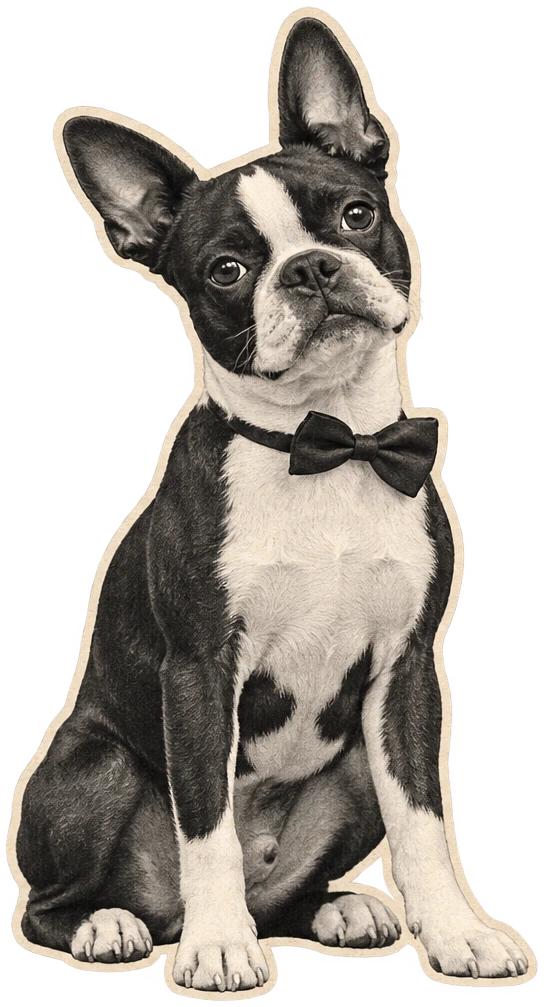
A Boston Terrier is a compact American dog with a short face and pointed ears. The white chest makes a bow tie seem inevitable. It’s small enough to curl up beside you, but there’s nothing small about the amount of attention you should pay to how it breathes. Get to know what a comfortable walk looks like for yours. A new rasp or a dog who keeps stopping to catch their breath isn’t putting on a funny voice for you. 12345
Jump to a section
The short version
Pay attention to breathing when they’re resting and after an ordinary walk. Tell your vet about repeated snorting, poor recovery or a dog who stops sooner than usual. If they’re struggling to breathe, or their gums look blue or grey, contact an emergency vet. Don’t wait to see whether it settles overnight. 345
Keep an eye on the eyes. A Boston who suddenly holds one shut or starts pawing at it needs prompt veterinary advice. If your dog pushes their face into every hedge on the way home, a less prickly route is a decent trade for not spending the evening at the vet. 267
Boston Terrier notes / 01
Breathe easy, keep cool
| Get this sorted | What it means in practice |
|---|---|
| Breathing | Learn what’s usual and discuss recurrent noise or low tolerance with the vet. 34 |
| Emergency | Difficulty breathing, blue or grey gums, or collapse means an emergency vet. 45 |
| Eyes | A suddenly closed or painful eye needs prompt advice. 67 |
| Hot weather | Leave the walk until it’s cooler, or skip it if it still isn’t safe. 8 |
A Boston Terrier isn’t a little French Bulldog
Boston Terriers and French Bulldogs are separate breeds. The Boston standard describes an upright-eared dog with a short muzzle that’s square in shape. White markings are part of the breed description. Both breeds sit in the Royal Kennel Club’s Utility group, and both can have problems associated with a short face. A shape or marking can help you understand the description; it can’t tell you how well a particular dog breathes. 1910
If a rescue isn’t sure of the ancestry, you don’t need to solve it to know what the dog needs. Ask how they go on a normal walk and how they recover afterwards. That will tell you more than comparing ear shapes on your phone. 3411
Small dog, proper fitting
The British show standard gives lightweight as under 6.8 kg, middleweight as 6.8 to under 9.1 kg, and heavyweight as 9.1 to under 11.4 kg. These are show classes, not a typical UK weight and certainly not a target for your dog. Have the vet show you what healthy body condition looks and feels like. 112
Fit a harness by the dog’s chest and watch them move in it. It shouldn’t rub under the front legs or press on the throat as the lead tightens. Don’t buy a bigger harness because the dog’s “between classes”. They’ll still be able to reverse out of it if it doesn’t fit. 313
Easy coat, watch the face
A Boston’s short coat doesn’t take much brushing. Use that time to check for changes in the skin, including any folds your dog actually has. If a fold is sore or smells, ask the vet before trying wipes or creams. Looking clean on the outside isn’t the same as feeling comfortable. 11415
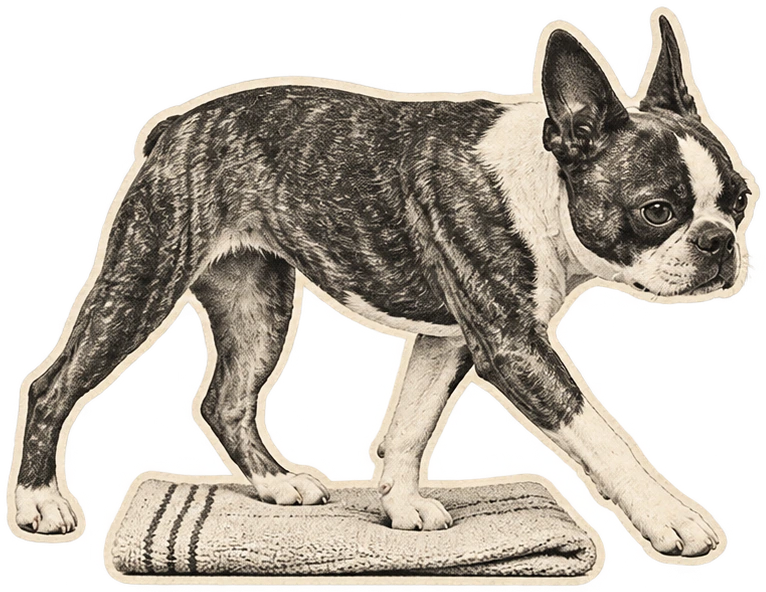
Introduce handling in seconds rather than trying to do the whole dog at once. Let them step away and come back. If they suddenly object to being touched around the face, don’t write it off as an opinion about the towel. Pain can change what they’ll tolerate. 61617
Boston Terrier notes / 04
Look past the short coat
Look for a dog who can settle
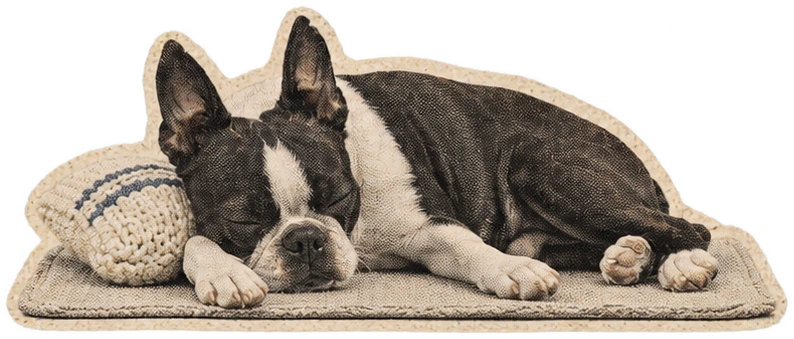
You might get a Boston who wants to play with everyone. You might get one who’d rather watch the visitor from a cushion. Don’t introduce them to the entire room just because friends have heard they’re a sociable breed. Let the dog choose whether to come over. 21719
If there’s always a scrap over who gets to the door first, teach a settle somewhere well out of the way. You can reward a dog on a mat much more easily than one halfway up a visitor’s trousers. Sudden reluctance to play or move needs a vet check rather than a more exciting toy. 192021
Boston Terrier notes / 05
Give them room
| What you see | What to try |
|---|---|
| Jumps up at the door | Practise settling at a distance before adding a visitor. 1920 |
| Moves away when someone reaches out | Give them room instead of following them round. 17 |
| Stops doing things they used to enjoy | Ask the vet if the change persists or comes with other symptoms. 1721 |
Give them something easy to get right
A short search for a toy can be more useful than ten minutes of tearing after it. Put it somewhere obvious, let them find it and make the game harder only if they enjoy it. You aren’t auditioning them for airport security. A decent rummage without a lot of sprinting will do. 42223
Practise a calm turn away on a loose lead. It helps if the pavement’s too busy or the dog is getting wound up, and it’s something you can do without leaning on their neck. Reward the dog for turning with you before shortening the lead. 132324
Boston Terrier notes / 06
Useful jobs for a normal day
The walk should still look comfortable
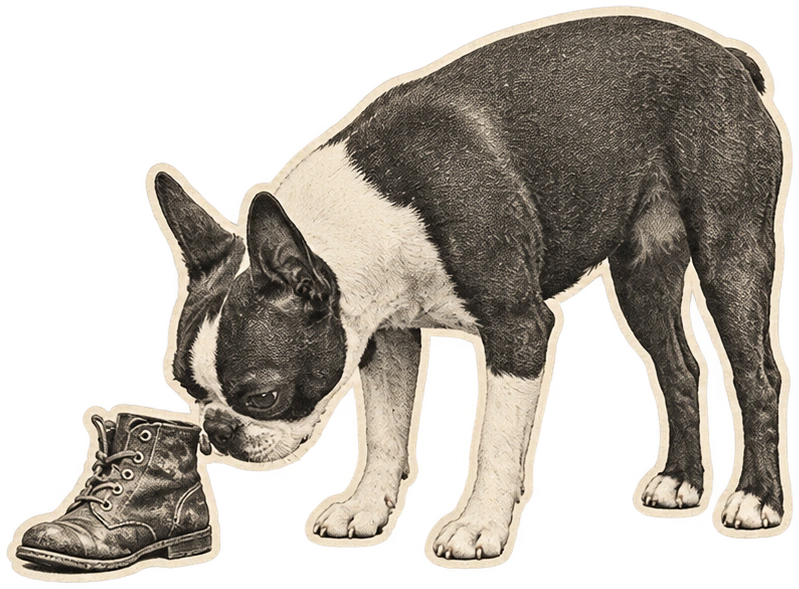
Give your dog regular activity they can manage without struggling for breath. Adapt it as they grow and their fitness changes. Walk where you can shorten the route if needed. If a dog regularly gets noisy or struggles to recover after a manageable walk, have the vet check them before adding distance or intensity. 3421
In warm weather, ditch the frantic ball game. Go out at a cooler time with water on hand. Pick a route with shade. Start cooling straight away and phone a vet if you suspect heatstroke. PDSA explains what to do while you get emergency help. The time to see whether your dog is “fine in the heat” is never. 825
Boston Terrier notes / 07
Keep the walk comfortable
| Situation | Plan for it |
|---|---|
| A normal cool day | Give them time to sniff and have a shorter route in mind if needed. 32122 |
| Hot day | Walk early or late if safe, or use calm indoor activity instead. 8 |
| Dog keeps slowing or breathing noisily | Stop, let them rest, and ask the vet to assess repeated signs. Breathing distress is an emergency. 45 |
| Suspected heatstroke | Begin cooling and seek emergency veterinary care. 825 |
At home, keep it easy to rest
Pick a place for their bed that’s cool and not right in the middle of the hallway. Offer a quiet option even if they spend most evenings trying to get onto your lap. If they snore heavily, wake up struggling or keep changing position as if they can’t get comfortable, tell the vet. A clip of what happens can help, but don’t delay an emergency call to take one. 34520
Teach time alone in small steps. Check how they behave after the door closes instead of guessing from how excited they are on your return. A dog who’s already pacing or barking isn’t learning to settle because you’ve planned a longer absence next time. 2627
Kids, cats and other dogs
They’re small, but they aren’t easy luggage for children to pick up. An adult needs to supervise actively and give the dog somewhere children aren’t allowed to follow. Keep games with hands away from the dog’s face, especially if the dog already dislikes being handled there. 61628
Give a cat a way to leave without having to rush past the dog. With another dog, pick an introduction with room to move away, not the narrow bit between the kitchen table and the back door. Call it early if either dog looks uncomfortable. 172930
Breathing grades, eye tests and what the results mean
Boston Terriers are eligible for the Royal Kennel Club and University of Cambridge Respiratory Function Grading (RFG) scheme. That is distinct from where the test sits in the formal breeding Health Standard. In November 2026 the Boston row lists the BVA/RKC/ISDS Eye Scheme under Good Practice and HC-HSF4 DNA under Best Practice. It notes RFG was recognised in August 2026 and recommends testing now. It says RFG will be added formally to the Health Standard and Find a Puppy from January 2027. Ask to see actual results for the breeding dogs. For your own dog, speak to your vet about noisy breathing even if there’s already a grade on file. 3313233
UK researchers who assessed Boston Terriers in 2026 linked narrowed nostrils with greater risk of airway problems in the breed. That isn’t enough to diagnose a dog by eye or to assume every dog with a wider nose is fine. A separate 2024 UK lifespan study put the median for Boston Terriers in its data at 11.8 years (95% confidence interval 11.0 to 12.2; 1,984 dogs). Both are study findings, not forecasts for this dog. 343536
Boston Terrier notes / 10
Health conditions and screening
| Check or condition | What to do with it |
|---|---|
| Breathing suddenly difficult | Call an emergency vet. Don’t wait for a grading appointment. 45 |
| RFG breathing assessment | Available for Boston Terriers under the current scheme; read the score and date and check the scheme’s eligibility details. 33132 |
| BVA/RKC/ISDS Eye Scheme | November 2026 Good Practice; ask for the actual examination results. 3137 |
| HC-HSF4 hereditary cataract DNA | November 2026 Best Practice. It tests a specific inherited risk, not whether the eye is healthy today. 3133 |
| Painful or shut eye | Contact your vet promptly; it needs an examination even if DNA results are clear. 67 |
| Repeated skipping or limping | Ask the vet about the individual dog; a kneecap problem is one possibility. 23839 |
| Lifespan context | UK 2024 study median 11.8 years, not an individual promise. 3536 |
A small food bill isn’t the whole budget
Price routine care with your practice. Ask what is covered by insurance if the dog already has a breathing or eye problem, and what you’d have to pay yourself. An affordable quote that excludes the condition you’re worried about doesn’t do the job you wanted it to. 240
Check that you’ll still have somewhere for the dog to be comfortable on hot days if you’re out of the house. If someone else walks them, explain their usual pace and how you change plans in warm weather. “They’re only little” isn’t a substitute for knowing what to do when it’s too hot. 82140
Boston Terrier notes / 11
Budget beyond the food
| Cost or commitment | Ask about |
|---|---|
| Food | A complete diet, sized by body condition rather than show class. 1240 |
| Veterinary costs | Routine care plus what the policy excludes. 40 |
| Kit | A well-fitted harness and a bed away from direct heat. 813 |
| Backup care | Someone who knows how to walk them safely and when not to go. 821 |
How Boston got its name on a dog
The breed developed in the Boston area of Massachusetts. An early dog called Judge appears in the American Kennel Club’s account of how those lines developed. The AKC recognised the breed in 1893. They’ve had that respectable-looking outfit for ages; the bow tie is still optional. 4142
Despite the name, the British classification is Utility rather than Terrier. That’s a registry grouping, not a guide to how much mischief your dog will manage before breakfast. If you’re curious about their history, use the breed records. If you’re curious about your dog, try a different walk and see what they notice. 11022
Boston Terrier notes / 12
Boston and the bow tie

Before you bring one home
Ask to see the dog breathing at rest and moving at an ordinary pace. When buying a puppy, meet them with their mum where they were raised and ask for the parents’ breathing grade and eye results. A seller telling you that loud breathing is standard for the breed isn’t giving you reassurance. 343143
If the dog’s already home, start by deciding what would make the next normal day easier. That might be a cooler route, or finally booking the appointment about the snoring you’ve been hearing. If they came through a rescue, ask what support they can give you while the dog is settling in. 3844
Boston Terrier notes / 13
Ask for evidence you can use
| What to find out | What to ask or check |
|---|---|
| How the dog moves and breathes | Ask about a familiar walk and how they recover. 34 |
| Health screening | See identifiable parental results rather than a message saying “vet checked”. 3143 |
| Previous home | Ask what they’ve been comfortable with and how they manage visitors. 1944 |
| Your first step | Choose a comfortable route and register with a vet. 42144 |
Sources
- S1Royal Kennel Club Boston Terrier breed standard and show weight classesSource · checked 21 November 2026
- S2PDSA Boston Terrier owner and health guidanceSource · checked 21 November 2026
- S3Royal Kennel Club and University of Cambridge respiratory grading and Boston Terrier eligibilitySource · checked 21 November 2026
- S4PDSA flat-faced dog respiratory signs and managementSource · checked 21 November 2026
- S5PDSA emergency advice for difficulty breathing and gum colourSource · checked 21 November 2026
- S6PDSA painful or closed eye adviceSource · checked 21 November 2026
- S7PDSA corneal ulcers and symptoms in dogsSource · checked 21 November 2026
- S8PDSA preventing and recognising heatstrokeSource · checked 21 November 2026
- S9Royal Kennel Club French Bulldog breed standardSource · checked 21 November 2026
- S10Royal Kennel Club Boston Terrier breed profileSource · checked 21 November 2026
- S11Dogs Trust support finding out rehoming fitSource · checked 21 November 2026
- S12PDSA weight and body condition adviceSource · checked 21 November 2026
- S13Dogs Trust on comfortable lead walking and equipmentSource · checked 21 November 2026
- S14PDSA brushing and dog grooming guidanceSource · checked 21 November 2026
- S15PDSA skin-fold dermatitisSource · checked 21 November 2026
- S16Dogs Trust gentle handling practiceSource · checked 21 November 2026
- S17Dogs Trust body language, pain and consent cuesSource · checked 21 November 2026
- S18PDSA ear symptoms and veterinary adviceSource · checked 21 November 2026
- S19Dogs Trust advice on visitorsSource · checked 21 November 2026
- S20Dogs Trust teaching a calm settleSource · checked 21 November 2026
- S21PDSA exercise matched to the individual dogSource · checked 21 November 2026
- S22Dogs Trust enrichment and scent gamesSource · checked 21 November 2026
- S23Dogs Trust reward-based trainingSource · checked 21 November 2026
- S24Dogs Trust managing reactions and using distance on walksSource · checked 21 November 2026
- S25PDSA emergency first aid for heatstrokeSource · checked 21 November 2026
- S26Dogs Trust developing time alone graduallySource · checked 21 November 2026
- S27PDSA separation distress signs and helpSource · checked 21 November 2026
- S28Dogs Trust safety when children spend time with dogsSource · checked 21 November 2026
- S29Dogs Trust introducing a dog to catsSource · checked 21 November 2026
- S30Dogs Trust introducing a new dog to existing dogsSource · checked 21 November 2026
- S31Royal Kennel Club formal Health Standard and Boston Terrier scheduled January 2027 changeSource · checked 21 November 2026
- S32Royal Kennel Club 2026 announcement of wider respiratory testingSource · checked 21 November 2026
- S33Royal Kennel Club HC-HSF4 DNA test scopeSource · checked 21 November 2026
- S34Tomlinson et al. original 2026 UK fourteen-breed BOAS studySource · checked 21 November 2026
- S35Dogs Trust 2024 breed longevity estimates and sample sizesSource · checked 21 November 2026
- S36Original 2024 UK companion dog breed longevity studySource · checked 21 November 2026
- S37BVA canine Eye Scheme and testing scopeSource · checked 21 November 2026
- S38PDSA canine luxating patella and examinationSource · checked 21 November 2026
- S39PDSA veterinary guidance on limping and stiffnessSource · checked 21 November 2026
- S40PDSA ownership costs and insuranceSource · checked 21 November 2026
- S41American Kennel Club Boston Terrier breed history and JudgeSource · checked 21 November 2026
- S42American Kennel Club recognition recordSource · checked 21 November 2026
- S43RSPCA responsible puppy breeder and meeting the motherSource · checked 21 November 2026
- S44Dogs Trust supporting a newly rehomed dogSource · checked 21 November 2026
