
Breed guide / Border Terrier
Living with a Border Terrier
A small working terrier who can keep up on a long walk and find every loose board in the garden fence. If you like a bit of company with your fresh air, this is a good dog to spend it with.
Jump to a section
The short version: small dog, proper walking boots
The Border Terrier is a small working dog from the country around the English and Scottish border. They were bred to cover ground with hounds and follow quarry underground. That’s still useful information if you’re trying to work out why your pet can do a decent walk, come home for a nap and then interrupt it to investigate a rustle under the shed. Give them enough time to explore safely, and make coming back to you worthwhile. 12
Border Terrier notes / 01
Four things worth getting right
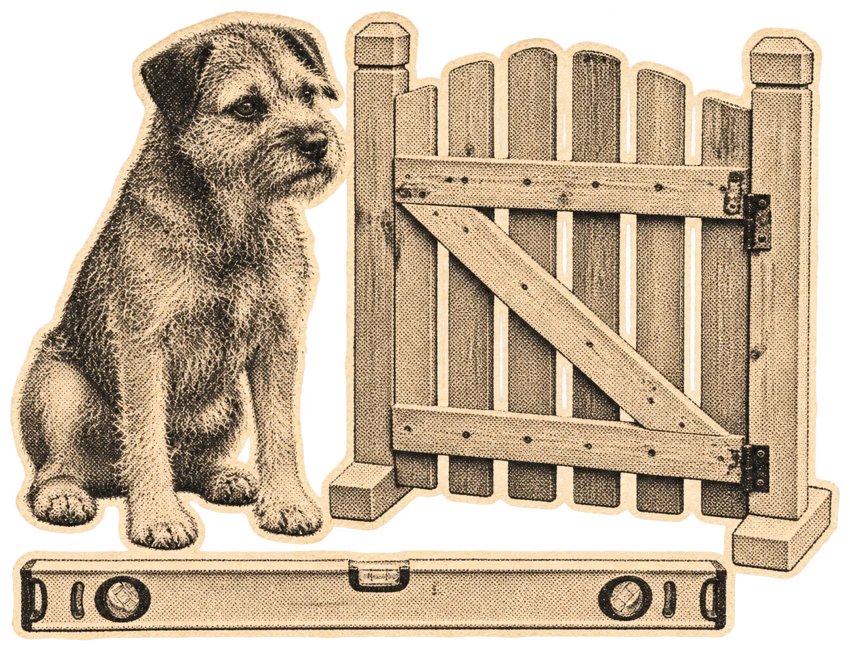
The fence gets a vote.
| What to check | What it means at home |
|---|---|
| Time | You can take the dog out most days and have cover if work runs over. |
| Recall | You’ve got somewhere secure to practise and won’t risk a loose dog near livestock. |
| Day-to-day care | Get the teeth looked at, keep an eye on weight and learn what the wiry coat needs. |
| Coat | Ask about brushes and hand stripping before the coat is uncomfortable to handle. 89 |
Names: a Border isn’t a Collie with its legs shortened
The standard name is Border Terrier. You’ll hear people call them Borders, which explains some odd conversations if somebody else is thinking about Collies. The Royal Kennel Club and FCI both put the breed among terriers, and the FCI lists it in the small-sized terrier section. Coquetdale and Redesdale terrier are regional names from the breed’s history, not two recognised varieties you have to choose between. 345
Border Terrier notes / 02
Know which Border is meant
A club history is not a menu of modern varieties.
| Label | What to ask |
|---|---|
| Working or show line | How do the parents walk, settle and react to small animals? Don’t expect the label to answer for them. |
| Border Terrier cross | Is parentage confirmed? What do the people living with this dog actually know about its coat, behaviour and health? |
| Coquetdale or Redesdale | Historical names, not modern registrations of a separate Border variety. |
| Border Terrier | The modern registered name. 13 |
| Border | Common shorthand. Say the full name if someone is expecting a sheepdog. 1 |
| Terrier group | The UK registry’s classification; the FCI puts it in its small-sized terrier section. 14 |
| Coat colour | Red, wheaten, grizzle and tan, or blue and tan. Colours don’t create separate varieties. 3 |
Size: the show scales aren’t the vet’s scales
The Royal Kennel Club updated the standard on 1 April 2026. It gives males 6–7 kg and females 5–6.5 kg, with no numerical height. The 2013 VetCompass records in England tell you what a different population weighed: adult males on record had a median of 10.9 kg and females 9.1 kg. Neither set of numbers is your dog’s target. Put your hands on the ribs, look down for the waist and ask the vet to show you what a healthy shape feels like under the coat. 367
Border Terrier notes / 03
What the scales actually say
The show weight and the dog in your kitchen are different things.
| Measure | Reading |
|---|---|
| RKC show-standard weight | Males 6–7 kg; females 5–6.5 kg. 3 |
| Observed adult vet weight | Median 10.1 kg overall, middle half 8.8–11.6; 10.9 kg males (665 dogs), 9.1 kg females (496 dogs) with available 2013 adult weight (study used ≥9 months). 6 |
| Fit a harness | Measure the individual dog. The breed name on the packet can’t tell you where the strap sits. |
| Height and build | The current RKC standard describes the dog’s build without setting a numerical height. Measure the individual to fit gear. 3 |
Coat: brush the dog, not just the presentable bit
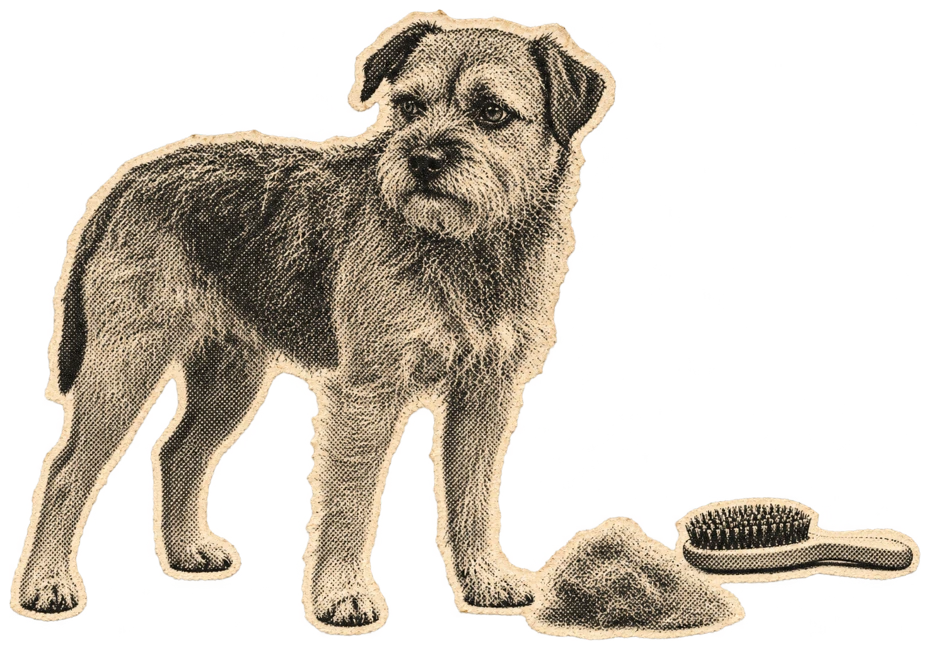
The outer coat is harsh and wiry over a close undercoat. Brush through regularly and check the bits the lead and harness rub. Look through the paws after wet or muddy walks. The dog who spent ten minutes putting its face in a bank of dead leaves won’t have kept a receipt, but the towel will tell you what happened. 389
Border Terrier notes / 04
A wire coat in ordinary life
Have a look behind the ears before they get a vote.
| Job | Practical choice |
|---|---|
| Regular brush | Keep it brief and comfortable; check ears, belly and feet. |
| Hand stripping | Ask a groomer with wire-coat experience to show you what it involves and assess the dog’s coat and comfort. |
| Clipping | Ask what it changes about coat texture and upkeep. Don’t turn a long grooming session into an endurance test for a sore or older dog. |
| Coat colours | Red, wheaten, grizzle and tan, or blue and tan in the UK standard. None lets you predict temperament. |
| Undercoat | Part the wiry topcoat while you brush. The close undercoat is easy to miss. 39 |
| Feet and toes | Look between the toes after rough or muddy ground. Ask for help if a paw is painful or the dog starts limping. 916 |
| Skin | Look under harness straps and at the skin as you brush. Persistent redness or soreness is a vet question. 10 |
Temperament: see what happens after the greeting
Some Borders are sociable and settle easily once the person they’re excited about has sat down. Some take longer around visitors, dogs or traffic. Ask when a particular dog chases or barks, and what happens when it’s all over. There’s a considerable difference between a dog who gives one bark at the door and one who then spends half an hour waiting for the door to do something else. 21
Border Terrier notes / 05
Read the dog in front of you
The useful clue is what happens after the excitement.
| What you see | What to do |
|---|---|
| Quick greeting, then can relax | Watch this in more than one situation. Ask about everyday walks and visitors. |
| Going still, backing away, repeated barking | Give space and see what changes. Don’t keep trying to get a friendlier hello. |
| Sudden sensitivity to touch | Ask a vet about pain or another change before treating it as bad behaviour. 10 |
Training: make it pay to come back
Practise recall somewhere safe, pay well for a good return and let them go back to sniffing some of the time. If a call always means going home, the dog can work that out before you’ve managed to find the poo bags. Move to a long line and fitted harness as you add distractions. Don’t use the first rabbit you see to test whether it’s working. 1112
Border Terrier notes / 06
Useful lessons to start with
A return can pay without ending the walk.
Exercise: a route with things to do
PDSA suggests at least an hour a day, plus play and training. It’s a planning figure for a healthy adult, not a quota for a puppy or a dog with sore joints. Take a lead route with proper sniff stops and use secure space for a run when you can. Four laps while you’re trying to get a phone signal may suit neither of you. 82
Border Terrier notes / 07
Move without gambling on recall
Puppies, injured dogs and healthy adults don’t have the same walk.
| Situation | Sensible adjustment |
|---|---|
| Livestock or roads | Use a suitable lead and follow local signs. 15 |
| Rained off or short on time | Offer a safe shorter outing and a simple search game with some of the daily meal. |
| New limp or refusal to walk | Stop and seek veterinary advice rather than trying to get the dog to walk it off. 16 |
| Exercise allowance | PDSA suggests at least an hour a day for the breed, plus play and training. Plan for the dog in front of you. 8 |
Home: check the gap at the bottom
Look at fence joins and gates from dog height, and assume a place they can get their nose into deserves another look. A gate indoors gives you breathing room opening the front door. If digging is a problem, protect the fence line and offer a safe place or activity rather than hoping an instruction over your shoulder will sort the garden. 172
Border Terrier notes / 08
A home a terrier can settle in
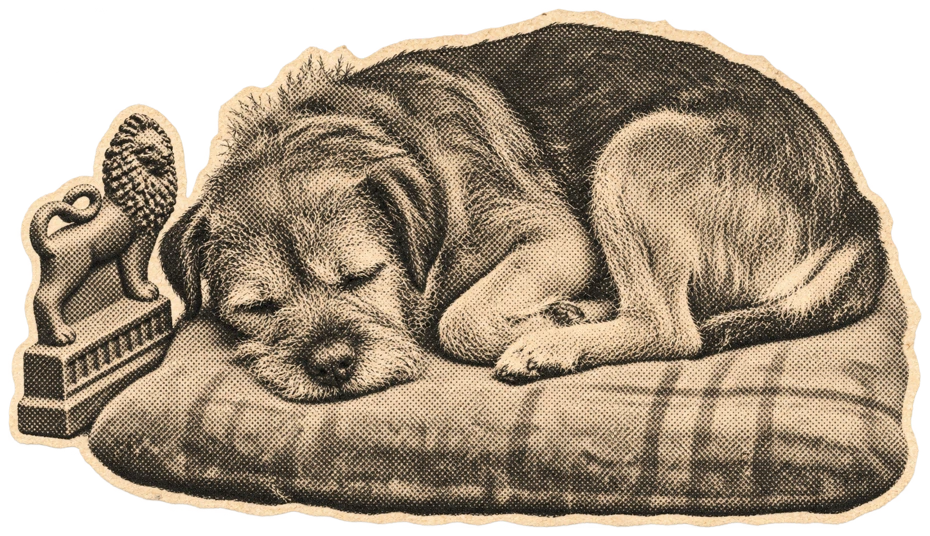
Start by getting down to the dog’s eyeline.
| Setup | Best use |
|---|---|
| Quiet bed | Somewhere the dog can leave company without being followed. |
| Time alone | Start with absences the dog can cope with. Pacing or repeated barking means the plan needs work; arrange cover if needed. 18 |
| Food routine | Have one way to record meals and treats. A unanimous family agreement that the dog looks hungry isn’t much help with portions. |
| Garden edges | Check below gates and at fence joins. Fix a gap before relying on recall. 17 |
| Visitors | Use a second boundary if someone needs the front door open. 17 |
| Digging and searching | Offer a safe search game or a permitted place to dig instead of expecting a fence line to police itself. 217 |
Kids and other pets: judge this dog, not the breed card
On the floor an adult can keep a close eye on a game and let the dog leave when it wants to. Keep the bed and food bowl undisturbed. Some Borders live with cats, but “has lived with a cat” is about one cat and one household. Give animals separate spaces and never set up a chase to see how it goes. Smaller pets need secure physical separation. 192021
Border Terrier notes / 09
Company without surprises
Use space and supervision rather than a breed promise.
| Ask about | Specific thing to look for |
|---|---|
| Other dogs | Can both stop play and take space? |
| Cats | Has this dog actually shared indoor space with a cat, with what precautions? |
| Children | Can an adult supervise actively and use barriers when busy? |
| Small animals | Use secure physical separation. Don’t run a trial chase or rely on a child to intervene. 192021 |
Health: teeth, ears and what to do about an episode
An English primary-care VetCompass study included 2,841 Border Terriers in the broader sampling frame. The annual diagnosis table uses 1,327 dogs under care in 2013, not 2,841. It reports recorded problems, not a lifetime forecast or a prevalence figure for today. A separate seizure study across 455,553 UK dogs under primary care in 2013 reported 1.67% one-year recorded seizure prevalence among Border Terriers (91 of 5,449; 95% CI 1.33–2.01). That was all recorded seizures, not a figure for epilepsy or gluten-sensitive dyskinesia alone. 622
Border Terrier notes / 10
Conditions, lifespan and breeding
UK study records and what to do if something changes.
| 2013 specific diagnoses | Recorded in 1,327 Border Terriers in England |
|---|---|
| Periodontal disease | 234 (17.63%; 95% CI 15.62–19.79) 6 |
| Overweight or obesity | 93 (7.01%; 95% CI 5.69–8.52) 6 |
| Otitis externa | 89 (6.71%; 95% CI 5.42–8.19) 6 |
| Overlong nails | 70 (5.28%; 95% CI 4.13–6.62) 6 |
| Anal sac impaction | 63 (4.75%; 95% CI 3.67–6.03) 6 |
Lifespan: The same study reports median recorded age at death 12.7 years (middle half 9.3–14.3) in 66 deaths across the study period. The Dogs Trust-led multi-source UK study estimates 14.2 years median survival (95% CI 14.1–14.3) across 9,387 Border Terriers, 2,427 recorded deceased. These are different datasets and measures. Neither puts a deadline on your dog. 623
Screening: The Royal Kennel Club lists the SLEM DNA test under Good Practice. No separate breed-specific test appears in the Best Practice column at the check date. Ask for the actual parental results and how they work as a pair. A healthy carrier is not an affected puppy, but the pairing matters; ask a vet or the official scheme to interpret it. The test does not cover an adult’s unexplained cramps or seizures. 2425
| Screening tier | Current Border Terrier entry |
|---|---|
| Good Practice | SLEM DNA test. Read both parents’ results and ask about suitability as a pair. 2425 |
| Best Practice | RKC currently lists no separate Border Terrier entry in this tier. This does not rule out veterinary screening for an individual dog. 24 |
Conditions to recognise
Gum disease
Bad breath, red gums or chewing differently warrant a check; some dogs keep eating despite pain. Ask your vet to demonstrate toothbrushing with dog toothpaste once the mouth is comfortable. 26
Weight gain
Track weight over time and learn to feel the ribs and waist. Agree a goal with your vet rather than using the show-standard number. 27
Outer-ear inflammation
Repeated head shaking, discomfort, odour or discharge needs a prompt check. Don’t put leftover treatment or cotton buds in the ear. 28
Overlong or torn nails
Check any dewclaws, too. Ask a vet nurse or groomer to show you how to clip safely. Persistent bleeding or obvious pain after a tear needs veterinary advice. 29
Blocked anal sacs
Scooting and repeated licking have several causes. Make an appointment instead of attempting to empty glands yourself. Get prompt advice for a painful swelling or discharge. 30
Seizure
Contact your vet after an episode. A prolonged or repeated seizure or failure to recover warrants emergency help. Time it if safe; a video isn’t worth delaying help. 31
Paroxysmal dyskinesia
This episodic movement disorder, sometimes historically called canine epileptoid cramping syndrome, can look like a seizure. A dog may stay aware during it, but that is not a home diagnostic test. Ask the vet to assess the episodes and discuss diet or further tests only after that assessment. Don’t routinely remove gluten from a healthy Border’s food. 32
SLEM, or shaking puppy syndrome
A recessive inherited neurological disorder that commonly appears around the first attempts to walk. A shaky or unsteady pup needs a vet, not a label read off the internet. A DNA result for the known variant is a breeding tool. 25
Costs: allow for a wire-coat groom and a decent vet plan
PDSA starts its Border Terrier budget at £70 per month after purchase and setup. That’s a charity estimate, not a quote for your postcode. Check a local groomer’s charge for hand stripping, a vet practice’s routine and out-of-hours arrangements, and whether insurance covers dentistry or pre-existing conditions. If you need a regular dog walker, get that price before fitting the dog around your hours. 833
Border Terrier notes / 11
What to put in the monthly budget
Get quotes for the things you’ll actually pay for.
| Budget separately | Why |
|---|---|
| Setup and wear | Harness that fits, secure gate or fence and the things that need replacing. |
| Day cover | Ask about a normal weekday, not just your week off. |
| Treatment and extras | Check excesses, exclusions and the cash you’d need if something isn’t covered. |
| Regular outgoings | Food, routine treatment and supplies. PDSA’s breed estimate starts at £70 monthly after setup. 833 |
| Grooming | Ask for a wire-coat hand-stripping price and what they can comfortably do for your individual dog. 89 |
| Veterinary care and insurance | Ask what’s included, including dentistry and exclusions, and what a typical excess means for your cash reserve. 33 |
History: kept up with the hounds
The Border Terrier Club traces the breed through Northumberland and the border country and records Coquetdale and Redesdale as older names. The dog worked alongside foxhounds and went to ground, which explains a useful coat and a determined interest in what’s under things. The UK Kennel Club recognised the breed in 1920, the year the Border Terrier Club formed. That’s recognition, not the date somebody first made a Border Terrier. 56
Border Terrier notes / 12
The old working brief
They had to keep up with the hounds and fit where the hounds couldn’t.
| Then | Now |
|---|---|
| Working alongside hounds and investigating underground | Safe opportunities to sniff, run and search for something you’ve chosen. You don’t need a country estate, but you do need to go outside. |
Bringing one home: ask about yesterday
A rescue or foster carer can tell you what a particular dog did yesterday when a cat went through the garden, when a person left or when somebody picked up a brush. Those answers are often more useful than a promise that the breed is good with everything. Walk together if you can. If choosing a pup, meet it with its mother where the litter is raised; read both parents’ SLEM results, ask about family health and keep the option to walk away. 343524
Border Terrier notes / 13
Questions worth asking before you commit
Ask about the dog you’ll be living with, not an ideal one.
| Before collection | First few weeks |
|---|---|
| Confirm identity and veterinary records; book your own vet appointment, check the fence and organise cover. | Let the dog learn the ordinary route and a quiet resting place. Keep early handling brief and positive. Start recall in secure space. |
Sources
- S1RKC: Border Terrier breed profileUK registry · checked 20 November 2026
- S2Dogs Trust: Border Terrier profileUK charity · checked 20 November 2026
- S3RKC: current Border Terrier breed standardUK registry · checked 20 November 2026
- S4FCI: Border Terrier nomenclatureInternational registry · checked 20 November 2026
- S5Border Terrier Club: originsUK breed club · checked 20 November 2026
- S6O’Neill et al.: Border Terrier demography and disorders in EnglandPrimary UK cohort · checked 20 November 2026
- S7PDSA: checking weight and body conditionUK veterinary charity · checked 20 November 2026
- S8PDSA: Border Terrier care and budgetUK veterinary charity · checked 20 November 2026
- S9Border Terrier Club: care tipsUK breed club · checked 20 November 2026
- S10PDSA: home health checksUK veterinary charity · checked 20 November 2026
- S11Dogs Trust: recall trainingUK charity · checked 20 November 2026
- S12Dogs Trust: harness trainingUK charity · checked 20 November 2026
- S13Dogs Trust: settle trainingUK charity · checked 20 November 2026
- S14Dogs Trust: handlingUK charity · checked 20 November 2026
- S15Defra and Natural England: Countryside CodeUK government · checked 20 November 2026
- S16PDSA: limping or stiffnessUK veterinary charity · checked 20 November 2026
- S17Dogs Trust: escaping or running awayUK charity · checked 20 November 2026
- S18Dogs Trust: learning to be aloneUK charity · checked 20 November 2026
- S19Dogs Trust: dog and child safetyUK charity · checked 20 November 2026
- S20Dogs Trust: living with dogs and catsUK charity · checked 20 November 2026
- S21Border Terrier Club: is the breed right for you?UK breed club · checked 20 November 2026
- S22Erlen et al.: recorded seizures in UK primary carePrimary UK cohort · checked 20 November 2026
- S23Dogs Trust: UK longevity breed table (McMillan et al.)Primary UK multi-source breed table · checked 20 November 2026
- S24RKC: current Health StandardUK registry screening tiers · checked 20 November 2026
- S25RKC: SLEM DNA testUK registry screening test · checked 20 November 2026
- S26PDSA: gum and dental diseaseUK veterinary charity · checked 20 November 2026
- S27PDSA: obesityUK veterinary charity · checked 20 November 2026
- S28PDSA: ear infectionsUK veterinary charity · checked 20 November 2026
- S29PDSA: nail clippingUK veterinary charity · checked 20 November 2026
- S30PDSA: blocked anal sacsUK veterinary charity · checked 20 November 2026
- S31PDSA: seizures in dogsUK veterinary charity · checked 20 November 2026
- S32Lowrie et al.: clinical markers of paroxysmal dyskinesia in Border TerriersPrimary clinical research · checked 20 November 2026
- S33PDSA: costs of dog ownershipUK veterinary charity · checked 20 November 2026
- S34Dogs Trust: rehoming processUK charity · checked 20 November 2026
- S35Defra: buying a cat or dogUK government · checked 20 November 2026
