
Breed guide / Borador
Living with a Borador
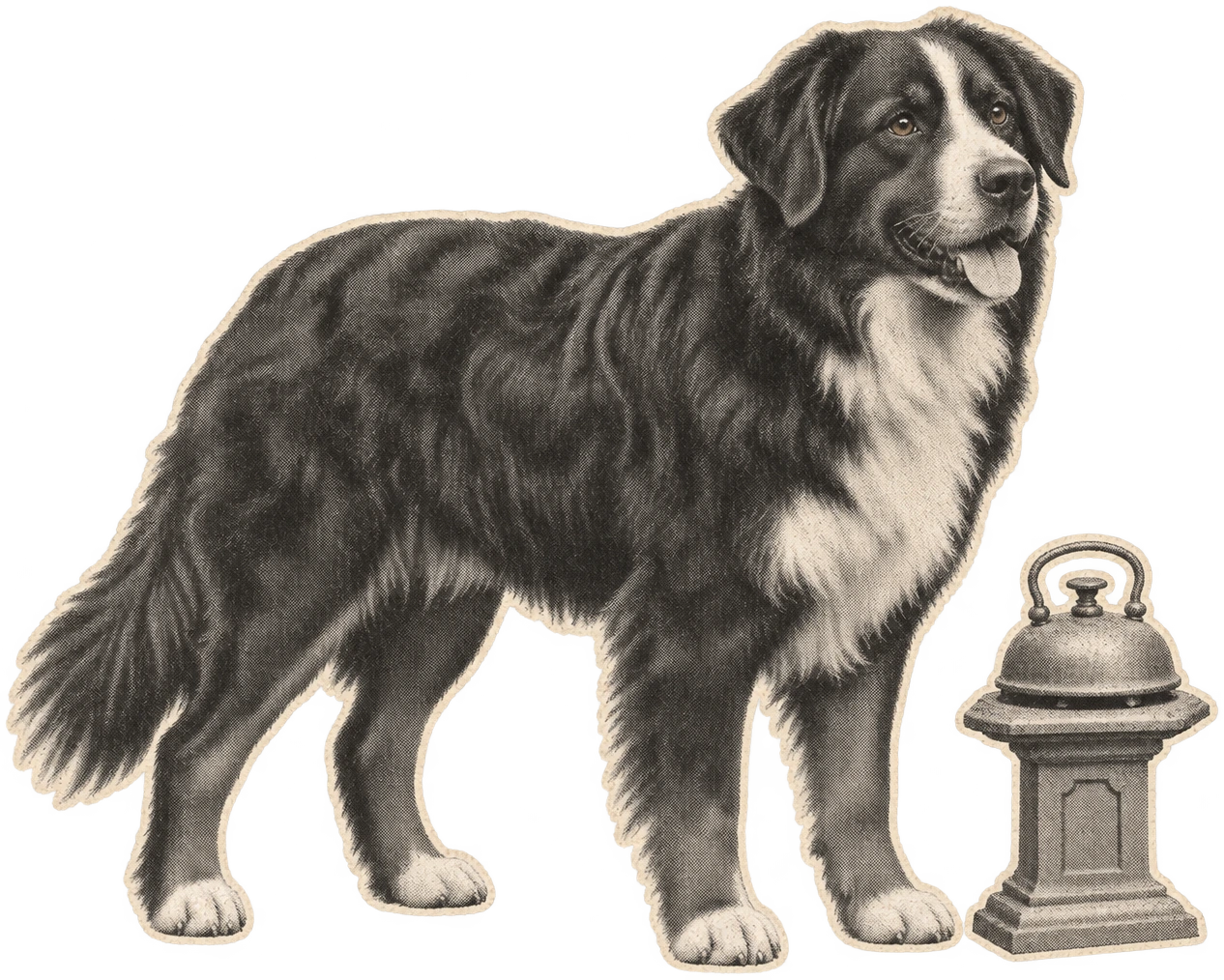
A Borador is a Border Collie crossed with a Labrador Retriever. That gives you two very different working backgrounds, not a dog with half a shopping list of traits from each. If yours is always looking for the next thing to do, learn when they’ll turn away from movement, give them something safe to find and practise stopping before you’ve both had enough. 12345
Jump to a section
The short version
If a bike, runner or ball takes all their attention, get more distance before you need them to listen. Learn the signs on an easy route. When your dog stops sniffing and starts going still or leaning ahead, that’s your chance to move away rather than stand there waiting for the interesting thing to come closer. 5 6
Build something quiet into the daily routine. A few easy finds and then a chance to lie down can suit a dog who otherwise spends the whole evening waiting for you to throw something. If food helps with training, count the rewards while they’re still in your pocket. 7 8 9
Borador notes / 01
The useful first moves
A name for two parents, not a personality test
In rescue listings, Borador is used for the Border Collie and Labrador Retriever pairing. Some dogs have a documented background and others are described by the best information the rescue has. The name doesn’t verify generation, ancestry proportions or what life with that dog will be like. 1 2 10
Buy for the legs, chest and waist you can see
The UK written Border Collie standard gives an ideal shoulder height of 53 cm for males and slightly less for females. The Labrador standard gives 56–57 cm for males and 55–56 cm for females. Those are parent breed descriptions, not a size range for the cross. 11 12
Measure the chest and look at the actual dog moving in the harness. Longer fur can hide a strap that’s sitting against the front leg. To check how well the dog is carrying weight, feel the ribs as well as looking for a waist. 13 14
Brush what’s really there
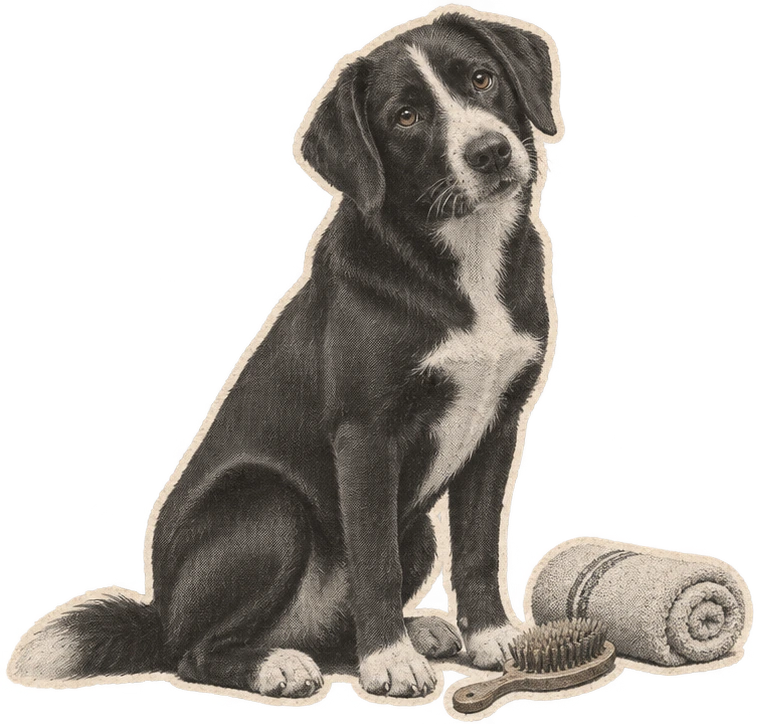
The Border Collie standard describes moderately long and smooth coats; the Labrador standard describes short, dense hair. Look at your dog’s undercoat and check where straps sit instead of guessing what grooming will take from the cross name. Longer hair behind the ears or down the legs may need more attention. 11 12 13 16
After grass or mud, give the feet a once-over. Let the dog move away and split the checks into manageable bits. If the dog keeps licking one spot, shakes their head or suddenly objects to being touched, get it checked rather than trying to brush the problem out. 16 17 18 19
Look for the moment they can still turn away
You don’t have to decide whether they’re retrieving, herding or just interested in the bike. If your dog goes quiet and stares, increase the distance. Reward them for noticing and then choosing to look back. Use a safer route if there’s nowhere to get away from traffic or passing wheels. 5 6 20
How a dog reacts can change with the place and what’s happened that day. Notice which routes they can manage without spending the whole time tight on the lead. If a sudden change comes with stiffness or a new dislike of handling, check for pain. 6 17 21
Borador notes / 05
Before they fix on it
| What you see | Your first move |
|---|---|
| Eyes fixed on a bike or jogger | Move off before you ask for their attention again. 5 6 |
| Can still turn towards you | Reward the check-in and keep the same easy distance for now. 20 |
| Reacts differently to everyday handling | Stop the handling and get advice if discomfort is possible. 17 21 |
One useful job is plenty
Give a dog who likes carrying things something safe to pick up. Trade for a reward when they bring it over, and give it back sometimes. If they’d rather search, hide that toy low down where they can find it without a running start through the kitchen. 7 22
Practise recall somewhere quiet before adding distance or distractions. A long line on a suitable harness can help where there’s enough space. Near traffic or livestock, use a normal lead; don’t put your training to the test against a moving car or a lamb. 5 13 23
Build a walk they can recover from
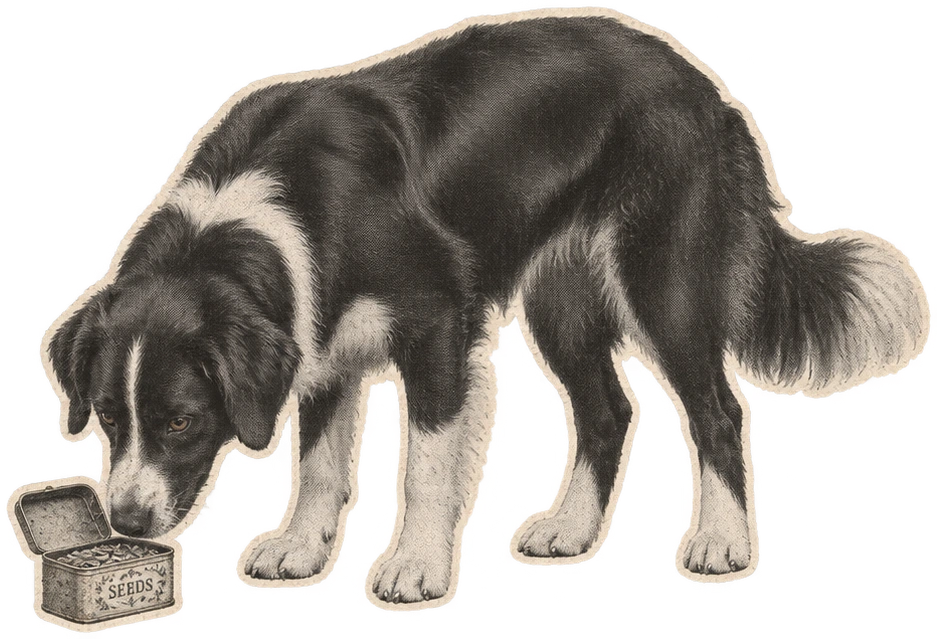
Give a healthy, active adult enough exercise and chances to use their nose. Build intensity to the dog’s age and fitness. If they’d keep chasing a ball after they’re tired, make the breaks your job. Searching for a toy lets them use a different bit of their brain without making every turn another hard stop. 7 24 25
Use a lead where movement makes coming back unlikely, and find easier routes for warm days. Ask the vet about new limping or repeated weakness during exercise rather than treating it as lack of fitness. 5 21 26 27
Borador notes / 07
A walk they recover from
| Situation | Try this |
|---|---|
| Dog loves a ball | Choose the right size of toy, limit hard chasing and take breaks. 25 |
| Busy or narrow path | Keep them close or pick a quieter route. 5 23 |
| Warm weather | Cooler hours and lower effort. 26 |
| Unusual tiredness or movement | Ease off and seek advice if the change repeats. 21 27 |
Make rest a thing the dog knows how to do
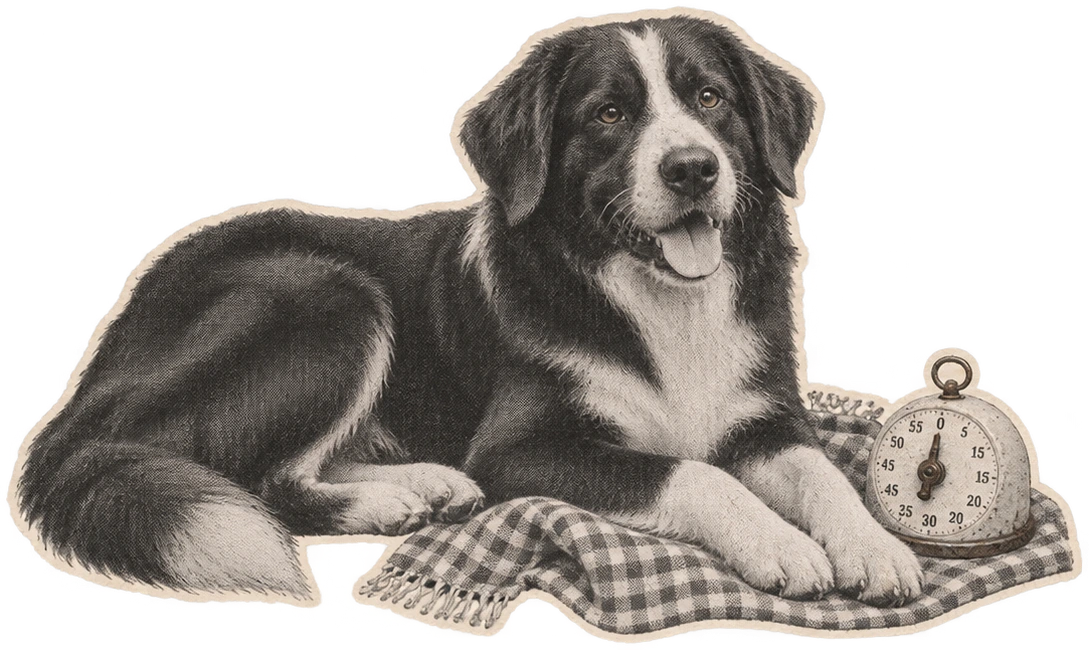
Start on a quiet evening when there’s nothing much going on. Reward the dog for lying on a mat while you put the kettle on. Work up to a knock at the door later. If the bed’s in the busiest bit of the hall, move it before deciding they’re unable to settle. 8 28
Use a measured feeding routine. Research on a POMC variant and food motivation was done in Labradors; you can’t tell from the cross name whether yours carries it. You can find out who’s already fed them and whether their body condition is changing. 9 14 29
Don’t use the kids to practise chasing
If the dog follows every quick movement, give children a job that doesn’t involve running away with a toy. Let them hide something while an adult has the dog with them. Supervise actively and put a barrier in place if grown-ups can’t watch. 5 7 30
Use separate spaces for animals when you need them. Ask about real experiences in a home, not whether someone thinks Labradors love everyone or collies always chase. Being all right beside a still cat doesn’t tell you what happens when it runs. 5 6 31 32
Read two separate sets of health results
For breeding, the RKC Border Collie Good Practice row lists clinical eyes and gonioscopy for PLA. Additional Best Practice includes hips, elbows, BAER hearing and DNA tests for CEA/CH, CL, MDR1, TNS, IGS, GGD, SN and Raine’s syndrome. The Labrador Good Practice row instead lists eyes, hips and elbows, plus CNM, EIC, MCD, prcd-PRA, SD2 and STGD DNA tests; Best adds HNPK DNA. These are recommendations for the parent breeds, not a combined formal Borador screening scheme. 3 4 33 34 35 36
If a dog gets unusually weak during exercise, stops using a leg or starts to see less well, ask the vet. A dog that collapses needs immediate veterinary advice. Neither a test for a particular variant nor a parent breed study tells you what caused a new symptom. 21 27 34 37 38
The UK longevity research has separate Border Collie and Labrador figures. We don’t average them or treat either as a measured Borador lifespan. The Labrador appetite study is also evidence about the dogs studied, not a prediction for the cross. 29 39 40
Borador notes / 10
Health conditions and screening
| Check | What the evidence says |
|---|---|
| Border Collie eyes | Good clinical eyes plus gonioscopy for PLA. 3 33 34 |
| Border Collie Best tier | Additional hips, elbows, BAER and the listed DNA tests. 3 33 |
| Labrador Good tier | Eyes, hips, elbows and its own different list of DNA tests. 4 33 |
| Labrador Best tier | HNPK DNA in addition to Good Practice. 4 33 |
| New weakness or collapse | Speak to a vet for the symptom today. Collapse needs immediate advice. 27 37 |
| New sight problems | Ask the vet, regardless of parent eye results. 34 38 |
| Lifespan | No verified representative Borador lifespan used here. 39 40 |
Price the routine you’ll actually use
Price food based on the dog’s portion and look at the coat before booking regular grooming. Ask the local vet what routine care costs and compare excesses and exclusions properly. If you need walking cover, check that the person has somewhere to take the dog away from things they can’t manage yet. 9 16 41 42
Ask a walker what their route looks like at school-run time or when the park is busy. It’s a better question than whether they’ve walked one of these crosses before. 5 42
Borador notes / 11
Price the real routine
| Cost | What to ask |
|---|---|
| Food and rewards | How much the dog really eats across the whole day. 9 |
| Harness and grooming | Fit and actual hair, rather than what you’d buy for either parent. 13 16 |
| Vet and insurance | Local prices, excesses and which conditions are excluded. 41 |
| Walking | How they’ll manage this dog around moving things. 5 42 |
Two very different ways to work
The Border Collie has a history of working stock. The Labrador is a retrieving gundog. That history makes it worth trying a search, a retrieve or reward-based check-in. It doesn’t tell you where the cross first happened or whether your dog will want to chase, carry or settle. 1 2 3 4 7
Ask about the ordinary walk
For an adult, ask what movement they notice most, what happens when a game ends and how they’re doing with short time alone. Ask about the dog you’re meeting rather than the other littermates. For a puppy, see them with their mum where they were raised and ask for named health records for both parents. 5 8 33 43 44 45
Pick an easy first route, sort the front door and give them a place to lie without being disturbed. Save the busy park until you know whether they can turn back to you on the quiet street. 8 23 28 43
Borador notes / 13
Ask about the ordinary walk
| Ask or arrange | Useful detail |
|---|---|
| Parent records | Which dogs and which specific screening results. 33 45 |
| Around movement | What they’ve actually done near bikes, runners and animals. 5 |
| Time at home | What helps them settle when there’s no game on. 8 43 |
| Early walks | A quiet route and safe equipment that already fit. 13 23 |
Sources
- S1Rescue Resort first-hand intake description, uses Borador for Labrador x Border CollieSource · checked 21 November 2026
- S2Barkin Dogs Rescue adoption record using Borador for Labrador x Border CollieSource · checked 21 November 2026
- S3Royal Kennel Club Border Collie breed profile, working history and healthSource · checked 21 November 2026
- S4Royal Kennel Club Labrador Retriever profile and current parent screeningSource · checked 21 November 2026
- S5Dogs Trust handling a dog that chases wildlife or vehiclesSource · checked 21 November 2026
- S6Dogs Trust reading body languageSource · checked 21 November 2026
- S7Dogs Trust enrichment and search gamesSource · checked 21 November 2026
- S8Dogs Trust mat and settle trainingSource · checked 21 November 2026
- S9PDSA practical dog feeding and treatsSource · checked 21 November 2026
- S10Royal Kennel Club crossbreed name scope and variable inheritanceSource · checked 21 November 2026
- S11Royal Kennel Club Border Collie written standard, coat and ideal shoulder heightSource · checked 21 November 2026
- S12Royal Kennel Club Labrador written standard, coat and heightSource · checked 21 November 2026
- S13Dogs Trust introducing and fitting a harnessSource · checked 21 November 2026
- S14PDSA checking a dog's body conditionSource · checked 21 November 2026
- S15Dogs Trust safer travel with a dogSource · checked 21 November 2026
- S16PDSA grooming and skin checksSource · checked 21 November 2026
- S17Dogs Trust low-pressure handlingSource · checked 21 November 2026
- S18PDSA veterinary guidance on grass seeds in paws, ears and eyesSource · checked 21 November 2026
- S19PDSA recognising ear infection signsSource · checked 21 November 2026
- S20Dogs Trust reward-based focus trainingSource · checked 21 November 2026
- S21PDSA limp and pain in dogsSource · checked 21 November 2026
- S22Dogs Trust teaching an exchange instead of chasingSource · checked 21 November 2026
- S23Dogs Trust recall and safe long-line useSource · checked 21 November 2026
- S24PDSA exercise by age, comfort and conditionSource · checked 21 November 2026
- S25PDSA veterinary safe ball selection, pacing and breaksSource · checked 21 November 2026
- S26Dogs Trust safety in hot weatherSource · checked 21 November 2026
- S27Royal Kennel Club EIC test and condition overviewSource · checked 21 November 2026
- S28Dogs Trust calm arrival and visitor managementSource · checked 21 November 2026
- S29Raffan et al., original 2016 Labrador POMC and appetite studySource · checked 21 November 2026
- S30Dogs Trust child and dog supervisionSource · checked 21 November 2026
- S31Dogs Trust cat and dog introductionsSource · checked 21 November 2026
- S32Dogs Trust dog-to-dog introductionsSource · checked 21 November 2026
- S33Royal Kennel Club central Health Standard, separate Border Collie and Labrador rowsSource · checked 21 November 2026
- S34British Veterinary Association clinical Eye SchemeSource · checked 21 November 2026
- S35British Veterinary Association hip dysplasia schemeSource · checked 21 November 2026
- S36British Veterinary Association elbow dysplasia schemeSource · checked 21 November 2026
- S37PDSA emergency advice for a collapsed petSource · checked 21 November 2026
- S38PDSA veterinary advice on eye pain and holding an eye shutSource · checked 21 November 2026
- S39McMillan et al. original UK dog longevity cohort, methods and supplementary breed estimatesSource · checked 21 November 2026
- S40Dogs Trust original UK longevity results including separate Border Collie and Labrador rowsSource · checked 21 November 2026
- S41PDSA dog ownership costs and insurance considerationsSource · checked 21 November 2026
- S42Dogs Trust guidance on finding a walkerSource · checked 21 November 2026
- S43Dogs Trust settling a rehomed dogSource · checked 21 November 2026
- S44RSPCA advice on selecting and visiting a breederSource · checked 21 November 2026
- S45Royal Kennel Club individual health results finderSource · checked 21 November 2026
