
Breed guide / Bichon Frise
Living with a Bichon Frise
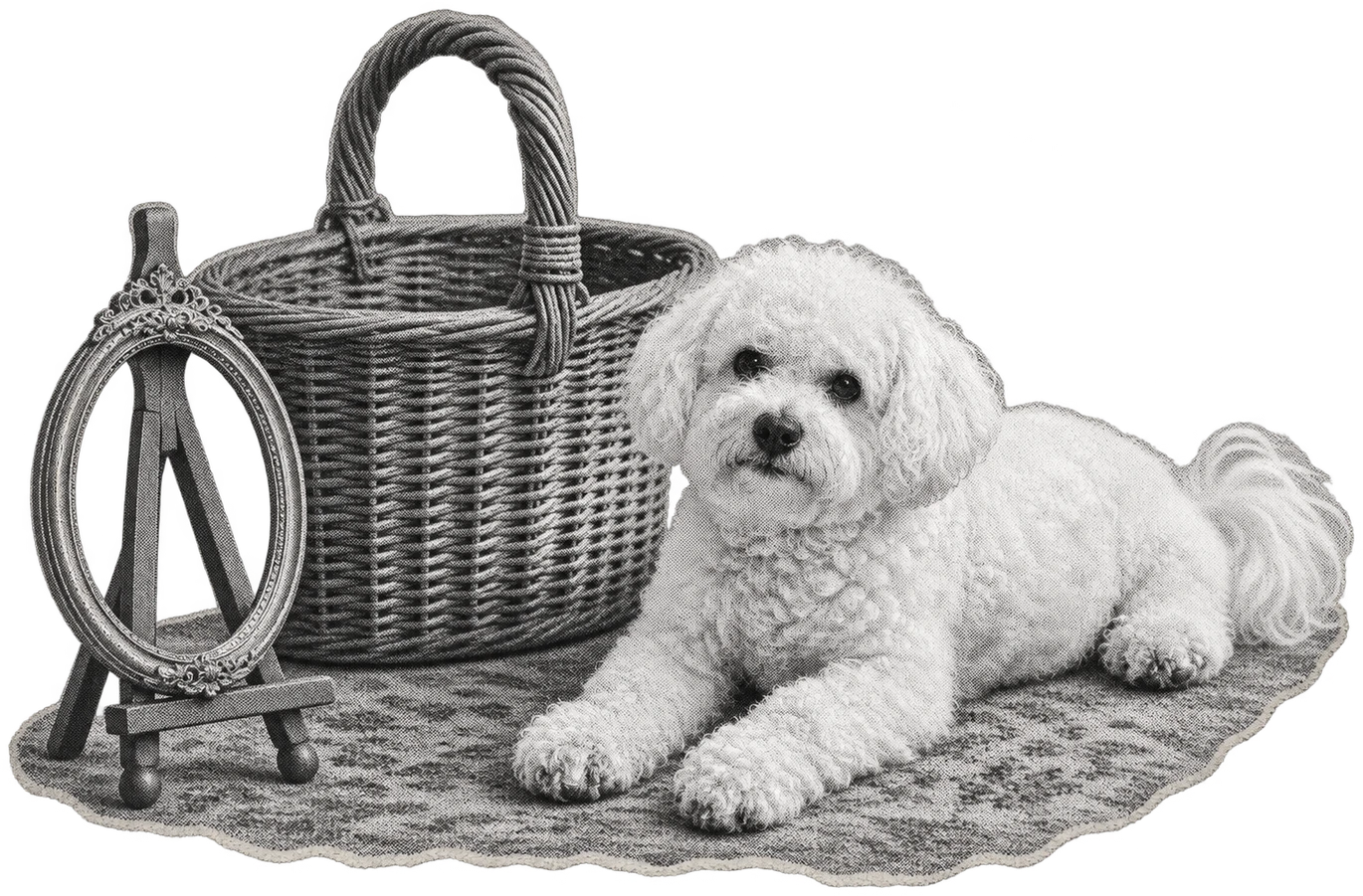
The Bichon Frise is a small companion dog with a soft, tightly curled white coat. Those curls are a daily job, particularly underneath the harness and behind the ears, and a shorter haircut only makes the job easier. It doesn’t make it go away.
Jump to a section
The short version: the coat is part of the deal
A Bichon Frise is a little companion dog with a white corkscrew coat. You can give one an ordinary, fairly short walk and still have a bit of dog to look after when you get in. Run your fingers behind the ears and under the front legs. That’s where the coat can knot while the bits everyone sees are looking immaculate. If you like a small dog and can make time for both company and regular handling, there’s a lot to like. If your plan is to book a groom every few months and leave it at that, pick a different coat. 12
Bichon Frise notes / 01
What to see before you decide
| What the week needs | What to arrange |
|---|---|
| Coat time | Easy daily checks, brief combing and a groomer you can get back to regularly. |
| Time with people | Room to build independence gradually and a plan for workdays the dog can’t manage alone. |
| Ordinary dog life | Walks, sniffing, floor-level time with the family and enough space to move away from attention. |
| The downside | Regular coat care takes time and money. Tight mats are a welfare issue, not a styling choice. |
Names and recognition: the curls tell you less than you think
The Royal Kennel Club registers the breed as Bichon Frise in the Toy group. Bichon and Bichon Frisé are common versions of the name. The FCI calls it Bichon à poil frisé, recognises it as a French and Belgian breed, and puts it in Group 9. Bichon is also the name of a wider family, so a small white dog or a cross advertised as a “Bichon” might need a second question. 13
Bichon Frise notes / 02
What the name tells you
| Label | What it means |
|---|---|
| Royal Kennel Club | Bichon Frise, Toy group. |
| FCI | Standard 215, Group 9 Companion and Toy Dogs, Bichons section. |
| American Kennel Club | Recognised in Non-Sporting; that isn’t the UK group. 4 |
| Bichon Frisé | The accent doesn’t denote a separate breed or coat variety. |
| Cavachon, Bichon × Poodle, or Bichon cross | Ask for the actual parents if known. A cross is not a smaller edition of this breed and doesn’t inherit its exact coat or figures on demand. |
| Breed Watch | RKC Category 1, no additional breed-specific points for judges currently identified. A show classification, not a health certificate. |
| UK legal status | Bichon Frise is not on the prohibited-type lists. General dog-control law still applies. 56 and 78 |
Size and build: find the dog under the haircut
The UK show standard’s ideal height is 23–28 cm at the shoulder. The rounded outline you see in a photograph includes quite a lot of hair. Under it is a small dog with a tail carried up and curved over its back, and legs that should be able to get about freely. Check that eyes and muzzle stay clear after grooming and that the harness sits on the body, not just the outer layer of curls. 910
PDSA gives 4–7 kg as its general guide. The observed adult median in the 2019 VetCompass records is 8.3 kg. These are different things. A set of clinical records includes whatever condition dogs were actually in; it isn’t a breed target. Ask a nurse to show you where to feel for the ribs and waist through the coat, then use repeat weights for that dog. 21112
Bichon Frise notes / 03
Three different kinds of size figure
| Measure | Figure or method |
|---|---|
| UK show height | 23–28 cm at the withers, combined ideal; no separate UK numerical height by sex. |
| UK show weight | No numerical weight specified. |
| FCI show description, separate from the UK standard | 25–29 cm at the shoulder, with up to 1 cm above for males or up to 2 cm below for females if proportions are balanced; around 5 kg in proportion to size. Not a weight goal. 13 |
| Charity weight guide | PDSA 4–7 kg, not a measured range from a named cohort. |
| Observed adult weight | VetCompass 2019: median 8.3 kg overall, 7.7 kg female, 8.7 kg male. The 25,162 figure is Bichons of all ages in the cohort, not a count of adult weights. |
| Equipment | Measure the individual dog at the chest and neck for a harness; recheck after a significantly shorter cut. |
Coat, colours and grooming: don’t just brush the bits you can see
Put the comb where the knots start. Part the coat in a small area and check from close to the skin outwards, without gouging at the skin or tugging. Behind the ears, along the harness line, under the front legs and where the legs meet the body deserve a look. A brush skating over the top can leave you with a neat-looking dog and a solid knot you only find at the next groom. Ask the groomer to show you how to check the coat your dog actually has. 214
If the comb won’t pass, stop pulling. Don’t put scissors under a tight mat: it’s hard to tell where the fur ends and the skin begins. Ask a groomer about taking the coat shorter safely. If there’s pain, broken skin, smell or infection, speak to the vet. Build the routine out of short comfortable turns, not one wrestling match before each appointment. 1516
Bichon Frise notes / 04
Look beneath the white curls
| Job or question | Practical answer |
|---|---|
| Coat | Fine, soft corkscrew curls in the UK standard. The length in that show description is not a maintenance target for a pet. |
| Colour | UK standard white; cream or apricot markings accepted up to 18 months. Dark skin pigment can show under a white coat. The separate FCI description allows a slight beige tinge up to 10% of the coat before 12 months. 13 |
| Daily grooming | RKC says daily. Work in small sections, with brush and comb suited to the coat and a safe break when needed. |
| Professional trim | PDSA suggests every couple of months. Ask what interval suits this cut, the dog’s comfort and your home routine. |
| High-friction spots | Ears, armpits, legs and straps. Check after wet walks and before knots tighten. |
| Face and hygiene | Keep eyes clear, check for wet fur or trapped dirt and get advice if there’s discharge or soreness. White coat staining alone doesn’t tell you the cause. |
| Low shedding and allergies | Less visible hair on the rug isn’t an allergy guarantee. Dogs produce allergens in dander and saliva; discuss a known allergy before committing. 17 |
Temperament: see how long it takes to lie down again
A Bichon can be good company while you get on with things, but liking people and being able to spend time without them are separate skills. If you’re meeting a rescue, find out what happens when someone leaves the room or the house. There’s a difference between a dog who follows you into the kitchen and a dog who won’t eat or rest once you’re out of sight. Ask where it happened and how long they were left rather than taking “can be left” at face value. 1819
Pay attention to the second half of a greeting too. Can the dog go back to their bed when the visitor sits down? When a brush, harness or ear touch gets a new sharp response, get the dog checked for pain before treating it as a training problem. 2021
Bichon Frise notes / 05
Watch how they settle after hello
| What you see | What to do |
|---|---|
| Dog notices a visitor and moves away | Let them go. Reward settling and keep the resting spot out of the hallway. |
| Dog barks at the shared landing repeatedly | Change what they can see or hear where possible and practise at a time they can cope. |
| Dog changes how they react to touch | Check for pain and speak to your vet, especially if it happens around the ears, mouth or a particular leg. |
Training: sort the brush and the front door before the party tricks
Put the brush down beside you and let the dog see it before trying to get through the whole coat. Reward a moment of calm, then a brief easy stroke on a good day. Stop before the dog has to ask you twice. The same approach works for settling: practise while you’re reading, not halfway through a reunion in the hall. A spare minute done properly is enough to start. 1620
Bichon Frise notes / 06
Start with the brush and the door
| Skill | Start here |
|---|---|
| Grooming and teeth | One short, rewarded step at a time. Let the dog move away. Get advice if an area is painful. |
| Toilet routine | Get outside at predictable times and reward doing it in the right place. If living upstairs, work out the quickest safe trip outside before you need it. 22 |
| Recall | Practise in safe quiet space, reward return, then build distractions gradually. 23 |
| Settling alone | Work up from being comfortable with a brief departure, measure what the dog can cope with and arrange cover rather than pushing through distress. |
Exercise: a short walk can still be a proper walk
PDSA puts 30 minutes a day as a minimum in its breed overview; the Royal Kennel Club describes up to 30 minutes. They’re guidebook figures with different wording, not a pass mark or a cap. For a healthy adult, work out a routine with regular chances to go outside, sniff and move. A short loop where the dog can stop and look about might be worth more than squeezing in an extra lap past the bins. 2118
Take it easier if they’re growing, recovering or struggling and ask the vet what’s appropriate. A dog who keeps skipping on a back leg deserves a check, even if the stride looks normal again before you get your phone out. 24
Bichon Frise notes / 07
Plan a walk for this dog
| Situation | Adjust the plan |
|---|---|
| Healthy adult | Use walks for sniffing as well as movement. Add a little play and training and see how the dog settles afterwards. |
| Busy pavement or large dogs | Choose a quieter route or enough space to pass. A small dog doesn’t have to greet every dog that comes over. |
| Hot weather | Pick cooler conditions and shorten or skip an outing if needed. 25 |
| Changed movement | New repeated skipping, a limp or an unwillingness to walk needs veterinary advice, not a longer route to see if it goes away. |
Living with one: a flat is fine if you can actually get outside
A small dog fits into the flat. They still have to fit into the day. Try the toilet trip from your front door in your head, including the lift that occasionally doesn’t work. Set up a quiet sleeping spot away from landing noise and find somewhere you can brush the dog where they have firm footing. A floor mat and a few minutes before you get distracted are often more useful than a fancy grooming table. 114
If the dog has trouble being left, find out what they can do comfortably. Start short, use a camera privately if it helps you spot pacing or panting and get advice if it’s persistent. Good company doesn’t have to mean a day spent following you between rooms. 1926
Bichon Frise notes / 08
What a flat needs to work
| Home detail | A test worth trying |
|---|---|
| Front door | Can you receive a parcel without the dog getting onto the landing? Use a gate or room separation if needed. |
| Toilet routes | Is someone able to get the dog out when they need to go? Don’t rely on one big evening trip. |
| Wet-weather kit | Keep a towel and appropriate comb where they get used. Check the strap areas once dry. |
| Rest spot | Somewhere at floor level, easy to reach, where people don’t keep disturbing the dog. |
| Time alone | Find what the dog tolerates rather than using a breed-wide timer. Plan cover while you build up. |
| Mobility at home | Add grip on slippery turns and don’t keep encouraging a dog who is sore to jump on or off furniture. 27 |
Children, other pets and first-time owners: keep greetings down on the floor
A Bichon looks easy to pick up. That’s why it’s worth teaching children to leave the dog on the floor and let it choose to move off. Supervise actively or separate when you can’t. Keep visitors from crowding the bed or playing with the dog while it eats. If you’re introducing a cat, give the cat a way to leave without running past the dog. One calm meeting in the rescue doesn’t settle how two animals will get on at home. 2829
As a first dog, it can work if you have the time, the grooming budget and a realistic plan for leaving them. Ask whether existing skin, dental or handling problems will affect that plan. 302
Bichon Frise notes / 09
Make room for a quiet exit
| With whom | Best starting point |
|---|---|
| Children | Adults supervise or use barriers. No lifting as part of play. Keep eating, grooming and rest separate. |
| Cats | A gradual introduction, barriers and escape routes. Don’t use a chase to test compatibility. |
| Other dogs | Space, separate food, and room for both to walk away. Take care around rough size-mismatched play. |
| First-time owner | Book a groomer who can demonstrate handling and a vet who can cover teeth, ears and knees without overloading the dog in one visit. |
Health: look in the mouth, listen for head shaking
The comfortable dog matters more than the nice haircut. New breath smell, an ear they won’t let you touch, regular skipping behind or persistent scooting is information for your vet. You don’t have to name the disorder first. A short note or a video of what happened naturally can help; don’t provoke pain or delay a call to get it. 312132
Bichon Frise notes / 10
Recorded conditions and screening
Recorded conditions and lifespan context
What UK records found. These are recorded diagnoses in past clinical samples, not a table of everything that happens to the breed. The two 2016 rows draw on the same 22,333-dog VetCompass sample for different outcomes. Their Bichon counts are separate outcome counts, not independent samples or a number of unique affected dogs you should add.
| Condition | Bichon finding | How to read it |
|---|---|---|
| Periodontal disease | 60 of 336 Bichon Frises (17.9%, calculated from published counts) in the 2016 UK sample. Adjusted odds ratio 1.67 vs crossbred dogs (95% CI 1.21–2.30). | Gum-support disease recorded within one year. Relative odds aren’t the same as the percentage affected. 33 |
| Outer-ear inflammation, or otitis externa | 33 of 336 Bichon Frises (9.8%, calculated from published counts) in the 2016 UK sample. Adjusted odds ratio 1.49 vs crossbred dogs (95% CI 1.02–2.18). | Recorded external ear disease, not necessarily yeast, bacterial infection or a particular cause. The confidence interval is wide. 34 |
| Non-cancerous anal-sac disorders | Bichon Frise one-year prevalence estimate 7.29% (95% CI 5.40–9.19) in 2013 UK primary care. Adjusted odds ratio 1.63 vs crossbreds (95% CI 1.21–2.20). | Whole study frame was 104,212 dogs of all breeds. The study verified a subset and accounted for that in the prevalence estimate; its modelling counts aren’t the raw numerator for this percentage. 35 |
| Non-traumatic patellar luxation | 3.8% (95% CI 2.5–5.0) in 2,839 dogs coded “Bichon” in English VetCompass records from September 2009 through August 2014. Adjusted odds ratio 3.0 vs crossbreds (95% CI 2.0–4.4). | Reported prevalence over that study period, not an annual or lifetime estimate. The study recorded the breed as “Bichon”. 36 |
| Lifespan and uncertainty | What we know |
|---|---|
| Median survival, UK multi-source 2024 study | 12.5 years (95% CI 12.3–12.7) for recorded Bichon Frises. It describes a study population, not the time left for an individual dog. 3738 |
| Eye conditions and urinary stones | Useful things to discuss with your vet; no UK breed-wide rate for cataracts or stones used here. A lab series of submitted stones can describe the stones received, not how often dogs develop them. |
Eight things you can act on
Teeth and gums
Bad breath, bleeding gums, a changed way of chewing or dropping food means book a vet check. A dog may still eat with mouth pain. Ask the vet or nurse how to introduce daily brushing with dog toothpaste once the mouth is comfortable. 31
Outer-ear disease
Repeated shaking, smell, redness, discharge or pain needs a prompt appointment. Don’t use leftover drops, pluck hairs or put cotton buds into a sore ear. Head tilt or loss of balance warrants same-day advice. Ask about underlying causes if it keeps happening. 21
Anal-sac problems
Repeated scooting, licking or discomfort around the bottom needs a check. A painful swelling, blood or discharge deserves prompt advice. Several problems look similar; don’t make gland emptying a standing grooming job without a veterinary plan. 3940
A slipping kneecap
Tell the vet if you see recurring skipping, briefly carrying a hind leg or lameness. Don’t manipulate the leg yourself. Call straight away if they’re in severe pain or can’t bear weight. 24
Cataracts and other eye changes
Cloudiness can have more than one cause. Ask the vet about a change in vision or appearance. Sudden sight loss, a painful red eye or marked squinting needs immediate advice. Don’t use human eye drops. 4142
Urinary trouble, including stones
Blood in urine, straining, more frequent trips or new accidents warrant a call. If the dog strains repeatedly and cannot pass urine, call the emergency vet straight away. Don’t change food or restrict water to treat a suspected stone at home. 43
Skin hidden by the coat
Look for repeated licking, itch, redness and painful mats. Get professional help for a tight mat and veterinary advice if the skin is sore or the itch persists. Don’t assume staining or a knot proves an allergy. 1544
Weight moving away from normal
Check ribs and waist beneath the coat and record repeat weights. Count training treats in the day’s food. Ask your vet about unexplained loss or gain instead of adjusting to a number from a breed chart. 12
Screening before breeding
| Screening before breeding | What to ask for |
|---|---|
| RKC Good Practice | BVA/RKC/ISDS Eye Scheme for parents. Ask for both dogs’ dated certificates and confirm the identity on them. 4546 |
| RKC Best Practice additions | No separate Bichon entry in that column at this check. Don’t label knees, hips or a DNA panel official additions on the strength of an advert or another country’s scheme. |
| Family health | Ask separately about knees, eyes and other known problems in close relatives. Clinical eye screening helps breeding decisions; it doesn’t guarantee a puppy’s future eyes or diagnose today’s red eye. |
| Registration restrictions | Royal Kennel Club breed page says no additional breed-specific restrictions currently in place. General rules still apply. |
What it costs: the haircut is a recurring bill
PDSA’s 2024 small-dog basket comes to £415 setup and £69 a month; its Bichon page says £70 a month minimum after purchase and setup. These aren’t tariffs and neither tells you the cost of regular Bichon grooming. Ask the groomer what a normal pet trim includes and what happens if the coat comes in matted or the dog needs shorter appointments. Then check whether your policy covers dental disease and what counts as pre-existing. The cheapest monthly number may not be cheap after a few ear visits. 472
Bichon Frise notes / 11
Add grooming to the budget
| Budget line | How to price it |
|---|---|
| Initial kit | Fit harness, bed and travel restraint to the dog. Get a suitable brush and comb demonstrably usable on this coat. |
| Grooming | Ask a local groomer for a normal price, visit frequency and any extra work for a matted coat. No national Bichon quote found. |
| Day-to-day | Ask what food and realistic cover will cost. Routine care and insurance are already included in PDSA’s monthly basket. |
| Insurance | Check dental exclusions, excess and limits; explain known medical history accurately. |
| Unplanned treatment | Keep the out-of-hours number and know how the practice deals with payment. Budget separately for what cover excludes. |
| Purchase or rescue | No reliable current UK breed-wide purchase price used. The organisation you actually use can give its fees and inclusions. |
Where the breed came from: the basket came later
The Royal Kennel Club places the Bichon among the little companion dogs of the Mediterranean. It reports a possible Tenerife connection and describes dogs taken to mainland Europe, eventually finding a place with French nobility. The international standard treats France and Belgium as the breed’s countries of origin. Those are accounts of development and recognition, not proof of where an individual founder dog came from. 113
The FCI records definitive acceptance on 28 October 1959. Its history names Pitou, born in 1924 and entered in Belgium’s studbook in 1932, and Ida, the first entry in the French studbook in 1934. Those are documented registrations, not the first two Bichons. Modern show grooming has made the outline more stylised. For your dog, the sensible choice is the cut they can be comfortable wearing and you can keep clear down to the skin.
Bichon Frise notes / 12
What the records say about the breed
| Historical detail | What’s supported |
|---|---|
| Region | Mediterranean family; possible Tenerife link according to the RKC. Exact early route uncertain. |
| Modern breed | France and Belgium in the FCI register. Definitive FCI acceptance in 1959. |
| Show outline | Royal Kennel Club distinguishes the breed’s underlying curly coat from stylised show presentation. |
Getting one: take a look at the grooming notes
A rescue can often tell you the length of coat the dog copes with and what happens at bath time or when left. Ask what actually happened at the last appointment and what they know about ears, teeth and eyes. A visit with the dog on the floor tells you far more than being handed a recently clipped dog for a cuddle. Bichon Frise Rescue UK and Dogs Trust are places to look; availability and matching vary. 4849
With a puppy, meet them with their mother where they were raised. Ask for named eye certificates, the family health history and actual examples of early handling. Give yourself time to check those after the visit. A promise that a coat won’t cause allergies isn’t evidence and isn’t a reason to pay extra. 5046
Bichon Frise notes / 13
Questions to ask before bringing one home
| Stage | Ask or check |
|---|---|
| Before collection | Eye certificates where relevant, vet records, chip details and what the dog eats. For rescue, ask what’s observed versus unknown. |
| First few days | Register with a vet, update chip keeper details and ask about Northern Ireland council dog licensing if applicable. Get short grooming practice into the existing routine. 5152 |
| Already at home | Notice where the first knot forms, check what size harness fits after the trim and book a check for a problem you’ve been putting off. |
Sources
- F1Royal Kennel Club breed guideReference · checked 20 November 2026
- F2PDSA breed guideReference · checked 20 November 2026
- F3FCI nomenclatureReference · checked 20 November 2026
- F4AKC registry historyReference · checked 20 November 2026
- F5England and WalesReference · checked 20 November 2026
- F6ScotlandReference · checked 20 November 2026
- F7XL Bully rulesReference · checked 20 November 2026
- F8Northern IrelandReference · checked 20 November 2026
- F9Royal Kennel Club standardReference · checked 20 November 2026
- F10Dogs Trust harness fitReference · checked 20 November 2026
- F112019 VetCompass, Table 1Reference · checked 20 November 2026
- F12PDSA body conditionReference · checked 20 November 2026
- F13FCI Standard 215Reference · checked 20 November 2026
- F14Blue Cross groomingReference · checked 20 November 2026
- F15Blue Cross skin and ear careReference · checked 20 November 2026
- F16Dogs Trust handlingReference · checked 20 November 2026
- F17UK allergy guidanceReference · checked 20 November 2026
- F18Dogs Trust Bichon guideReference · checked 20 November 2026
- F19Dogs Trust alone timeReference · checked 20 November 2026
- F20Dogs Trust settle trainingReference · checked 20 November 2026
- F21PDSA ear problemsReference · checked 20 November 2026
- F22Dogs Trust toilet trainingReference · checked 20 November 2026
- F23Dogs Trust recallReference · checked 20 November 2026
- F24PDSA kneecap guidanceReference · checked 20 November 2026
- F25PDSA hot walksReference · checked 20 November 2026
- F26PDSA separation anxietyReference · checked 20 November 2026
- F27PDSA arthritisReference · checked 20 November 2026
- F28Dogs Trust child safetyReference · checked 20 November 2026
- F29Dogs Trust cats and dogsReference · checked 20 November 2026
- F30Dogs Trust choosing a rescue dogReference · checked 20 November 2026
- F31PDSA dental diseaseReference · checked 20 November 2026
- F32PDSA limpingReference · checked 20 November 2026
- F33VetCompass, Tables 1 and 3Reference · checked 20 November 2026
- F34VetCompass, Tables 1 and 3Reference · checked 20 November 2026
- F35VetCompass, Figure 1 and Table 3Reference · checked 20 November 2026
- F36VetCompass, Tables 1 and 3Reference · checked 20 November 2026
- F37McMillan et al.Reference · checked 20 November 2026
- F38Breed tableReference · checked 20 November 2026
- F39PDSA blocked anal glandsReference · checked 20 November 2026
- F40Blue Cross basic careReference · checked 20 November 2026
- F41PDSA cataractsReference · checked 20 November 2026
- F42PDSA eye signsReference · checked 20 November 2026
- F43PDSA bladder stonesReference · checked 20 November 2026
- F44PDSA itchy skinReference · checked 20 November 2026
- F45RKC Health StandardReference · checked 20 November 2026
- F46BVA Eye SchemeReference · checked 20 November 2026
- F47PDSA cost basisReference · checked 20 November 2026
- F48Bichon Frise Rescue UKReference · checked 20 November 2026
- F49Dogs Trust adoptionReference · checked 20 November 2026
- F50Defra buyer guidanceReference · checked 20 November 2026
- F51UK chip guidanceReference · checked 20 November 2026
- F52NI licensingReference · checked 20 November 2026
Five original generated photo-first editorial newspaper cutouts. These are not photographs documenting individual dogs or medical examples.
