Breed guide / Bernese Mountain Dog
Living with a Bernese Mountain Dog
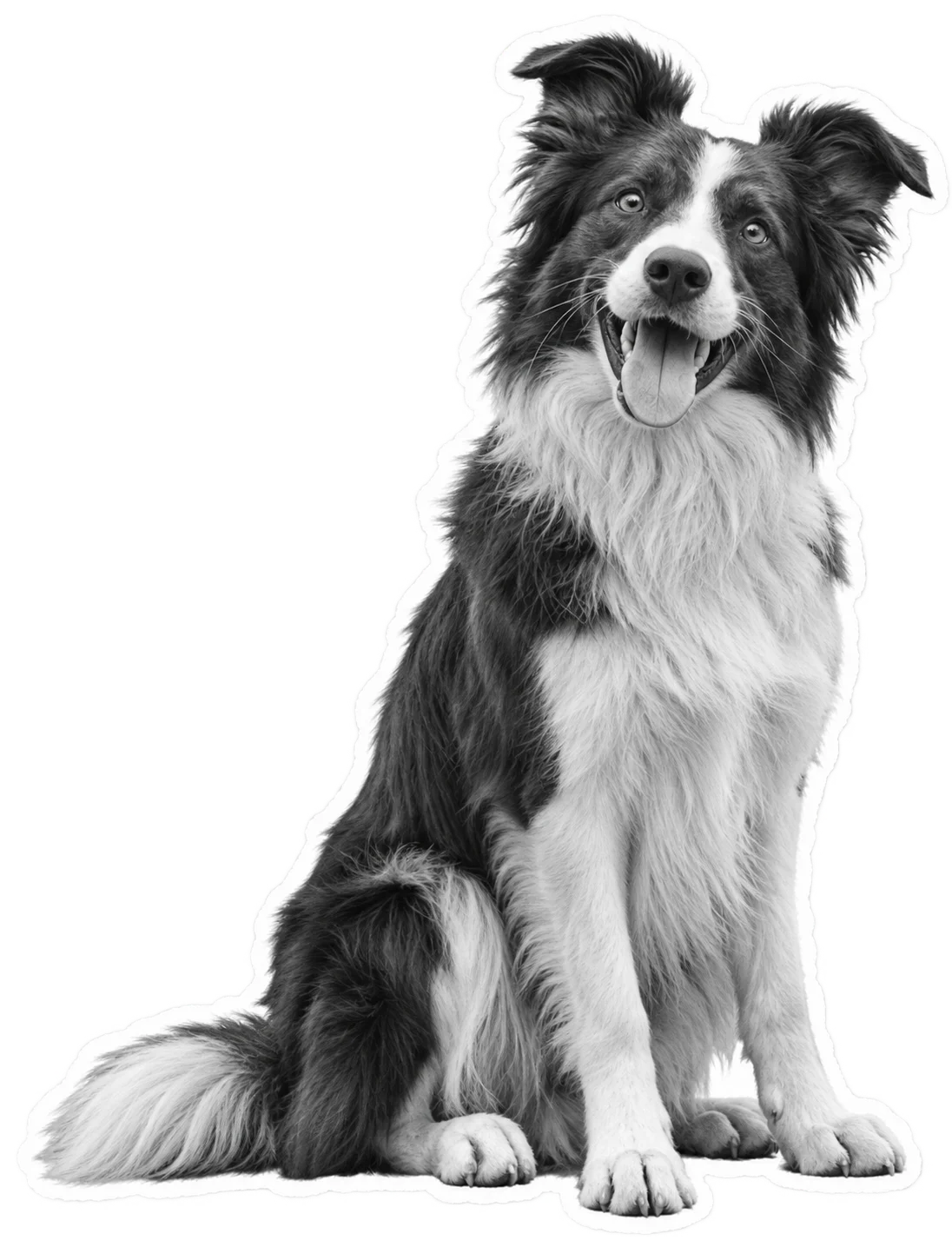
The Bernese Mountain Dog is a big Swiss farm dog with a thick tricolour coat. It’s the sort of dog that can look perfectly settled while taking up the only bit of hallway you need. Teach them how to walk beside you while they’re still easy to steer, make room for them to cool down when it’s warm and get to know what a normal day looks like for yours. You’ll spot changes much sooner that way. 12345
Jump to a section
The short version
If you’ve got a young Berner, put some time into loose-lead walking before they learn that leaning forward gets them to the next tree. Practise away from exciting smells first. A good lead doesn’t do the teaching for you, and by the time you’ve got both feet planted it’s already a bit late. 1 3
Keep a sense of what’s normal for your adult. If they usually get straight up for breakfast and start taking a while to stand, jot down when you noticed it. Don’t write off a new limp or a loss of appetite as a dog growing older. 4 6 7
Bernese Mountain Dog notes / 01
Start before they get big
| Start here | What to try |
|---|---|
| Walking | Reward a slack lead on a quiet stretch, before you try it somewhere busy. 3 |
| Warm weather | Move the walk earlier and let them rest in a cool part of the house later. 5 |
| Weekly once-over | Part the hair and check what you can’t see through the coat. 4 |
| New changes | Note when it started and tell the vet if there’s a new limp, a lump or unexplained weight loss. 6 7 8 |
What the name actually means
Berner is just a nickname for Bernese Mountain Dog, from the area around Bern in Switzerland. The Royal Kennel Club lists it in its Working group. A Great Swiss Mountain Dog is a separate breed, not an extra-large Bernese. For health records, use the precise breed name rather than a description that sounds close enough. 1 2 9
A big dog in a normal house
The UK breed standard gives heights of 64–70 cm at the shoulder for males and 58–66 cm for females. It describes the preferred size for the breed. Your dog is the one who has to fit in the car and turn on the landing, and neither of those gets wider if you wave a breed standard at it. 2 12
Feel under the coat for the ribs and look at changes in their waist from above. The hair can make it hard to judge, so ask the vet to show you how to check their body condition in person. If a growing puppy always looks hungry, follow your vet’s plan for their food rather than topping up the bowl every time you get the look. 1 13 14
Bernese Mountain Dog notes / 03
Make room for the dog
| Where the size matters | What to measure or check |
|---|---|
| Boot and car | Whether they can get in securely and have room to rest in the travel set-up. 12 |
| Walking kit | Measure the chest and watch the fit of the harness while they move. 3 |
| Body condition | Get the vet to show you how to check it through a thick coat. 1 13 |
The coat will be in places the dog has never been
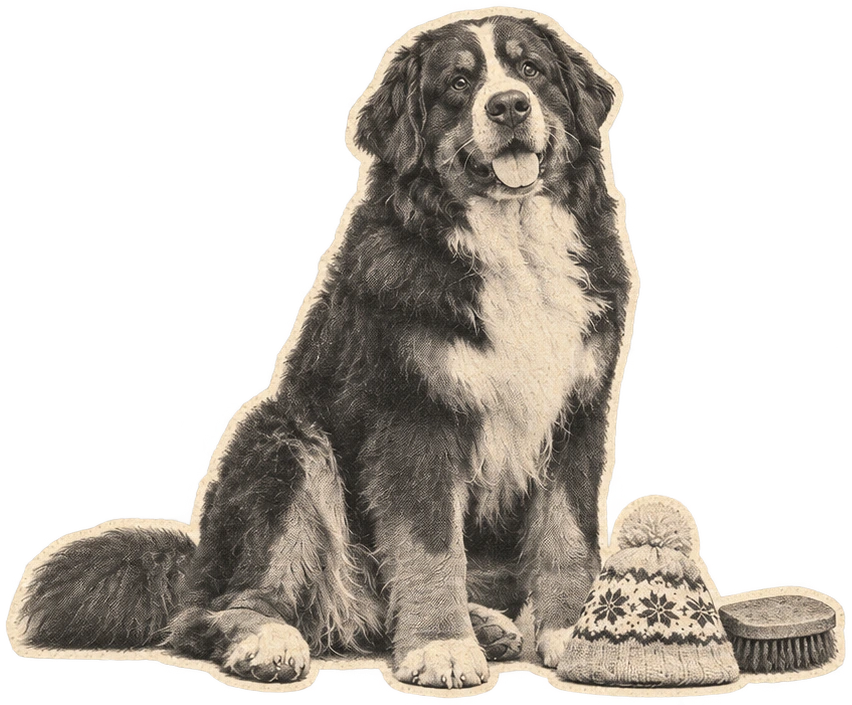
Bernese have a long coat and they shed heavily. Brush small sections so that you can see what’s underneath, working particularly around the back of the ears and the long feathering on the legs. The tufts that end up in your socks are irritating. The stuff you’re trying not to miss is the damp knot that stays on the dog. 1 15
After a wet outing, towel off where the harness sits and check the skin when you part the hair. Don’t battle with a tight knot against the skin. Ask a groomer about mats and have a vet look if there’s a sore patch, persistent itching or a lump you haven’t felt before. 4 8 15
Bernese Mountain Dog notes / 04
Coat and skin checks
| Coat check | Useful habit |
|---|---|
| Ear and neck hair | Check below the surface, particularly where the collar or harness rubs. 4 15 |
| Feathering | Work in sections. Stop at a tight mat and get help instead of dragging a brush through it. 15 |
| When wet | Towel dry and look for grit held against the skin. 4 15 |
| Changes underneath | Phone the vet about sore skin or a new lump. 4 8 |
Friendly still needs a bit of room
People often describe the breed as affectionate. That doesn’t tell you what your dog thinks of someone reaching over their head. Ask visitors to give them space to come over on their own. If they choose to stand back, get on with the visit without making the dog its main event. 1 16 17
For a dog that rushes to meet people, practise a quieter version with someone they know and a gate between you. Reward what you want while they’re still calm enough to notice. If you always wait until they’re halfway onto a guest’s lap, you’re giving yourself the hardest possible lesson. 16 18
Bernese Mountain Dog notes / 05
Leave room to say no
| What’s happening | Where to start |
|---|---|
| Backs away from people | Give them more space and let them choose whether to approach. 16 17 |
| Charges out to greet | Use a barrier and rehearse with a familiar visitor at lower excitement. 16 |
| Sudden grumpiness with handling | Stop the handling and speak to the vet about possible pain. 4 17 |
Teach the useful stuff first
On a quiet road, pay for two or three steps with a slack lead and stop for a sniff. Build from there. If pulling takes over every time you leave the house, make the practice location easier rather than repeating the same wrestling match by the front gate. 3 18
Teach a turn cue without a dog coming the other way. Turn with them and reward when they follow. Later, it gives you a way to move on without having to pull half a sofa’s worth of dog round by the harness. At home, let them find a toy hidden at floor level if they fancy another job. 19 20
Bernese Mountain Dog notes / 06
The useful skills
Walk the dog you’ve got, not the mountain on the label
Your adult doesn’t need a summit on every walk. Build up uneven ground or longer outings gradually and watch how they move later that day and the next morning. For puppies, aim for activity they can manage comfortably with rests rather than taking them on the adult route from day one. If you have a dog with an existing joint issue, get specific exercise advice from your vet. 1 6 21 22
A thick coat and a large body make hot days worth planning around. Go early if it’s cooler, use shade and cut a walk short if it’s getting warm. If you suspect heatstroke, start cooling straight away and call your vet for urgent advice. Don’t put it down to a dog needing a sit. 5 23
Bernese Mountain Dog notes / 07
Walk and heat watch
| Outside | What to change |
|---|---|
| Warm day | Swap a sunny outing for a cooler time and have fresh water available. 5 |
| Open field | Use a long line on a harness until recall is dependable in that setting. 24 |
| Steep or uneven route | Build it up gradually rather than making it their first long walk. 21 |
| New stiffness | Stop the hard outing and ask the vet, particularly if they’re limping. 6 |
Make the house easier on them
A grippy runner through the route they use most can make more difference than a bigger bed in a room they never go in. Watch how they get up and turn. If a dog that used to manage fine is spreading their feet on the kitchen floor, change the surface and get the new difficulty checked. 6 25
Set up a resting spot where they can still see you without being in traffic. On a warm day that might be somewhere cooler than the family’s favourite corner. Teach short absences separately from the walking routine so you know they can relax, rather than guessing because they’re always quiet when you return. 5 26 27
Bernese Mountain Dog notes / 08
Give the feet some grip
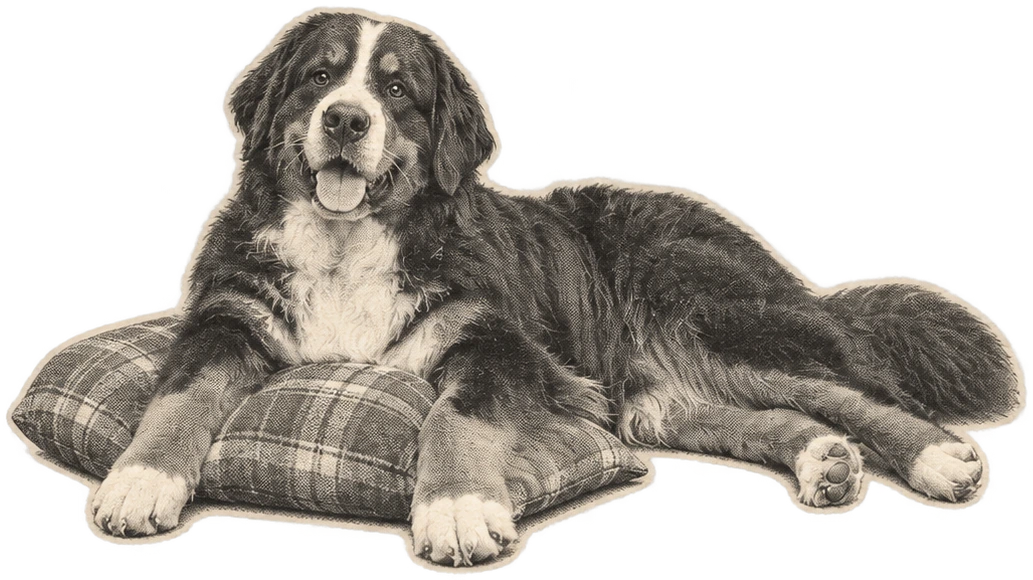
| Friction at home | A change to try |
|---|---|
| Turning on hard floors | Put a washable non-slip runner along their route and notice whether they move more easily. 25 |
| Resting in the middle of things | Give them enough room to stretch and keep foot traffic away from the bed. 26 |
| Worried when alone | Keep absences short enough to stay comfortable and get help if they’re distressed. 27 |
Children and other pets
A friendly dog can still knock a child over by backing up to get a better position for a scratch. Set up for both of them. An adult supervises when they’re together, and the dog gets an undisturbed place to eat and sleep. Take the pressure off well before somebody gets fed up. 1 28
Let a resident cat leave without having to walk around the dog. Use a barrier at first and provide somewhere high and quiet. With another dog, start with room to move away and avoid sharing a cramped feeding area before you know how comfortable they are. 29 30
Health
A 2024 UK study estimated a median lifespan of 10.1 years for Bernese Mountain Dogs (95% CI 9.8–10.4). It used records for 1,116 Bernese, including 449 recorded deaths. The median across all dogs in that study was 12.5 years. That’s a difference between groups in one set of records, not a timetable for the dog beside you. 31 32
Cancer is an important breed concern. The published UK breed health plan describes 186 British Bernese deaths voluntarily reported by May 2016. In that set, 42 were listed under “Histio” (22.6%) and 84 in a separate cancer category (45.2%). Those were the shares of deaths reported to that survey, not the odds a puppy will develop histiocytic sarcoma. A separate UK owner survey found a raised proportion of reported deaths from lymphoma in the breed. Lymphoma and histiocytic sarcoma are different conditions. 33 34 35
The Royal Kennel Club lists hip and elbow screening under Good Practice for breeding, with no additional measure in the Best Practice column for this breed. Separately, the UK breed club discusses degenerative myelopathy testing and a histiocytic sarcoma genetic index for breeding. The index cannot tell whether an individual dog has cancer or will get it. Have a vet assess new lumps, unexpected weight loss or a change in mobility rather than trying to interpret a breeding result against symptoms. 6 7 8 36 37 38
Bernese Mountain Dog notes / 10
Health conditions and screening
| Health topic | What it means in practice |
|---|---|
| Hips and elbows | Ask the vet about new lameness and check both parents’ named scores when considering a puppy. 6 36 39 40 |
| Histiocytic sarcoma | A significant breed cancer concern; the breed club’s selection index is not an individual diagnosis or prediction. 34 37 38 |
| Lymphoma | A distinct cancer. A new lump, appetite change or weight loss needs veterinary assessment, not a breed-based guess. 7 8 33 35 |
| Degenerative myelopathy | The breed club discusses separate DNA variants. Ask about named tests for the parents and see a vet for new hindlimb weakness. 6 37 |
| GDV or twisted stomach | Repeated retching without bringing anything up, sudden distress or a swollen abdomen can signal an emergency. Call the vet immediately if suspected. 41 |
| Heatstroke | Suspected heatstroke needs immediate cooling and urgent veterinary help. 23 |
| Limits | Lifespan, voluntary death reports and parent screening answer different questions. None predicts what will happen to your dog. 31 32 34 38 |
Budget for the dog after the puppy stage
A bigger dog changes what you spend on food and equipment, and it’s worth checking whether the local walker has space and experience with a dog that size. Take deposits and one-off purchases out of the calculation for a moment and work out what an ordinary month costs. Price the travel set-up with the car you’ve actually got. 12 42 43
Look at what your policy does with an ongoing condition as well as what it costs this year. Read the exclusions and excess and ask whether there’s a separate contribution towards the bill as the dog ages. Save the local urgent-care number before you need to work out where you’re going with a large, unwell dog. 41 42
Bernese Mountain Dog notes / 11
The grown-up budget
| Cost | What to find out |
|---|---|
| Food | Ask the vet how to feed and monitor their body condition as they change. 13 14 |
| Grooming | Ask what a full coat visit costs and how to maintain it at home. 15 42 |
| Support | Find a walker who can handle the dog you have, not just one with a space on Wednesday. 43 |
| Vet care | Check what you’d pay once the excess, limits and exclusions apply. 42 |
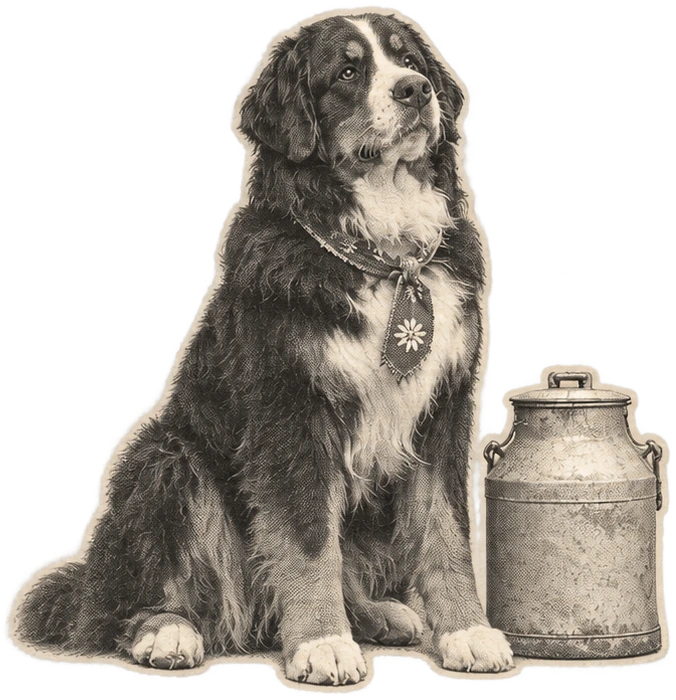
Why there’s a milk churn in the pictures
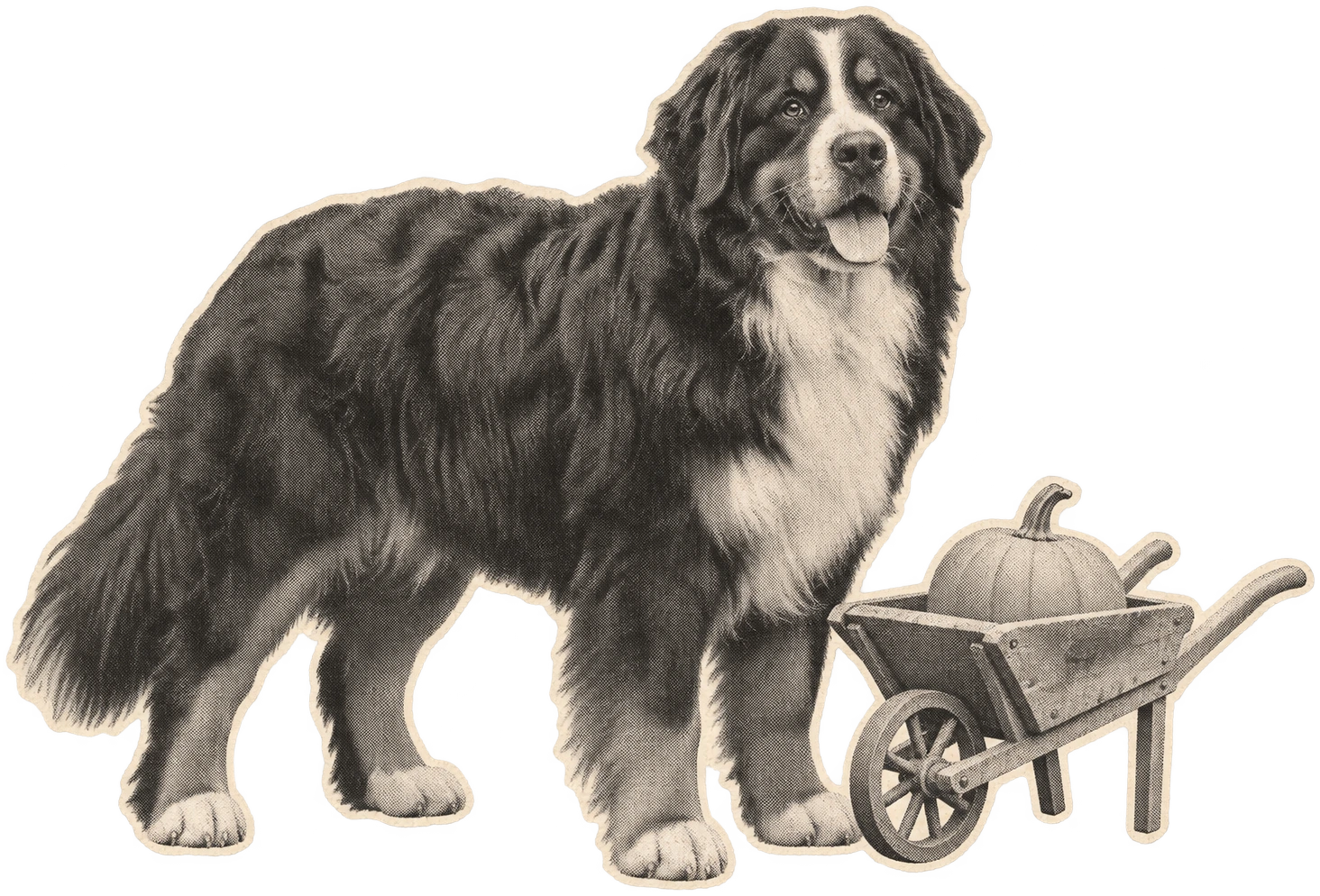
The breed’s Swiss history includes working on farms and pulling carts. The UK breed club’s historical account describes dogs taking milk and goods around the Bern region. Today the club still runs carting activities, but don’t hitch your own dog to a load on the strength of that history. A toy search will do fine if the only cart in your life is the supermarket trolley. 1 9 10 44
Bernese Mountain Dog notes / 12
Built for farm work
| Old job or modern label | What we know |
|---|---|
| Farm work | Breed histories describe varied work rather than a single job. 1 9 |
| Carting | The archive describes dairy and goods transport; there is current beginner guidance from the breed club. 9 44 |
| Working group | The UK registry places it here. That doesn’t describe your individual dog’s likes or strengths. 1 2 |
Bringing one into your particular home
For a rehomed adult, find out how they walk past other dogs and how they cope with the car and being brushed. If you can, see them on an ordinary walk with the rehoming team. Be honest about the stairs and the times you need to leave the dog alone. A good fit on a dull day is worth knowing about. 45 46
For a puppy, look at named parental results before a visit and meet the litter in the place where it’s being raised with its mother. Ask what the breeder knows about health and lifespan in close relatives. It’s a fair question even if the puppy has already fallen asleep on your shoe. 36 37 47 48 49
Bernese Mountain Dog notes / 13
See the evidence
| Ask about | An answer you can use |
|---|---|
| Joints | Named scores for both parents, with a way to check them. 36 39 40 48 |
| Wider health | Age and known causes of death in close relatives, plus the limits of any genetic index. 34 37 38 |
| Handling a big adolescent | How to get them walking with a slack lead and how to organise the house safely. 3 28 |
| Rehomed adult | What helps them settle, what they can manage on a walk and what they still find hard. 45 46 |
Sources
- S1Dogs Trust Bernese breed profile and UK owner adviceSource · checked 21 November 2026
- S2Royal Kennel Club Bernese Mountain Dog breed standardSource · checked 21 November 2026
- S3Dogs Trust safe leads and harness fitSource · checked 21 November 2026
- S4PDSA systematic at-home pet health checkSource · checked 21 November 2026
- S5Dogs Trust hot weather safetySource · checked 21 November 2026
- S6PDSA new limping, stiffness and veterinary helpSource · checked 21 November 2026
- S7PDSA advice on unexplained weight lossSource · checked 21 November 2026
- S8PDSA advice on lumps and tumoursSource · checked 21 November 2026
- S9Bernese Mountain Dog Club of Great Britain, Margret Bärtschi’s historySource · checked 21 November 2026
- S10Bernese Mountain Dog Club of Great Britain breed informationSource · checked 21 November 2026
- S11Royal Kennel Club Great Swiss Mountain Dog breed standardSource · checked 21 November 2026
- S12Dogs Trust safe travel and comfortable dog equipmentSource · checked 21 November 2026
- S13PDSA body condition and healthy dog weightSource · checked 21 November 2026
- S14PDSA puppy healthcare and growthSource · checked 21 November 2026
- S15PDSA grooming dogs with different coatsSource · checked 21 November 2026
- S16Dogs Trust preparing for visitorsSource · checked 21 November 2026
- S17Dogs Trust body language and consent signalsSource · checked 21 November 2026
- S18Dogs Trust positive reinforcementSource · checked 21 November 2026
- S19Dogs Trust walking around triggers and making spaceSource · checked 21 November 2026
- S20Dogs Trust practical hide and seek toy gameSource · checked 21 November 2026
- S21PDSA adapting exercise for the individual dogSource · checked 21 November 2026
- S22UK Bernese club puppy exercise contextSource · checked 21 November 2026
- S23PDSA heatstroke in dogs and emergency careSource · checked 21 November 2026
- S24Dogs Trust recall and use of long line and harnessSource · checked 21 November 2026
- S25PDSA non-slip flooring and mobility adjustmentsSource · checked 21 November 2026
- S26Dogs Trust quiet settle and mat trainingSource · checked 21 November 2026
- S27Dogs Trust gradual time-alone trainingSource · checked 21 November 2026
- S28Dogs Trust active supervision for children and dogsSource · checked 21 November 2026
- S29Dogs Trust safe cat and dog introductionsSource · checked 21 November 2026
- S30Dogs Trust introducing a dog to another dogSource · checked 21 November 2026
- S31Dogs Trust 2024 longevity table, exact Bernese Mountain Dog rowSource · checked 21 November 2026
- S32Original UK study, McMillan et al. (2024), scientific method and overall medianSource · checked 21 November 2026
- S33Original UK Kennel Club mortality study, owner survey of 2014, published 2018Source · checked 21 November 2026
- S34Royal Kennel Club Bernese Breed Health and Conservation Plan, historic Table 4Source · checked 21 November 2026
- S35PDSA lymphoma symptoms and diagnosisSource · checked 21 November 2026
- S36Royal Kennel Club Health Standard, Bernese Mountain Dog rowSource · checked 21 November 2026
- S37UK Bernese club health programme and test contextSource · checked 21 November 2026
- S38Antagene primary histiocytic sarcoma breeding index scope and limitsSource · checked 21 November 2026
- S39BVA Hip Dysplasia SchemeSource · checked 21 November 2026
- S40BVA elbow dysplasia schemeSource · checked 21 November 2026
- S41PDSA emergency GDV veterinary adviceSource · checked 21 November 2026
- S42PDSA typical dog ownership costs and insurance considerationsSource · checked 21 November 2026
- S43Dogs Trust how to choose a dog walkerSource · checked 21 November 2026
- S44Bernese Mountain Dog Club of Great Britain introductory carting contextSource · checked 21 November 2026
- S45Dogs Trust settling a rehomed dog at homeSource · checked 21 November 2026
- S46Bernese Mountain Dog Club of Great Britain rescue and rehomingSource · checked 21 November 2026
- S47RSPCA responsible puppy purchase and meeting the motherSource · checked 21 November 2026
- S48Royal Kennel Club Health Test Results FinderSource · checked 21 November 2026
- S49Bernese Mountain Dog Club of Great Britain sourcing a puppySource · checked 21 November 2026