
Breed guide / Basset Hound
Living with a Basset Hound
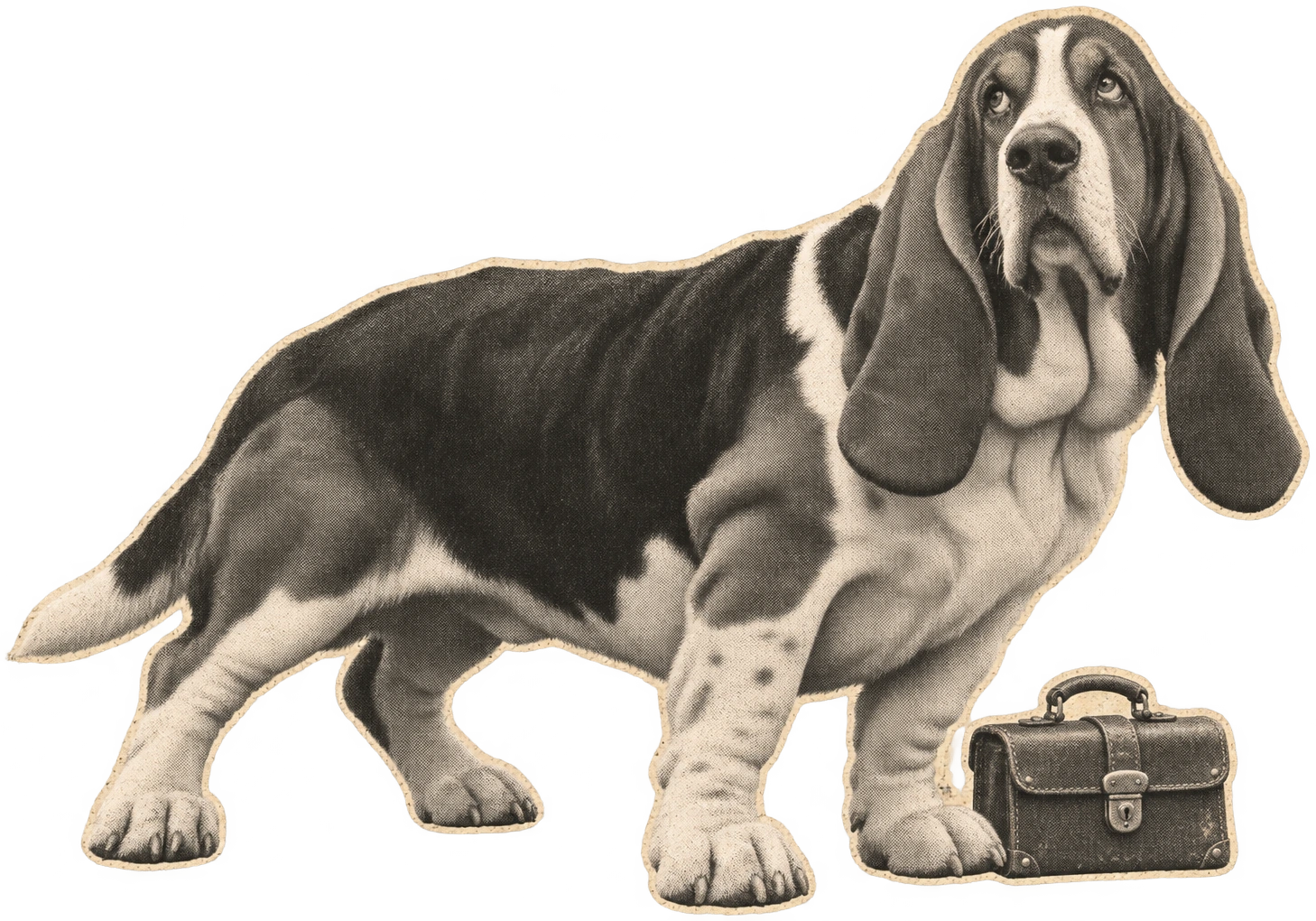
A Basset Hound is a substantial scent hound with short legs, long ears and the patience to work a smell until you’ve forgotten where you were going. The size is misleading: there’s a big dog to get in and out of the car, and a much better walker than the silhouette suggests. What pays off is a route with room to sniff, a quick ear check after the muddy bits and knowing which eye changes can’t wait. 12345
Jump to a section
The short version
Pick a quiet place where the dog can follow a scent without drifting towards a road. Turn back together while they can still pay attention; a Basset with their nose down isn’t a good first test of whether your recall works. 3 6 7
Afterwards lift each ear briefly and find out what’s normal for your dog. New smell, redness, discharge or repeated head shaking is a reason to ring the vet, not to keep washing it out. If an eye suddenly goes red or cloudy and the dog squints or seems in pain, call the vet immediately. 4 5 8
Basset Hound notes / 01
Where to start
| Start with | What helps |
|---|---|
| A route with room | Give them time to sniff without standing in the middle of a busy path. 3 7 |
| An ear check | Notice new smell, discharge, scratching or head shaking. 4 8 |
| Easier car access | Get them used to the ramp or low entry before it’s needed. 9 10 |
| A sudden painful eye | Call the vet immediately, including out of hours if needed. 5 11 |
Basset Hound is one name, not the whole Basset family
The Royal Kennel Club lists Basset Hound separately from the Basset Fauve de Bretagne and the Petit Basset Griffon Vendéen. That matters if you’re checking a health result: a word in common doesn’t make an eye test interchangeable between breeds. Take the dog’s full registered name or the rescue’s paperwork, not just what the photo looks like. 1 12 13 14
Basset Hound notes / 02
Use the full name
| Name on the paperwork | What it tells you |
|---|---|
| Basset Hound | This guide’s breed, with a short close coat and a substantial low build. 1 2 |
| Basset Fauve de Bretagne | A separate recognised breed with its own standard. 12 |
| Petit Basset Griffon Vendéen | Also a separate breed; don’t borrow its screening results. 13 14 |
Short doesn’t mean small
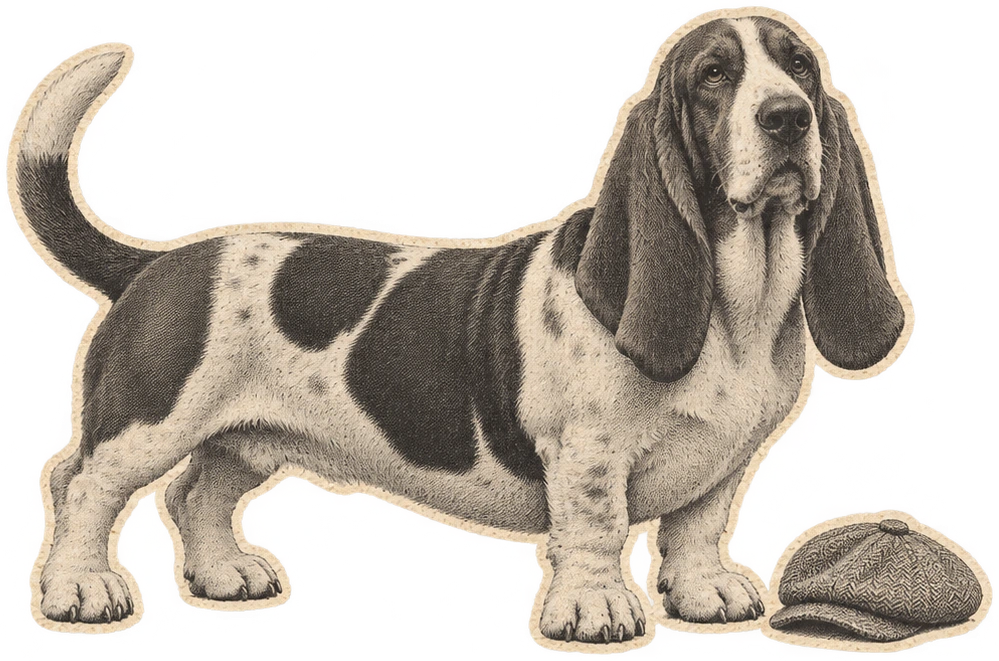
The written UK height is 33–38 cm at the shoulder. The standard also wants sufficient room under the chest to move freely on different ground. Look at the dog walking, not just posing: there should be room for the front legs to swing and space under the body. 2 15
Check your own dog’s ribs and waist by touch if you’re wondering whether the build is getting heavier. The right harness is the one that fits their actual chest and leaves their shoulders free; if straps sit near their elbows, watch it while they turn and walk. 16 17
Basset Hound notes / 03
Short, not small
| What to check | Why |
|---|---|
| Shoulder height | Use the UK standard for scale, not as an individual target. 2 |
| Clearance and gait | Watch whether they can stride without the chest almost skimming the ground. 2 15 |
| Ribs, waist and chest | Check body condition and buy kit by measurements, not a breed-size dropdown. 16 17 |
The short coat is the easy part
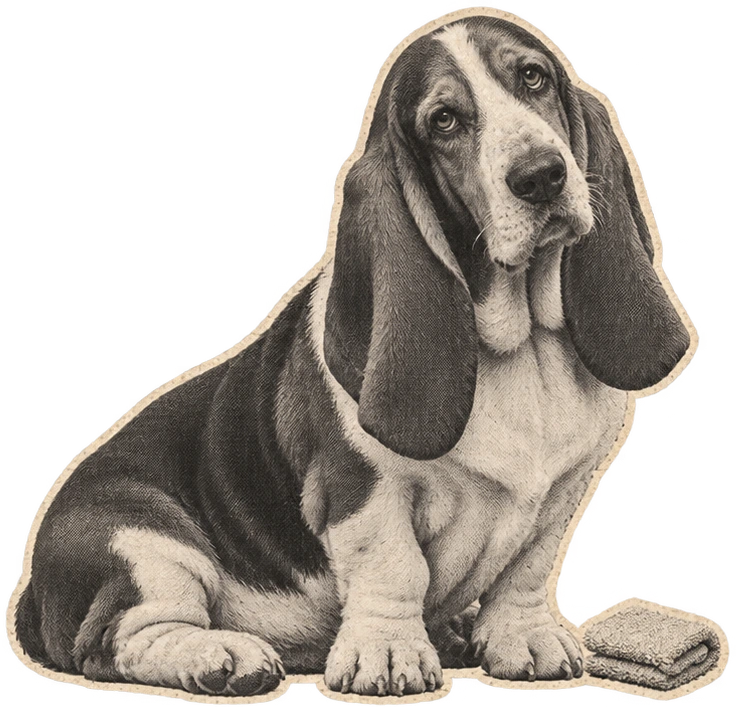
A soft brush is usually enough for the coat. The bits worth checking are the low chest, creases and the tips of the ears after a wet outing. A dry towel at the door helps; even a dainty stop at the water bowl doesn’t always end with dry ears. 2 3 18 19
Keep an ear check quick and gentle. If there’s a change, ask what your vet wants you to do before putting anything into the ear. Don’t poke a cotton bud into the canal. For a dog with repeat trouble, ask the vet to show you what a normal check looks like and whether they recommend cleaning at all. 4 8 20
Basset Hound notes / 04
Check the ears
| Area | The useful bit |
|---|---|
| Coat and chest | Soft brush, then look for damp or rubbing where they’re low to the ground. 2 18 19 |
| Ear tips | Wipe off dirt or water from the outside gently. 3 20 |
| Ear openings | Take a quick look; if sore, smelly or inflamed, contact the vet before cleaning. 4 20 |
| Skin creases | Look for new redness or discomfort when the dog is dry and relaxed. 15 19 |
Listen for when the noise happens
The breed was developed to work by scent. If your Basset bays, look at what’s happening just before it: a gate rattling, another dog arriving, the usual dinner preparation or you leaving the room. If the noise happens when you’re out, a recording is more useful than asking the neighbours how loud it was. 1 3 21 22
If the dog will eat, take a sniff break and settle once the trigger goes away, that tells you something different from a dog that paces or cannot settle alone. Get help early for distress, and for behaviour that changes sharply, speak to your vet rather than treating it as a new personality trait. 22 23 24
Basset Hound notes / 05
Hear the trigger
| When it happens | What to try first |
|---|---|
| Looking out at a familiar trigger | Move away from the view and reward a calmer choice. 21 24 |
| On a scent outside | Make a little space and practise a turn while they can still respond. 6 7 |
| Mainly when left alone | See what happens on a recording and ask for help if they’re distressed. 22 23 |
Give the nose something to do on purpose
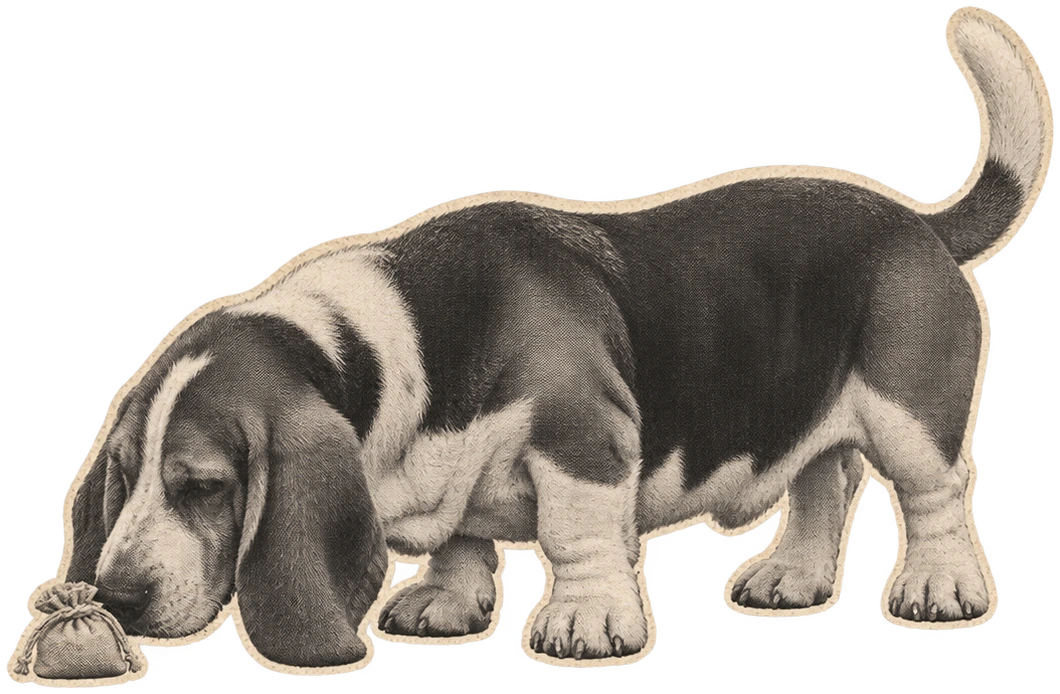
Let them find a few pieces of their own kibble in a clear patch of grass or a safe snuffle mat. Make it easy first so they learn where the game starts, and use some of the normal ration rather than loading every training session with extra food. If two dogs compete for it, run the game separately. 7 16 25 26
Practise turning, checking back, and coming when called separately from the search. Use a well-fitted harness and long line where there’s room to handle it, away from roads and livestock. When you get a head turn, pay it; you’ve won some attention, not the right to make the next exercise ten times harder. 6 17 27 28
Basset Hound notes / 06
Give the nose a job
A walk is more than mileage
PDSA suggests at least an hour a day for a healthy adult Basset, with room to sniff between the more purposeful stretches. Treat it as a starting reference, not a number to make a puppy, sore dog or older dog hit. A loop you can shorten is useful when they tire or the temperature changes. 3 7 29 30
If your dog starts lagging, repeatedly catches themselves on steps or takes longer to get up the next day, note what’s changed and ask your vet. Don’t compensate for stiffness by doing the same long outing a bit faster. 9 29 31
Basset Hound notes / 07
Plan the route
| Situation | Better bet |
|---|---|
| Fit adult on familiar ground | Regular movement and time to sniff, split up to suit them. 3 29 |
| Young, older or unwell dog | Adjust the outing to age, condition and veterinary advice. 7 29 |
| Hot weather | Cooler part of the day and an easy route back. 30 |
| New persistent stiffness or limp | Get advice; keep a note or short clip of what you see. 31 |
Work out the route from floor to boot
Try car access before you need to get a dog with sore legs to an appointment. A stable non-slip ramp can be easier for a heavy low dog than big jumps. Teach it on the ground first, use it at a manageable angle and never pull the dog up it. If they’re struggling, ask the vet about safe handling for their size and shape. 9 10 32
Put grip on the route from the resting spot to the back door if they skid, and check the gate from dog height. At dinner, watch where the ears actually land; being able to clear a bowl without soaking the ears every time is handy. 3 9 20 33
Basset Hound notes / 08
Floor to boot
Leave the ears alone
Children might be drawn to the ears, but they’re part of the dog, not handles. Keep an adult close when children and dog share the floor, or separate them if you can’t supervise. Leave the dog to eat and sleep without being followed. 24 26 34
Give other animals their own space and work with the dog in front of you. Being a scent hound tells you something about their interests, not how they’ll behave with your cat or the other dog when the food bag opens. 1 24 26 35
What those ear and eye results actually tell you
A VetCompass analysis published in 2021 used UK primary-care records from 2016. In the analysis, recorded outer ear inflammation had 5.87 times the adjusted odds for Basset Hounds compared with crossbreeds (95% confidence interval 3.26–10.57). That’s a comparison of odds in those records, not a percentage of Bassets that will get it or a forecast for your dog. If you notice repeat flare-ups, ask your vet to look for the reason rather than just keep switching ear products. 4 8 37
Basset Hounds have evidence of both primary open-angle and angle-closure glaucoma. An open-angle DNA result concerns a particular variant; it doesn’t clear the dog of all glaucoma. Gonioscopy looks at the eye’s drainage angle and is a separate clinical screening test. If an eye suddenly seems painful, cloudy, swollen or red, call the vet immediately rather than checking old paperwork. 5 11 14 38 39 40
For breeding dogs, the current RKC Good Practice list is eye examination and gonioscopy for pectinate ligament abnormality. Its added Best Practice tests are the two DNA tests for Lafora’s disease and primary open-angle glaucoma (POAG-3), plus elbow screening. Best Practice includes Good Practice; the breed club scheme is separate. The Dogs Trust 2024 table reports a median lifespan of 12.5 years, from 2,013 Basset Hound records, including 883 deaths. That’s population context, not a deadline. 1 14 41 42 43 44
Basset Hound notes / 10
Health conditions and screening
| Question | What to take from it |
|---|---|
| Itchy, smelly or sore ears? | Ring the vet, particularly if symptoms are new, painful or recurring. 4 8 |
| Painful or suddenly cloudy eye? | Call the vet immediately. Don’t wait for the next day. 5 11 |
| Good Practice parent screening? | Eye examination and gonioscopy under the BVA/RKC/ISDS scheme. 1 14 40 |
| Added Best Practice tests? | Lafora’s and POAG-3 DNA tests and elbow screening, alongside Good Practice. 1 14 41 |
| Does a DNA result replace gonioscopy? | No; it tells you about the relevant variant, not every cause of glaucoma. 38 39 40 |
| Changing gait or stiffness? | Get new or persistent changes assessed rather than blaming their shape. 15 31 |
| What about lifespan? | 12.5 years was the UK dataset median, not an estimate for an individual. 43 44 |
Price it as a big dog on short legs
The standing height won’t tell you what it costs to feed, transport or care for the dog. Check the actual measurements, ask about the cost of repeating an ear appointment and read what a policy does with conditions that have already shown symptoms. Get the out-of-hours details into your phone before you need them. 3 5 45
If somebody else walks your dog, ask what they do when the dog stops on a smell and how they handle roads. How much fine print is on the website is less useful than a walk together with your actual hound. 6 46
Basset Hound notes / 11
Price the real size
| Budget line | What to look at |
|---|---|
| Lead and harness | Chest fit and safe handling, not a label that says small. 17 |
| Routine and unexpected vet care | Ask about local fees, policy limits, waiting periods and exclusions. 45 |
| Walking help | Ask about solo versus group walks and where they use leads. 46 |
| Travel and floors | Price a safe route in or out if your home or car has a steep step. 9 10 |
A working hound before it was a face on a cushion
The Royal Kennel Club’s account traces the breed to French hounds and its development in Britain, where the Basset Hound Club was formed in 1884. The low build and scent work go together. That history isn’t a reason to make the dog lower or the skin looser than it needs to be. 1 2 15
The RKC places the breed in Breed Watch Category 3 for show monitoring from January 2025. Its watch points include insufficient clearance and exaggerated features that can affect welfare. It’s a way of monitoring conformation at shows, not a diagnosis handed out to every dog of the breed. 15 47
Basset Hound notes / 12
Scent-hound roots
Ask how the dog moves on a normal day
When adopting, ask how the dog gets into a car, whether ears or eyes have needed regular care and what the dog is like walking away from a smell. Ask to see them moving somewhere ordinary. If a puppy is the plan, see the litter with its mother where they’re raised and ask for dated, identifiable results for both parents. 14 48 49 50
Choose the dog whose everyday needs you can meet. The ears will look good in the first photo; knowing who checks them, who walks the dog on a wet evening and how everyone gets to the vet matters rather more the following week. 3 20 49
Basset Hound notes / 13
Ask about the routine
| Ask for | Why it’s useful |
|---|---|
| Daily routine and behaviour notes | Find out what already works on real walks and at home. 7 49 |
| Ear and eye history | Pick up an existing care routine and get your vet to check any concerns. 4 5 |
| Both parents’ screening documents | Check the dog, test date and result rather than trusting a general reassurance. 1 14 48 |
| A normal walk or an introduction | See how the dog moves and leaves something interesting. 2 7 49 |
Sources
- S1Royal Kennel Club Basset Hound profile, history and screeningSource · checked 21 November 2026
- S2Royal Kennel Club Basset Hound written breed standardSource · checked 21 November 2026
- S3PDSA veterinary Basset Hound owner guideSource · checked 21 November 2026
- S4PDSA veterinary signs of ear infectionsSource · checked 21 November 2026
- S5PDSA veterinary advice on glaucoma and urgent careSource · checked 21 November 2026
- S6Dogs Trust recall and long-line trainingSource · checked 21 November 2026
- S7Dogs Trust Basset Hound owner and rescue guidanceSource · checked 21 November 2026
- S8PDSA veterinary ear-problem signs and assessmentSource · checked 21 November 2026
- S9Canine Arthritis Management veterinary access and safe flooring guidanceSource · checked 21 November 2026
- S10Dogs Trust gentle car familiarisation and safe travelSource · checked 21 November 2026
- S11Royal Kennel Club eye emergencies and acute glaucomaSource · checked 21 November 2026
- S12Royal Kennel Club Basset Fauve de Bretagne separate standardSource · checked 21 November 2026
- S13Royal Kennel Club Petit Basset Griffon Vendéen separate standardSource · checked 21 November 2026
- S14Royal Kennel Club live central Health Standard and Basset Hound tier rowSource · checked 21 November 2026
- S15Royal Kennel Club Basset Hound Breed Watch Category 3 and points of concernSource · checked 21 November 2026
- S16PDSA body condition at homeSource · checked 21 November 2026
- S17Dogs Trust harness fitting and checking free movementSource · checked 21 November 2026
- S18PDSA veterinary grooming and coat maintenanceSource · checked 21 November 2026
- S19PDSA practical home health checksSource · checked 21 November 2026
- S20PDSA veterinary ear cleaning and when not to cleanSource · checked 21 November 2026
- S21Dogs Trust identifying barking triggersSource · checked 21 November 2026
- S22Dogs Trust introducing time alone, using a recordingSource · checked 21 November 2026
- S23Dogs Trust identifying and getting help for separation distressSource · checked 21 November 2026
- S24Dogs Trust canine body languageSource · checked 21 November 2026
- S25Dogs Trust safe enrichment and search gamesSource · checked 21 November 2026
- S26Dogs Trust resource guarding and separate feedingSource · checked 21 November 2026
- S27Dogs Trust managing chase behaviour and distractionsSource · checked 21 November 2026
- S28Natural England Countryside Code, controlling dogs around livestockSource · checked 21 November 2026
- S29PDSA tailoring activity to age and conditionSource · checked 21 November 2026
- S30Dogs Trust safe outings in hot weatherSource · checked 21 November 2026
- S31PDSA veterinary guidance for a new or persistent limpSource · checked 21 November 2026
- S32RSPCA South Australia canine college guide to using a car rampSource · checked 21 November 2026
- S33Dogs Trust checking boundaries and preventing escapesSource · checked 21 November 2026
- S34Dogs Trust children and dog supervisionSource · checked 21 November 2026
- S35Dogs Trust safer dog and cat introductionsSource · checked 21 November 2026
- S36Dogs Trust gradual introduction to another dogSource · checked 21 November 2026
- S37O’Neill et al. original VetCompass UK otitis externa study, 2021Source · checked 21 November 2026
- S38Oliver et al. original ADAMTS17 open-angle glaucoma variant researchSource · checked 21 November 2026
- S39Oliver et al. original Basset Hound primary closed-angle glaucoma researchSource · checked 21 November 2026
- S40Royal Kennel Club gonioscopy clinical screening explanationSource · checked 21 November 2026
- S41Royal Kennel Club elbow dysplasia screening schemeSource · checked 21 November 2026
- S42Basset Hound Health Group separate breed club certificate schemeSource · checked 21 November 2026
- S43Dogs Trust 2024 Basset Hound lifespan table and countsSource · checked 21 November 2026
- S44McMillan et al. original UK dog longevity studySource · checked 21 November 2026
- S45PDSA dog ownership costs and insuranceSource · checked 21 November 2026
- S46Dogs Trust finding a suitable walkerSource · checked 21 November 2026
- S47Royal Kennel Club announcement of January 2025 Breed Watch changesSource · checked 21 November 2026
- S48Royal Kennel Club health results finderSource · checked 21 November 2026
- S49Dogs Trust settling a rescue dogSource · checked 21 November 2026
- S50RSPCA buying a puppy and seeing mother with the litterSource · checked 21 November 2026
