
Breed guide / Australian Labradoodle
Living with an Australian Labradoodle
An Australian Labradoodle comes from a breeding project that took the original Labrador and Poodle cross several generations further. That’s why the name means more than “a Labradoodle born in Australia”. The dog in front of you might have loose waves or thick curls, and the difference matters when you’re trying to get a comb behind an ear. If you want to know what yours will be like to live with, start with their adult relatives and pay more attention to how they behave than to what it says on the paperwork. 123456
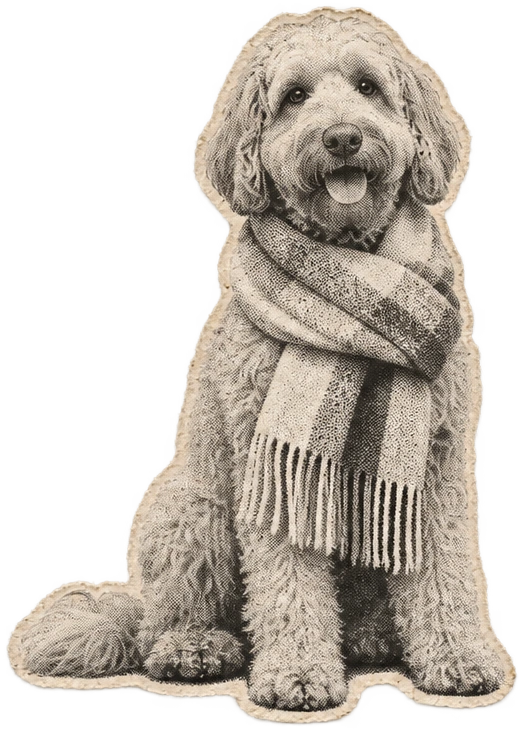
Jump to a section
The short version
Start with the comb. Part the coat behind an ear and see whether it goes smoothly from near the skin to the ends. If the surface looks beautifully brushed but the comb stops halfway, you’ve found the bit that needs attention. A shorter clip can make a lot of sense if your dog spends their Sunday in a ditch. 67
Ask to see proper family records if you’re buying, but if you already have the dog, take a week to notice what they actually do. Can they stay settled while you cook? Are they pulling towards every dog or trying to get away? That’s more useful to your next training session than knowing what percentage Poodle somebody thinks they are. 18910
Australian Labradoodle notes / 01
The first things to check
| Start here | Why it matters |
|---|---|
| Check the roots | A neat-looking coat can hide mats underneath. 67 |
| Get the adult measurements | Two dogs called Australian Labradoodle can be quite different sizes. 45 |
| Keep greetings optional | A dog should be able to walk past without having to say hello. 910 |
| Take allergies seriously | A coat that sheds less is not an allergy guarantee. 1112 |
What does the Australian bit mean?
A Labrador Retriever crossed directly with a Poodle is the original first-generation Labradoodle. Australian Labradoodle usually refers to developed lines with several generations behind them. The details can differ between associations, and putting the name on an advert doesn’t show which line the dog comes from. Ask for the pedigree and find out who issued it. 12313
The Worldwide Australian Labradoodles Association and Australian Labradoodle Association UK publish their own standards. They’re useful for finding out what those clubs mean, not UK regulation. The Australian Labradoodle doesn’t appear in the Royal Kennel Club’s published A to Z of recognised pedigree breeds. A club paper and a Royal Kennel Club pedigree are different things. 451314
Australian Labradoodle notes / 02
Check who issued the papers
| What you see | What it tells you |
|---|---|
| First-generation Labradoodle | A Labrador Retriever parent and a Poodle parent. 12 |
| Australian Labradoodle | A name used for a developed multigenerational line; check the records on this dog. 135 |
| Club registration | Check its issuing body and what it records; the name doesn’t mean the dog was born in Australia. 51314 |
Same name, different-sized dog
The Australian Labradoodle Association UK publishes three size bands. They’re club descriptions, not UK population averages and not a promise for any puppy. Ask for heights and weights from adult relatives of the same line if size matters to your home. An adult rescue dog takes most of the guesswork out of it. 415
Weigh and measure the dog you have before you order a harness or a travel crate. The number on the scales helps with kit, but it doesn’t tell you whether the dog is carrying too much weight. Your vet can show you where to feel for ribs underneath all that coat. 1617
Check the coat underneath the fluff
Fleece coats can be wavy or loosely curled; wool coats have more pronounced spiral curls. Take one patch at a time, lifting the hair so you can see where you’re working. A groomer can show you how to use a comb without pulling on the skin. Check the spots that rub, particularly where the harness sits. 567
Ring the groomer if you find a mat you can’t separate comfortably. Don’t get the kitchen scissors out: the skin can get pulled into a tight mat and it’s easy to cut it. A sore, red or weeping patch needs a vet, not more brushing. 6718
Australian Labradoodle notes / 04
Get right down to the roots
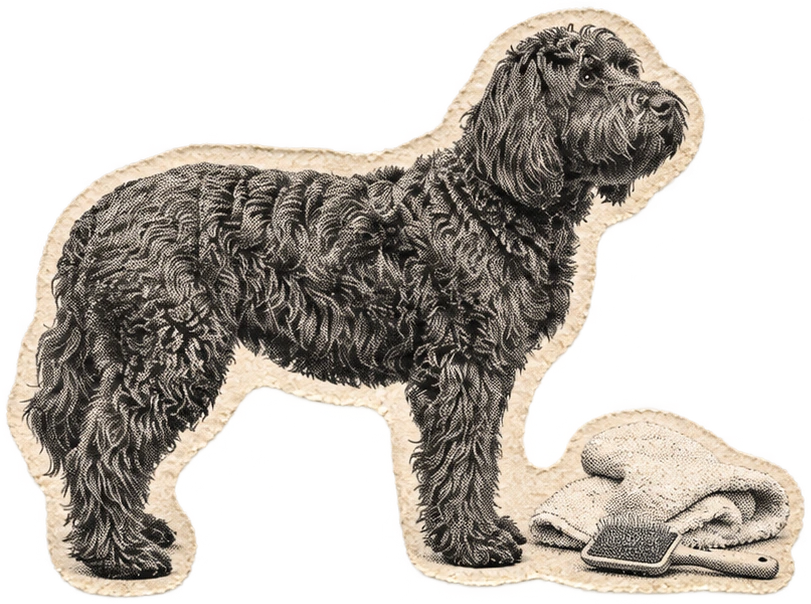
| Where to look | What to do |
|---|---|
| Behind the ears | Part the coat and check close to the skin rather than brushing over the top. 67 |
| Underarms and harness line | Look for tangles where the hair rubs. Ask the groomer if the same spot keeps matting. 67 |
| After a wet walk | Dry the dog well and check the legs and paws for debris or grass seeds. 619 |
| A coat that sheds less | It can still carry allergens. Don’t use a photograph or a coat label to make an allergy decision. 1112 |
How are they with people?
Club standards describe the kind of dog the clubs aim to produce. They won’t tell you how your dog will feel when the delivery driver knocks. Let your dog watch from a distance, and give them something to do on a mat if jumping up has become their standard greeting. If they back away, they don’t owe the visitor a cuddle. 591020
A UK study of dogs recorded as Labradoodles doesn’t make a prediction for this particular dog or for a separately verified Australian Labradoodle line. If a greeting gets noisy every time, note the point at which the dog stops taking a reward or can no longer disengage, and give them more room next time. Ask a qualified behaviour professional for help if it gets worse. 2122
Australian Labradoodle notes / 05
Read the actual dog
| What you notice | A useful response |
|---|---|
| Launches towards company | Practise four paws on the ground before the visitor comes within reach. 910 |
| Moves away from a hand | Let the dog go and ask the visitor to leave them alone. 20 |
| Stares and won’t turn away | Make space. Get qualified help if it keeps happening. 922 |
Teach a handover, not a chase
Find something your dog likes to carry. In a quiet room, offer something they’re happy to trade it for, reward the release and give the original item back when it’s safe. If giving it up always means seeing it vanish, you’re giving the dog a decent reason to take it behind the sofa. 2324
For a dog who gets animated at doors, practise the whole thing with nobody on the other side. Open it a little while they’re on the mat and reward them for staying there. The first time they learn what you mean shouldn’t be the day a visitor is standing in the rain holding your dinner. 102425
Australian Labradoodle notes / 06
Useful jobs for a normal day
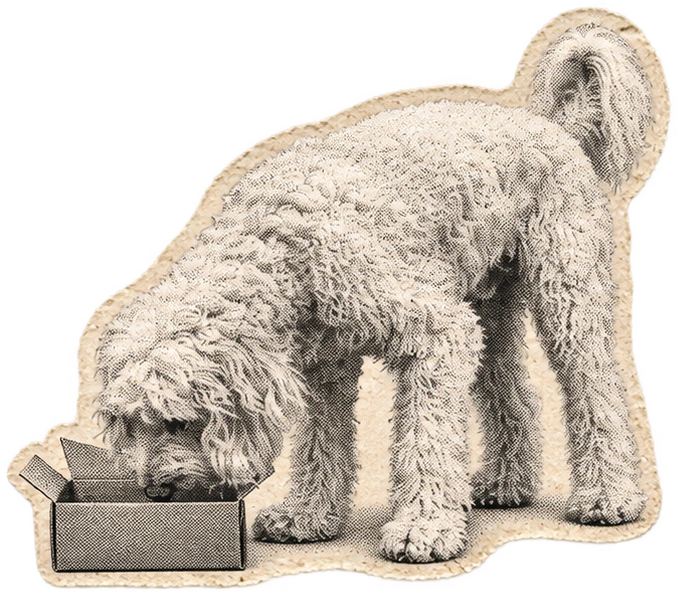
A walk where they can actually sniff
Build a walk to suit the adult dog you’ve got, rather than following an exercise allowance from the word “medium” on a chart. Watch how they move and how they recover, and check with your vet if an ordinary outing suddenly leaves them slow or stiff. For a young dog, build activity gradually. 162728
Try letting them investigate one safe grassy stretch properly instead of tugging past everything to finish the same loop. Watch overgrown seed heads in summer. If your dog comes back from long grass shaking their head or licking the same paw, ring the vet rather than poking about to see what you can find. 1929
Australian Labradoodle notes / 07
Keep the walk comfortable
| Situation | Change of plan |
|---|---|
| Crowded route | Use more space and practise passing without a greeting. 9 |
| Needs something to do indoors | Start an easy scent game with a bit of their normal food. 29 |
| Hot weather | Go out when it’s cooler and cut the walk short if needed. 30 |
| Repeated stiffness or limping | Talk to the vet rather than adding more walks to “loosen them up”. 28 |
Give them an off switch
If the dog follows you whenever you stand up, give them a place to lie where they’re not blocking the kitchen door. Reward a quiet moment and move around a little. It’s easier to teach that the kettle going on is none of their business when they’re already settled than when they’re fit to supervise the entire house. 2531
Build time alone at the pace your own dog can manage. A phone or camera can show whether they actually sleep or spend the whole time at the door. If they pace, pant or bark persistently while you’re gone, make the next absence shorter and get help. 2232
Australian Labradoodle notes / 08
A place to rest
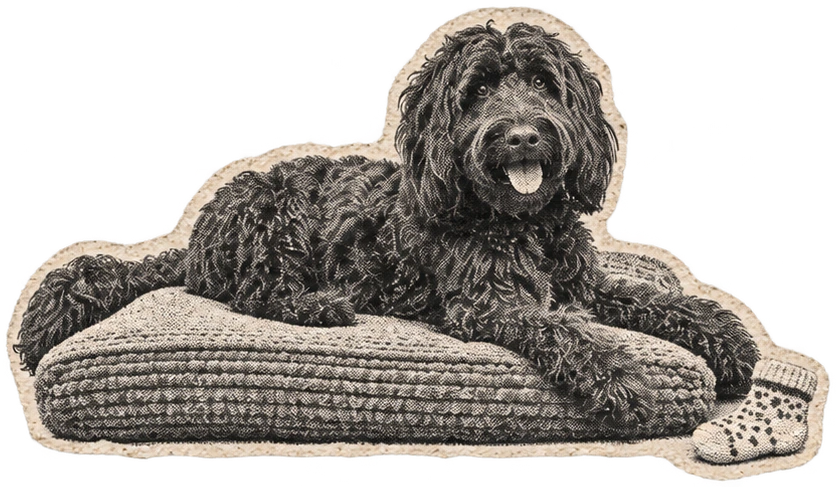
Kids, cats and other dogs
The fluffy face is misleading: it doesn’t turn a dog into something a child can lie on. An adult should actively supervise them together, and the dog needs a place where nobody follows them. Ask children to call the dog over and leave it at that if they don’t come. 2033
For a cat, start with separation and a way for the cat to get out. If you’re seeing hard staring or attempts to chase, don’t leave them to sort it out. With another dog, introduce them with room to move and put favourite toys away at first if they’re liable to argue over them. 3435
Health checks and what the studies can’t tell you
Ask about hip and elbow results where relevant, and ask for eye screening and DNA results suited to the actual family lines. WALA says its member breeders must submit hip and elbow clearances for active breeding dogs. The Royal Kennel Club’s crossbreeding advice is to consider the relevant tests for the parent breeds. Ask your vet which results matter for this dog, including whether relevant eye or knee checks have been missed. Screening reduces some risks; it doesn’t prevent every health condition. 313363738
The 2024 UK study comparing Labradoodles with their parent breeds wasn’t a verified Australian Labradoodle cohort, so it doesn’t give these lines a UK condition rate. I haven’t found a representative UK lifespan figure for Australian Labradoodles. If your dog keeps shaking their head or an ear starts to smell, get them seen rather than trying a different shampoo or using leftover drops. 394041
Australian Labradoodle notes / 10
Health conditions and screening
| What to ask about | Where that leaves you |
|---|---|
| Hips | Ask to see actual screening results for breeding dogs where applicable. 133637 |
| Elbows | Ask for the elbow assessment separately. It isn’t the hip result. 133637 |
| Eyes and DNA | Ask which exam and inherited conditions were covered, and check line relevance. 133738 |
| Knees | Ask the vet about repeated skipping or lameness rather than trying to diagnose it yourself. 2841 |
| Ears | Head shaking or a sore, smelly ear warrants a vet check. 40 |
| Allergy | Poodle ancestry or a low-shedding coat is not proof a person won’t react. 1112 |
| Lifespan and UK disease rates | No representative figure from the evidence used here; don’t borrow a proxy from a different cohort. 3942 |
Budget for the coat you’ve got
Ask a groomer what they charge for a dog of this size and coat, and how often they would normally want to see them. If you like a long coat, make sure you can keep the comb moving between appointments. There’s no shame in asking for it shorter if the longer version spends half its life full of brambles. 6743
When you compare insurance, look at what you’d actually have to pay on a claim and whether an existing condition is excluded. Keep a regular allowance for the stuff a quote may not cover, and ask your practice what routine care costs locally. 43
Australian Labradoodle notes / 11
Budget beyond the food
| Budget item | What to check |
|---|---|
| Grooming | Price for this dog’s size and coat, plus brush and comb for home. 643 |
| Year-round care | Food and routine vet costs. 1643 |
| Cover for illness or accident | Limits, excesses and exclusions rather than just the monthly figure. 43 |
| Time | Who does the brushing and walks when the usual person is out? 627 |
How the lines came together
The Labrador and Poodle cross began as an Australian guide-dog project. Other ancestry entered some later breeding lines, and the associations don’t all tell the history in exactly the same way. The Australian association’s account includes Cocker Spaniel ancestry. It doesn’t mean every dog on sale has all of the ancestors in that account. 1344
A 2020 genetic study compared 21 Australian Labradoodles with eight first-generation Labradoodles and other breeds. The dogs sampled from the developed line had predominantly Poodle ancestry. It was a small study, and it didn’t tell you what’s in the family tree of the dog you’re meeting or how they’ll behave around the hoover. 1
Australian Labradoodle notes / 12
How the line developed
Before and after bringing one home
Ask what the dog does when it’s touched or brushed, and ask to see them walking normally rather than being posed for a photo. For a puppy, see them with their mum where they were raised and check the health records against the actual dogs. A pedigree is useful, but it can’t tell you whether the breeder has made getting a comb out into a pleasant event. 132645
If you already have the dog, put the next grooming appointment and vet check in the diary. Do a short handling session on a quiet day and get help with the bit neither of you enjoys. The next time you come back from a soggy walk, you’ll be glad you didn’t wait to make friends with the towel. 6182646
Australian Labradoodle notes / 13
Ask for evidence you can use
| Have a proper look at | Ask or check |
|---|---|
| The dog and relatives | Adult size and behaviour, plus who issued the lineage records. 141345 |
| Health evidence | Which named dogs were screened and what results they actually received. 133637 |
| Life now | Whether the dog is comfortable with brushing and with time alone. 263246 |
| Allergy in the household | Get clinical advice before committing. Don’t rely on a no-shedding or allergy-safe sales claim. 1112 |
Sources
- S1Ali et al. genetic analysis of sampled modern Australian Labradoodles and first-generation crossesSource · checked 21 November 2026
- S2Royal Kennel Club guide to what crossbreed names meanSource · checked 21 November 2026
- S3Australian Labradoodle Association of America history and open stud bookSource · checked 21 November 2026
- S4Australian Labradoodle Association UK colour and size descriptionsSource · checked 21 November 2026
- S5Worldwide Australian Labradoodles Association breed standardSource · checked 21 November 2026
- S6Worldwide Australian Labradoodles Association coat and grooming guideSource · checked 21 November 2026
- S7PDSA grooming and coat careSource · checked 21 November 2026
- S8Dogs Trust predicting and understanding dog behaviourSource · checked 21 November 2026
- S9Dogs Trust advice on walking a dog around triggersSource · checked 21 November 2026
- S10Dogs Trust preparing a dog for visitorsSource · checked 21 November 2026
- S11Allergy UK pet allergy factsheetSource · checked 21 November 2026
- S12Vredegoor et al. dog allergen studySource · checked 21 November 2026
- S13Royal Kennel Club health screening for crossbred dogsSource · checked 21 November 2026
- S14Royal Kennel Club recognised pedigree breed listSource · checked 21 November 2026
- S15Dogs Trust benefits of rehoming an older dogSource · checked 21 November 2026
- S16PDSA adult dog body condition and weightSource · checked 21 November 2026
- S17Dogs Trust harness and lead mannersSource · checked 21 November 2026
- S18PDSA at-home health check and coat inspectionSource · checked 21 November 2026
- S19PDSA grass seed symptoms and veterinary adviceSource · checked 21 November 2026
- S20Dogs Trust reading dog body languageSource · checked 21 November 2026
- S21Bryson et al. comparison of owner-reported behaviours in designer Poodle crossesSource · checked 21 November 2026
- S22RSPCA reward-based training and qualified helpSource · checked 21 November 2026
- S23Dogs Trust teaching a dog to swap an itemSource · checked 21 November 2026
- S24Dogs Trust positive reinforcement and rewardsSource · checked 21 November 2026
- S25Dogs Trust doorway trainingSource · checked 21 November 2026
- S26Dogs Trust gentle handlingSource · checked 21 November 2026
- S27PDSA on activity levels for adult dogs and puppiesSource · checked 21 November 2026
- S28PDSA advice on limping and stiffnessSource · checked 21 November 2026
- S29Dogs Trust enrichment and scent activitiesSource · checked 21 November 2026
- S30PDSA dogs and heatstrokeSource · checked 21 November 2026
- S31Dogs Trust settle trainingSource · checked 21 November 2026
- S32Dogs Trust gradual time aloneSource · checked 21 November 2026
- S33Dogs Trust child and dog safetySource · checked 21 November 2026
- S34Dogs Trust dogs and cats living togetherSource · checked 21 November 2026
- S35Dogs Trust bringing another dog into the householdSource · checked 21 November 2026
- S36Worldwide Australian Labradoodles Association requirements for member hip and elbow resultsSource · checked 21 November 2026
- S37Royal Kennel Club health standard for recognised breeds behind crossbred linesSource · checked 21 November 2026
- S38British Veterinary Association getting started with canine health screeningSource · checked 21 November 2026
- S39Bryson et al. study of physical health in UK designer Poodle crossesSource · checked 21 November 2026
- S40PDSA ear infection signs and treatmentSource · checked 21 November 2026
- S41PDSA canine patellar luxationSource · checked 21 November 2026
- S42Dogs Trust UK breed lifespan tableSource · checked 21 November 2026
- S43PDSA cost of owning a dogSource · checked 21 November 2026
- S44Australian Labradoodle Association account of historical parent breedsSource · checked 21 November 2026
- S45RSPCA advice for choosing a responsible breederSource · checked 21 November 2026
- S46Dogs Trust helping an adopted dog settle inSource · checked 21 November 2026
