
Breed guide / American Cocker Spaniel
Living with an American Cocker Spaniel
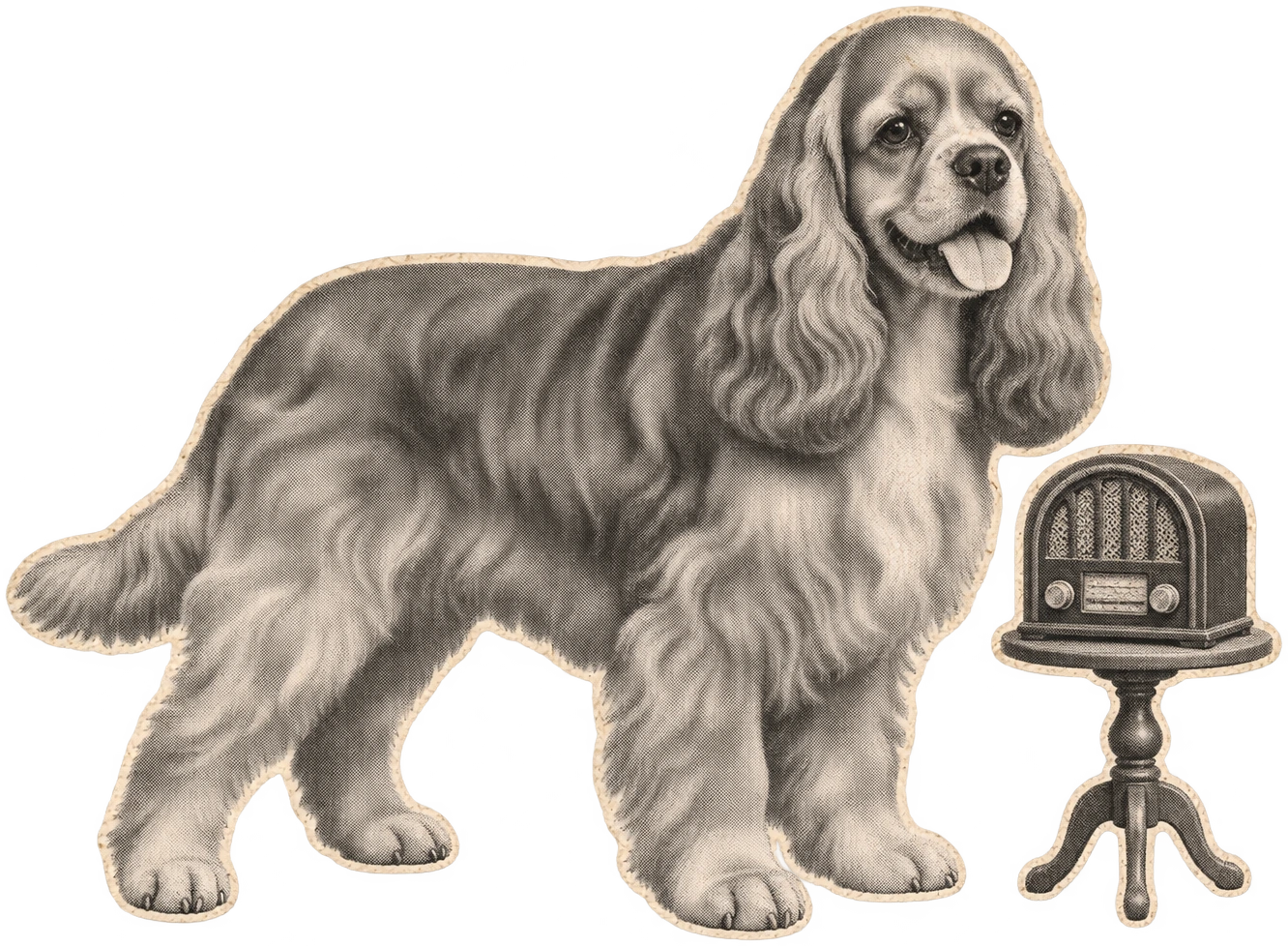
The American Cocker Spaniel is a compact gundog with English Cocker ancestors, its own breed standard and a fair bit of coat. That last bit matters when they come home with the underside of each ear wet and half a hedge stuck to a leg. Make time for walks and a few calm minutes with the brush; know what their eyes and ears normally look like so you spot a change. 12345
Jump to a section
The short version
Check both ears after a wet outing. Dry the hair on the outside and look for a new smell, soreness, discharge or repeated head shaking. If something has changed, speak to the vet rather than trying a deeper clean. It’s a lot easier to notice something on the second ear if you’ve looked at both before. 4 5 6
Keep some time for an outing that isn’t just the walk to get home again. Give them a sniff and then a place to settle. Get advice immediately if an eye becomes painful, suddenly cloudy or held shut; don’t put it down to a stray hair. 7 8 9
American Cocker Spaniel notes / 01
Look at both sides
The American Cocker is its own breed
The Royal Kennel Club calls this one Spaniel (American Cocker), and lists the English Cocker separately as Spaniel (Cocker). The American written standard describes a compact build, a rounded skull and a broad, deep muzzle. The presentation and proportions differ, but you can’t reliably identify a dog using a haircut or an ear alone. 1 2 3 11
American Cocker Spaniel notes / 02
Two separate Cockers
Fit the chest beneath the coat
The UK American Cocker standard gives ideal shoulder heights of 37–39 cm for males and 34–37 cm for females. Those aren’t the English Cocker figures and they aren’t a guide for how much to feed. You’ll get more from feeling your own dog’s ribs and looking at how the waist changes beneath the coat. 2 11 14
Check how a harness sits while they’re moving, not just while they’re standing square at home. Longer hair can conceal rubbing. Part it under the straps after a new harness goes on and look again after a trim. 4 15
Don’t confuse a brushed top with a brushed dog
Work down through the longer hair around the ears, legs and underside. Use a brush that suits the coat and stop if you’re pulling on a knot. A comfortable pet trim can be easier to live with than trying to make the dog sit through a full coat every evening. Ask a groomer what your dog actually needs. 1 2 4 17
Learn what the ears look and smell like on a normal day. Check the outer folds, especially after getting wet. If the ear hurts or keeps getting sore, get the underlying issue looked at. Deep cleaning with cotton buds is not a solution. 5 6
American Cocker Spaniel notes / 04
After a wet walk
| Area | Useful check |
|---|---|
| Ear hair | After water or mud, check and gently dry the outside. 5 18 |
| Earlobe and canal entrance | Look for soreness, smell or discharge; don’t push anything down. 5 |
| Feathering and straps | Separate hair gently and check for knots close to the skin. 4 15 |
| Eyes | Ask promptly about new irritation, and urgently about pain or cloudiness. 9 |
Notice what happens when the brush comes out
A dog that leaves the room when you get the comb may be telling you something useful. Do one easy patch and stop while they’re still comfortable. If they suddenly won’t let you near one ear or one side of the face, pause and check for a health reason rather than pushing through. 4 5 17
Let greetings work the same way. Give them a choice to come over and don’t assume that spaniel means they want a stranger’s hands round their head. If they’d rather move back, give them room. 17 19
American Cocker Spaniel notes / 05
Notice their response
Give the nose something easy to find
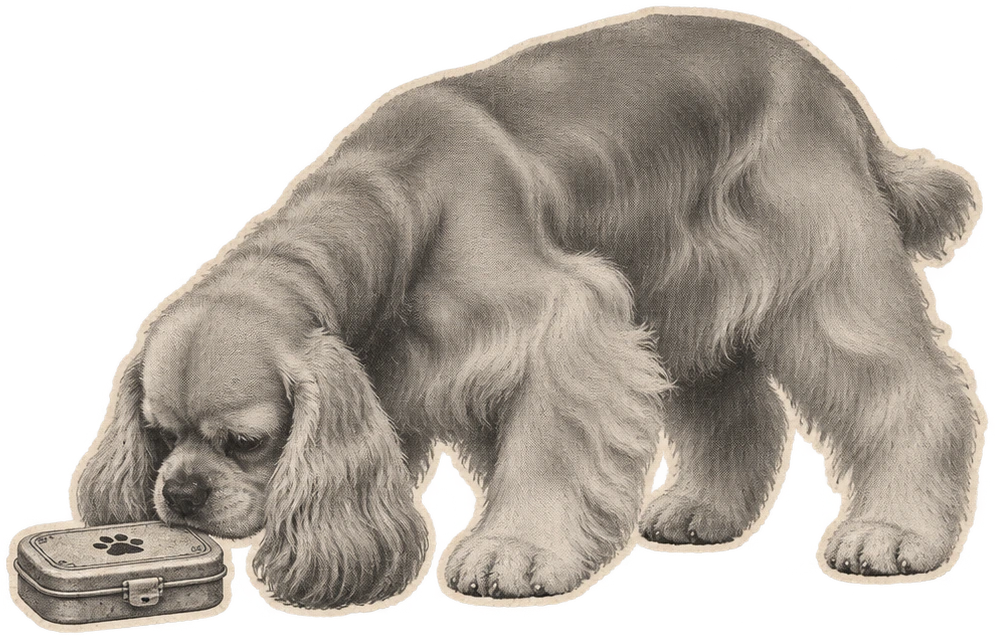
Start with a toy somewhere obvious and let them find it. A few pieces of their normal food can work too, taken from their measured portion if that suits their diet. The first search doesn’t need to be hard. You want a dog keen to do it again, not somebody searching behind the fridge for twenty minutes. 7 20
Practise a return somewhere quiet and make it worthwhile. Sometimes let them go back to sniffing after they come in. Use a fitted harness and long line in suitable space if the recall still needs work. Near roads or livestock, keep the lead short. 10 15
Give them a proper walk without chasing a number
A healthy adult can enjoy a substantial daily routine. Build the duration to their current ability, and get some variety from smells and surfaces rather than insisting on the same distance. A dog who used to keep up and now starts lagging might need a check more than another lap. 1 21 22
If they like water, choose somewhere safe to get out again. Avoid suspect algae. Check the ears and paws afterwards, especially in long grass. Use the cooler part of the day when it’s warm and adjust the route to how they’re moving. 5 18 23 24
American Cocker Spaniel notes / 07
A proper walk
| Situation | Useful adjustment |
|---|---|
| An ordinary adult walk | Add a chance to search or sniff rather than just another circuit. 7 21 |
| Water | Check the exit, then look at the outer ears and hair once home. 5 18 |
| A warm day | Cooler hours and an easier pace. 24 |
| New stiffness or limp | Stop the hard exercise and get a recurring problem checked. 22 |
Make coming home part of the routine
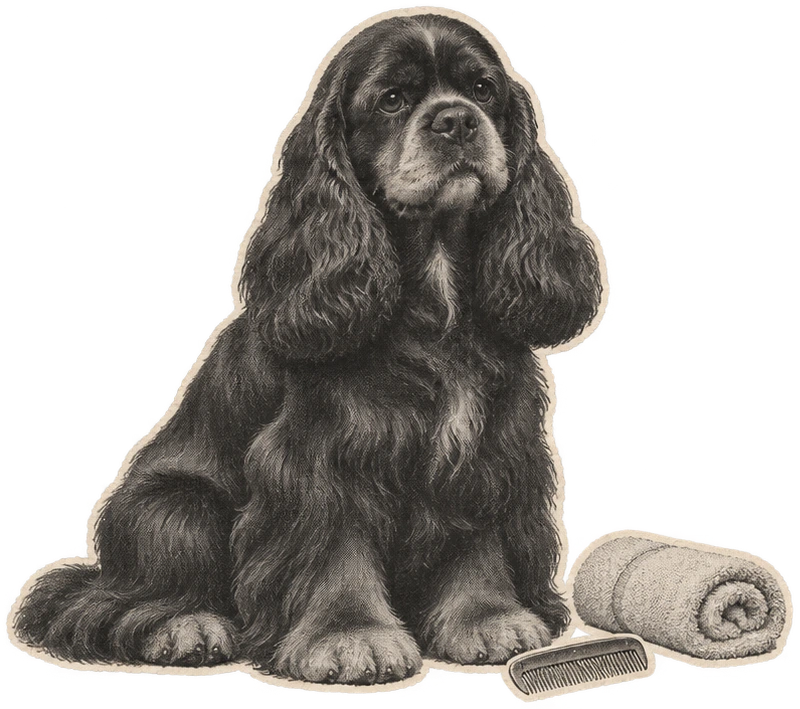
Put a towel by the door and make a quiet place to lie nearby. Check the outside of the ears and the longer hair on the legs, then let the dog settle. There’s no need to keep the whole house waiting while one reluctant spaniel is having a full salon appointment. 4 5 8
Build short periods apart if they struggle on their own. Watch how they cope rather than focusing on the clock. Count food rewards as part of their daily intake, especially if more than one person walks them. 14 20 25
Give everyone space from the ears and the face
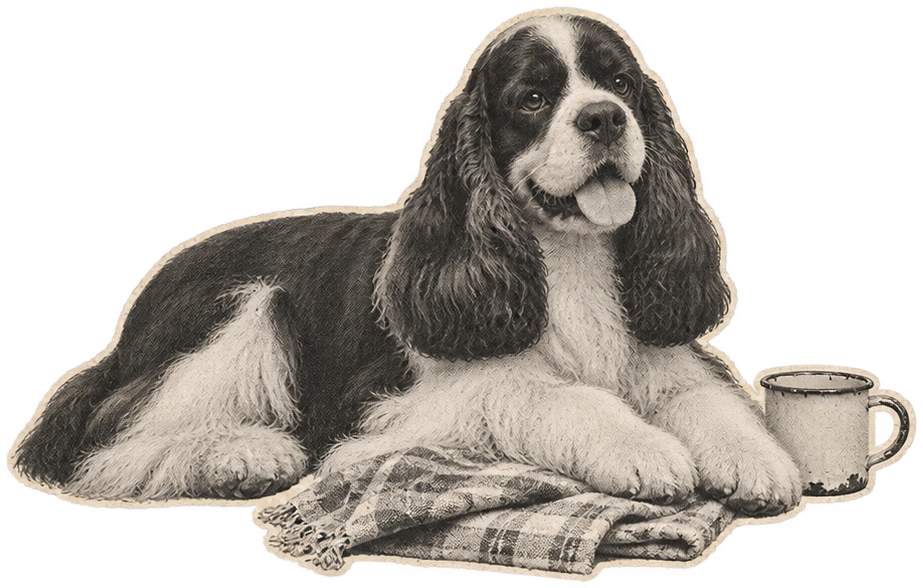
Show children how to invite the dog over rather than pulling them closer or touching the ears. Supervise when they’re together and use separate spaces when you can’t watch. Leave the dog alone when they’re eating, resting or moving away from play. 17 19 26
For other pets, start with gradual introductions and an easy exit for both animals. Ask about that particular dog’s history. Being relaxed around one cat or dog doesn’t mean they’ll enjoy being followed around the kitchen by another. 19 27 28
Know what needs a vet now
A painful, suddenly cloudy or enlarged eye, or an eye they keep shut, needs urgent veterinary advice. Glaucoma is raised pressure in the eye and can affect sight. Clinical eye screening, including gonioscopy in the American Cocker’s Good Practice tier, is a different thing from diagnosing a painful eye today. 9 29 30 31
For breeding, the current Royal Kennel Club American Cocker row has clinical eye testing and gonioscopy for pectinate ligament abnormality (PLA) in Good Practice. Additional Best Practice lists prcd-PRA DNA and hip scoring. The English Cocker is on a different row. Ask for the named screen and parent results rather than treating “Cocker tested” as a certificate. 1 3 30 31 32
UK VetCompass research found that breeds with pendulous ears had higher odds of diagnosed outer-ear inflammation than erect-eared breeds in its records. That’s a finding for ear-carriage groups, not an American Cocker disease rate or proof of the cause of an individual ear problem. The 2024 UK longevity cohort estimated a median of 13.3 years among 657 American Cockers. That’s a group estimate, not a forecast or measurement of healthy years. 5 12 13 33 34
American Cocker Spaniel notes / 10
Health conditions and screening
| Issue | What to do with it |
|---|---|
| Painful or abruptly cloudy eye | Call the vet urgently. 9 29 |
| Clinical eyes | Good Practice in recognised BVA/RKC/ISDS scheme. 30 31 |
| Gonioscopy | Good Practice for PLA, not a guarantee against glaucoma. 1 29 30 |
| prcd-PRA and hips | Best Practice adds the DNA test and hip scores. 30 32 |
| Repeated ear trouble | Get symptoms examined; don’t assume water is the only cause. 5 12 |
| Signs on a walk | Get a recurring change in movement or activity assessed. 21 22 |
| Lifespan | 13.3-year UK cohort median, not an individual forecast. 33 34 |
Price the grooming and the daily care
Get an actual quote for the coat you have and a cut you can keep up with. Ask what ear and eye care is likely to cost locally and check insurance exclusions before assuming both are covered. Price food on the portion the dog actually eats. 4 20 35
Ask a walker what they do after a wet or muddy outing. A quick towel and a note that the dog has started shaking an ear might be more useful than a message saying they’ve done their usual distance. 5 36
American Cocker Spaniel notes / 11
Grooming and cost
Where the two Cockers parted company
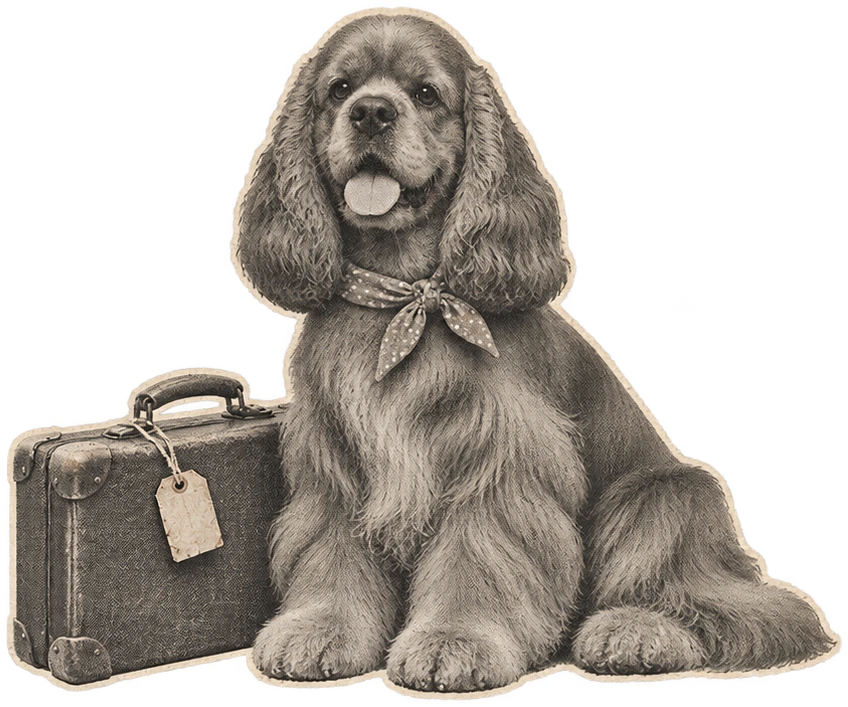
The Royal Kennel Club traces the American Cocker to English Cocker ancestors and describes a separate type developing in North America. What came out of that history is a different breed, not merely the English dog after a haircut. The American still belongs to the UK gundog group. 1 2 3 11
American Cocker Spaniel notes / 12
Where the Cockers split
Ask how they’re looked after now
For a rehomed adult, ask about past ear problems, any eye checks and how they cope when their coat is brushed. Go for a quiet walk with them if that’s possible. For a puppy, meet them with their mum where they were bred and ask to see the actual parent screening record for the American Cocker. 1 5 30 37 38 39
Have a good place to rest, a short first walk and a brush the dog doesn’t have to be wrestled into using. If you already have the dog, learn what one healthy ear looks like today, then make a point of checking the other one too. 4 5 8 17
American Cocker Spaniel notes / 13
Ask about the routine
| Ask or arrange | Useful detail |
|---|---|
| Parent and vet records | Named American Cocker results and any relevant treatments. 30 39 |
| Grooming | What they can tolerate and where they need a gentler approach. 4 17 |
| Everyday outing | Pace, cue and the places they enjoy. 10 37 |
| At home | A calm resting place and somewhere to dry them. 4 8 |
Sources
- S1Royal Kennel Club American Cocker profile, separate lineage and screeningSource · checked 21 November 2026
- S2Royal Kennel Club American Cocker written standard, coat, head and ideal heightSource · checked 21 November 2026
- S3Royal Kennel Club English Cocker profile, separate breedSource · checked 21 November 2026
- S4PDSA grooming and skin checksSource · checked 21 November 2026
- S5PDSA recognising ear infection signsSource · checked 21 November 2026
- S6PDSA veterinary advice for cleaning ears without cotton budsSource · checked 21 November 2026
- S7Dogs Trust enrichment and search gamesSource · checked 21 November 2026
- S8Dogs Trust mat and settle trainingSource · checked 21 November 2026
- S9PDSA veterinary advice on eye pain and holding an eye shutSource · checked 21 November 2026
- S10Dogs Trust recall and safe long-line useSource · checked 21 November 2026
- S11Royal Kennel Club written English Cocker standardSource · checked 21 November 2026
- S12O’Neill et al., original UK VetCompass otitis externa study, ear-carriage associationSource · checked 21 November 2026
- S13Engdahl et al., original UK clinical cohort of English Cockers onlySource · checked 21 November 2026
- S14PDSA checking a dog's body conditionSource · checked 21 November 2026
- S15Dogs Trust introducing and fitting a harnessSource · checked 21 November 2026
- S16Dogs Trust safer travel with a dogSource · checked 21 November 2026
- S17Dogs Trust low-pressure handlingSource · checked 21 November 2026
- S18PDSA swimming and water safety including blue-green algaeSource · checked 21 November 2026
- S19Dogs Trust reading body languageSource · checked 21 November 2026
- S20PDSA practical dog feeding and treatsSource · checked 21 November 2026
- S21PDSA exercise by age, comfort and conditionSource · checked 21 November 2026
- S22PDSA limp and pain in dogsSource · checked 21 November 2026
- S23PDSA veterinary guidance on grass seeds in paws, ears and eyesSource · checked 21 November 2026
- S24Dogs Trust safety in hot weatherSource · checked 21 November 2026
- S25Dogs Trust practising time alone graduallySource · checked 21 November 2026
- S26Dogs Trust child and dog supervisionSource · checked 21 November 2026
- S27Dogs Trust cat and dog introductionsSource · checked 21 November 2026
- S28Dogs Trust dog-to-dog introductionsSource · checked 21 November 2026
- S29PDSA veterinary guidance for glaucoma including urgent assessmentSource · checked 21 November 2026
- S30Royal Kennel Club central Health Standard, separate American and English Cocker rowsSource · checked 21 November 2026
- S31British Veterinary Association clinical Eye SchemeSource · checked 21 November 2026
- S32British Veterinary Association hip dysplasia schemeSource · checked 21 November 2026
- S33McMillan et al. original UK dog longevity cohort, methods and supplementary breed estimatesSource · checked 21 November 2026
- S34Dogs Trust original UK longevity table, American Cocker Spaniel rowSource · checked 21 November 2026
- S35PDSA dog ownership costs and insurance considerationsSource · checked 21 November 2026
- S36Dogs Trust guidance on finding a walkerSource · checked 21 November 2026
- S37Dogs Trust settling a rehomed dogSource · checked 21 November 2026
- S38RSPCA advice on selecting and visiting a breederSource · checked 21 November 2026
- S39Royal Kennel Club individual health results finderSource · checked 21 November 2026
