
Breed guide / American Bully
Living with an American Bully
An American Bully is a broad, muscular companion dog developed in the US. The name covers several registry styles, including some quite different builds. It doesn’t tell you what your dog can cope with on a hot walk or whether UK law applies to them as an XL Bully type. Get the legal status clear if there’s any doubt. For day-to-day life, pay attention to how easily the dog moves and breathes, and teach them to give people room at the door. 12381421
Jump to a section
The short version
If you’ve already got an American Bully, look at the dog in front of you when you plan a walk. Watch how freely they move and whether their breathing is easy at rest. Notice how well they recover after light activity. The broad head gets the attention. Normal breathing and easy movement are worth much more. Tell your vet if either has changed. Struggling to breathe is urgent. 1141516
Sort out what applies to your individual dog before making assumptions about public walks. “Pocket” on paperwork doesn’t settle whether a dog falls into a banned type. If your dog is exempted, keep to the conditions, including the public lead and muzzle requirements. Once that’s clear, work on an ordinary skill that saves you both a headache: turning with you when something else catches their eye. 34671718
American Bully notes / 01
Look at the actual dog
| Start here | Put it into practice |
|---|---|
| Know the rules | Registry papers and UK legal type are separate questions. Use the official guidance where you live. 13467 |
| Check breathing and movement | Call the vet about new noise, poor recovery or stiffness. Get urgent help for difficulty breathing. 141516 |
| Fit the gear | Work with the shape of the individual dog. If a muzzle is required, choose a secure fit that lets them pant and drink. 81719 |
| Practise a turn | Reward following you while the lead is still slack. Start somewhere quiet. 1820 |
American Bully styles and legal XL type
The US American Bully Kennel Club describes Pocket, Standard, Classic and XL. The US United Kennel Club describes Pocket, Standard/Classic and XL as styles within its one breed standard. Classic refers to a lighter frame relative to Standard. These are organisations’ breed descriptions. They aren’t British legal categories, and the United Kennel Club is not the UK’s Royal Kennel Club. 129
For UK enforcement, XL Bully type is assessed using a government physical conformation standard, rather than the name on a sale advert or pedigree. Official guidance in Scotland and Northern Ireland points to the same type standard used in England and Wales, but local exemption rules differ. This guide can’t tell you whether a particular dog is legally of that type, and neither can the pictures on this page. Use the official authority where you live if you’re unsure. 34567
American Bully notes / 02
What the registry names mean
| Label | What it does and doesn’t mean |
|---|---|
| A shorter registry style. The label does not rule a dog in or out of legislation. 23 | |
| Standard | A registry description of the breed’s build, not a legal category. 123 |
| Classic | A lighter-framed registry style compared with Standard. 12 |
| XL | A registry style; the legally defined UK XL Bully type is a separate assessment. 12357 |
UK rules to check before you go out
As checked on 21 November 2026, keeping an XL Bully type dog in the UK requires a valid Certificate of Exemption. Exempted dogs must be on a lead and muzzled in public; the official guidance also sets out requirements for secure keeping and veterinary records. These cover microchipping and neutering. Northern Ireland requires a valid dog licence for the exemption to remain valid. Read your own certificate and current official guidance. Local rules matter for your particular circumstances; this is an owner’s guide, not legal advice. 46710
The old third-party liability insurance requirement for exemption was removed from 1 July 2026 across the UK schemes. That isn’t the same thing as buying cover for vet bills, and it doesn’t change the other exemption conditions. The relevant authorities have also introduced private-place safeguards for children under 12 from 1 November 2026. See the children section below for links to the different national guidance. 46710111213
American Bully notes / 03
Find your nation’s guidance
| Where you are | Start with this guidance |
|---|---|
| England | Defra’s rules and the conditions for an existing certificate. Contact your local police if your dog may be within scope and you don’t have a certificate. 4 |
| Wales | Defra’s England and Wales scheme, also linked from the Welsh Government’s ownership guidance. 410 |
| Scotland | Scottish Government exemption rules, including contact details for the exemption team and the Scottish child-supervision guidance. 5612 |
| Northern Ireland | Nidirect’s conditions and the council dog-control team; keep the licence valid. 71113 |
Short coat, broad head and comfortable handling
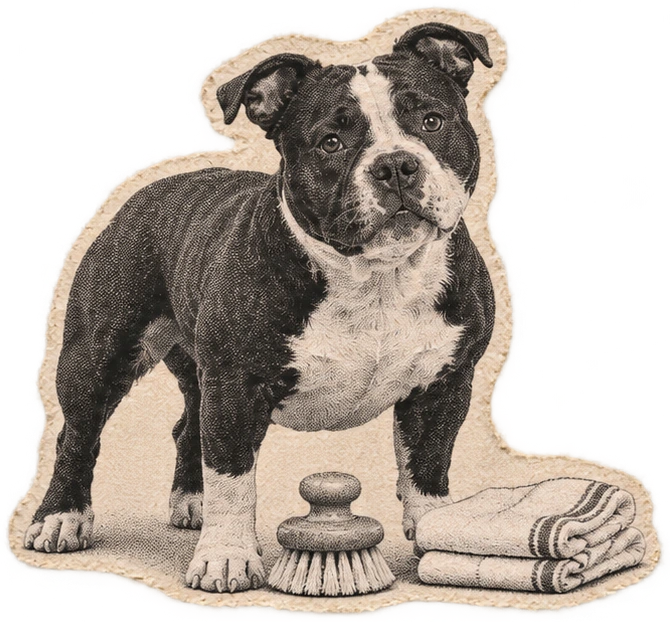
A short coat doesn’t take long with a soft brush. Use the time to notice changes rather than trying to get a showroom shine. If your dog has skin folds, check for redness, dampness or a persistent smell. A sore ear or an itchy patch is a reason to speak to the vet rather than an invitation to scrub harder. 1142223
Wide cheeks or a short muzzle can make a standard-fit muzzle awkward. For a dog that needs one, ask a vet or qualified trainer about fitting if it pinches or moves about. Check there’s room for a full pant and for drinking, and keep the dog’s view clear. A sleeve that keeps the mouth shut isn’t for ordinary walks. 81719
American Bully notes / 04
The short-coat checks
| Check | A useful habit |
|---|---|
| Short coat | Soft brush and a look at the skin underneath. 122 |
| Skin folds, if present | Get veterinary advice for irritation, soreness or a smell. 1423 |
| Muzzle fit, if used | Secure basket-style fit with room for panting and drinking. Ask for help if a shop fit doesn’t work. 81719 |
| Paw and harness checks | Brief, rewarded handling so the dog can learn what to expect. 2024 |
Strong doesn’t tell you what they’re thinking
A registry description is not a promise of how an individual dog will behave. The useful thing to watch is what the dog does before the obvious reaction. A dog freezing as someone leans over them needs space. It’s not the time to get a visitor to prove they’re good with dogs. Call the dog away or separate them calmly, whichever is safer. 11821
If people arriving is hard work, arrange the hallway before the knock. Put the dog somewhere they can be comfortable, behind a secure barrier if needed, and get the visitor inside without stepping round them. Separate the dog from visitors if there’s rushing or snapping, or if the dog has bitten before. Ask a vet or qualified behaviourist for help before trying another introduction. 182125
American Bully notes / 05
Make room before the greeting
Reward the useful bits of the walk
Teach a turn with you before you need it. Start inside or on a quiet route. Turn and reward the dog when they follow, then carry on without making it a big event. If you’ve got a broad, powerful dog, a turn you’ve actually practised is worth a lot more than saying their name six times beside the traffic. 182026
If your dog needs a muzzle, begin with small sessions where they can choose to put their nose in and take it out. A reward inside can help make it familiar. Add time gradually, and ask for help with fit or strong discomfort. Training at home doesn’t suspend the requirement to muzzle a legally exempted dog in public. 4671719
American Bully notes / 06
Practise what you need outdoors
| Skill | Keep the first version small |
|---|---|
| Turn away together | Practise where there’s nothing gripping the dog’s attention. 1820 |
| Muzzle practice | Start with voluntary nose-in; build time in easy stages. 1719 |
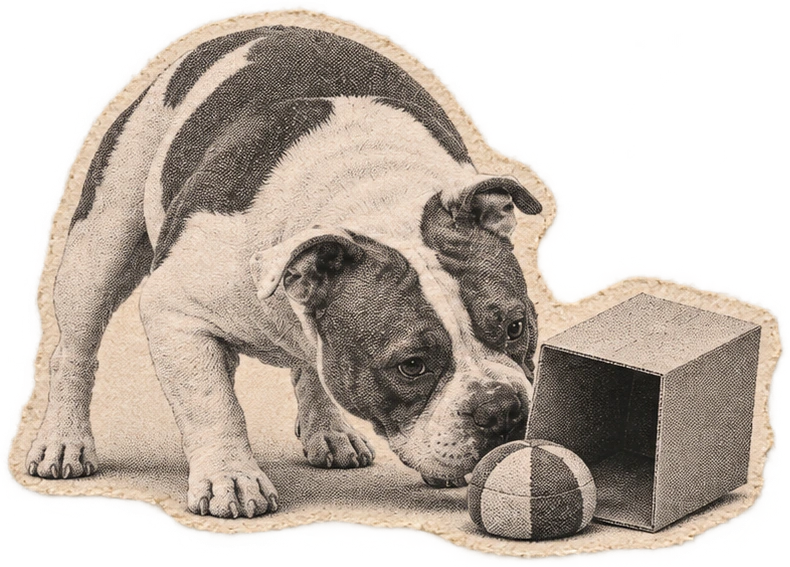
| Find a toy | Hide a familiar, dog-safe object in an easy spot instead of winding the dog up for another sprint. 2627 |
The breathing matters more than the distance
Choose walks based on the individual dog, not the build they’re supposed to have. A shorter-faced dog may be more likely to struggle with heat or exercise. Go out when it’s cooler, leave time for sniffing and don’t keep going if your dog is starting to struggle. Ask your vet if they’re taking longer to recover on routes that used to be fine. 141528
If the dog has difficulty breathing or you suspect heatstroke, get urgent veterinary help. For routine outings, work with safe spaces and the rules that apply to your dog. Quiet doesn’t mean legally private. A route with nobody around isn’t a reason to set aside public lead or muzzle rules. 4671528
American Bully notes / 07
If breathing changes
| Situation | Change the plan |
|---|---|
| Comfortable and fit | Keep walks within what the dog copes with. Leave time to sniff and stop. 2629 |
| Hot weather | Adjust the timing and activity. Pay extra attention if the dog is short-faced or overweight. 1428 |
| New limp or worse recovery | Stop pushing the pace and ask the vet. 1416 |
| Difficulty breathing | Contact an emergency vet. 15 |
Make the house easy to live in
Put the resting place somewhere the dog can reach without squeezing past feet or being touched every time someone walks by. If they’re inclined to fling themselves at the door to see who’s there, use a secure physical separation before you open it. Don’t wait for a visitor and three shopping bags to find out whether your “stay” works. 202130
Keep gates and doors in good order. If a gate cannot stop the dog or a child reaching over it, it isn’t your only answer. That matters in any busy house and particularly when the dog is subject to secure-keeping conditions. Give the dog time to settle in their space on ordinary days, not solely when something stressful is happening. 4671230
American Bully notes / 08
A place to rest undisturbed
Children and the rules for exempted dogs
Supervise children around any dog and separate them when you can’t give the interaction your full attention. Put the dog’s food and chews somewhere children won’t approach and keep their rest space off limits. A closed door or a barrier that actually prevents contact is more useful than trying to watch the dog while answering the front door. 2132
From 1 November 2026, exemptions for banned types including XL Bully dogs carry child-safety conditions across all four UK nations. Don’t leave a child under 12 in close contact with an exempted dog in a private place without the required supervision. The national definitions differ: Scotland’s guidance specifies someone aged 16 or over; read the applicable guidance for where you live and arrange physical separation whenever suitable supervision isn’t available. Cameras don’t replace in-person supervision. 467111213
American Bully notes / 09
Keep children and dogs safe
| Situation | What to put in place |
|---|---|
| Children in the room | In-person active supervision, or effective separation. Read the local exemption guidance if applicable. 11121332 |
| Resident cats | Barriers plus places the cat can go that the dog cannot follow. 33 |
| Other dogs | Start with space and an individual assessment of how both dogs cope. 34 |
Breathing, skin, joints and what we don’t know
Registry standards describe appearance. They can’t screen an individual dog for disease. If your dog has a short face, noisy breathing while awake, poor exercise tolerance or trouble coping in heat is worth asking a vet about. Breathing difficulty is an emergency. If the dog has skin folds, ask about irritation under them and check that the skin is comfortable. These are shape-related considerations, not diagnoses for every American Bully. 114152328
Ask your vet about repeated stiffness, a limp, or reluctance to get up or move the way they normally do. Keep the dog at a healthy body condition for their frame. A wider chest doesn’t make excess body fat helpful. Joint screening schemes and individual clinical assessment are different; let your vet tell you which checks matter for the dog you have. 163536
I couldn’t verify a reliable UK lifespan estimate for this breed for the American Bully in the UK longevity sources checked. One UK study includes an American Bulldog category. That’s a different name and population, and its figures don’t tell us how long an American Bully is likely to live. There’s no source here for precise prevalence figures across the registry styles, either. 13738
American Bully notes / 10
Health conditions and screening
| Conditions and checks | What to do |
|---|---|
| Noisy breathing or poor stamina | Ask the vet even if you’ve heard people call it normal for a short face. 14 |
| Breathing difficulty | Treat as urgent and call the vet. 15 |
| Heatstroke | Know the signs, seek emergency care and follow your vet’s instructions. 28 |
| Uncomfortable folds | Seek help for redness, odour or pain. 23 |
| New stiffness or lameness | Give the vet an example of the change and discuss clinical checks and body condition. 163536 |
| Screening | A registry label does not demonstrate health screening before breeding. Get veterinary records and speak to your vet. 136 |
| UK lifespan | No reliable breed-specific figure in the sources checked here. Don’t use American Bulldog lifespan in its place. 3738 |
What life with one can cost
Budget for equipment that fits the individual dog, not a stock kit sized by a breed name. A well-fitting harness is worth sorting early. If your dog needs a muzzle and the ones you’ve tried are rubbing, ask a professional about the fit. Price day-to-day care and veterinary support with the dog’s current needs in mind. 17192639
For an exempted dog, check the arrangements in your own certificate before relying on someone else to provide care. Budget separately for vet bills or suitable vet-fee insurance. The change to exemption liability insurance in July 2026 does not cover the cost if your dog needs treatment. If you’re in Northern Ireland, remember the dog licence renewal as a distinct item. 46739
American Bully notes / 11
What you’ll need to budget
| Put it in the budget | Check this first |
|---|---|
| Gear that actually fits | Harness, lead and, where needed, a suitable muzzle. 171926 |
| Training or behaviour support | Qualified reward-based advice if you need help with handling. 182025 |
| Routine and emergency care | Vet provision and how you would pay for a problem. 39 |
| Exemption-related admin | Check exact conditions; keep the Northern Ireland licence current where applicable. 467 |
Where the breed name comes from
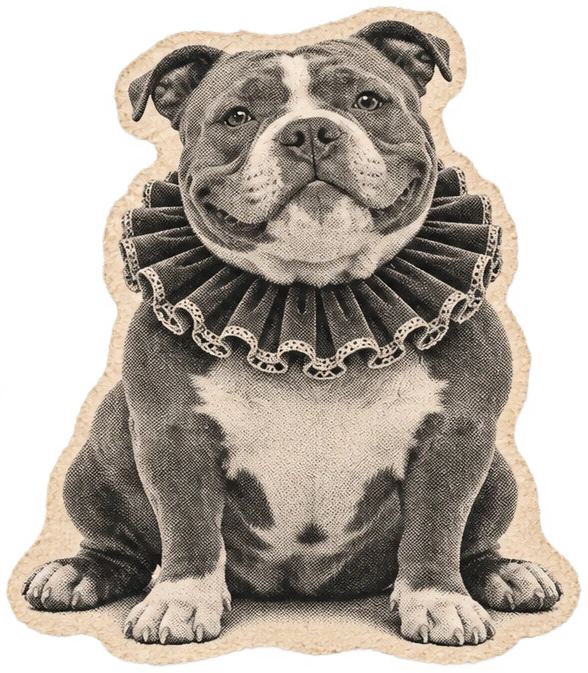
The American Bully was developed in the United States as a companion dog. In 2013 the US United Kennel Club recognised the breed. The broad head and muscular body form part of that registry’s description, and the same standard warns against exaggerated features that interfere with breathing or movement. It’s worth remembering that warning when a picture makes a dog look like most of the effort went into the front half. 12
The British legal type is a different idea, used to apply legislation. Modern registry recognition and the UK type assessment answer different questions. Neither can explain what the dog in front of you needs to walk and rest comfortably. 1314
Where to get help with the dog you have
If you don’t know whether the law applies to your dog, don’t get an answer from somebody guessing from a photo. Start with your government guidance and ask the relevant authority, or get independent legal advice. Keep a copy of any existing certificate and check its conditions. Before any proposed change involving a dog that might be of a prohibited type, ask the relevant authority. This article is not an acquisition or transfer guide. 34567
For health or behaviour, start with things the vet or behaviourist can use: a change in which walk the dog can manage, when they get stiff, or what happened just before they went still at the front door. You don’t need the perfect label before you can ask for help getting the dog more comfortable or keeping everyone safe. 14161825
American Bully notes / 13
Where to ask for help
| Need help with | Start here |
|---|---|
| Legal type or certificate | Official authority guidance for your nation. Get advice rather than attempting to classify a dog yourself. 34567 |
| Muzzle or handling | Ask a vet or reward-based professional about fit and training. 171920 |
| A physical change | Call your vet and describe exactly what you’ve noticed. 141516 |
| Risk around people or animals | Separate safely and seek qualified behavioural help. 212532 |
Sources
- S1United Kennel Club (US) American Bully breed standardSource · checked 21 November 2026
- S2American Bully Kennel Club (US) breed standard and classesSource · checked 21 November 2026
- S3Defra official XL Bully type definition in England and WalesSource · checked 21 November 2026
- S4Defra England and Wales XL Bully rules and existing exemptionsSource · checked 21 November 2026
- S5Scottish Government, applying the XL Bully type standardSource · checked 21 November 2026
- S6Scottish Government, existing XL Bully exemption guidanceSource · checked 21 November 2026
- S7Nidirect, XL Bully exemption conditions and licensingSource · checked 21 November 2026
- S8PDSA fitting a muzzle and beginning trainingSource · checked 21 November 2026
- S9Royal Kennel Club UK official breed standardsSource · checked 21 November 2026
- S10Welsh Government responsible dog ownership and XL changesSource · checked 21 November 2026
- S11Defra child safety in private placesSource · checked 21 November 2026
- S12Scottish Government child protection and adequate supervisionSource · checked 21 November 2026
- S13DAERA Northern Ireland child safety in private placesSource · checked 21 November 2026
- S14PDSA breathing problems in short-faced dogsSource · checked 21 November 2026
- S15PDSA urgent help for pets struggling to breatheSource · checked 21 November 2026
- S16PDSA guidance on new limping or stiffnessSource · checked 21 November 2026
- S17Dogs Trust positive muzzle training and fitSource · checked 21 November 2026
- S18Dogs Trust reactivity, body language and giving spaceSource · checked 21 November 2026
- S19Dogs Trust support for XL Bully ownersSource · checked 21 November 2026
- S20Dogs Trust reward-based trainingSource · checked 21 November 2026
- S21Dogs Trust preparing for visitorsSource · checked 21 November 2026
- S22PDSA routine grooming adviceSource · checked 21 November 2026
- S23PDSA flat-faced dogs and skin issuesSource · checked 21 November 2026
- S24Dogs Trust handling practiceSource · checked 21 November 2026
- S25Dogs Trust aggression towards visitors and getting helpSource · checked 21 November 2026
- S26Dogs Trust lead walking and suitable equipmentSource · checked 21 November 2026
- S27Dogs Trust nose games and enrichmentSource · checked 21 November 2026
- S28PDSA heatstroke signs and emergency adviceSource · checked 21 November 2026
- S29PDSA individual exercise by age and healthSource · checked 21 November 2026
- S30Dogs Trust training to settleSource · checked 21 November 2026
- S31Dogs Trust gradual time aloneSource · checked 21 November 2026
- S32Dogs Trust safe management with childrenSource · checked 21 November 2026
- S33Dogs Trust dog and cat introductionsSource · checked 21 November 2026
- S34Dogs Trust introducing an adult dog to a resident dogSource · checked 21 November 2026
- S35PDSA body condition and weightSource · checked 21 November 2026
- S36BVA Canine Health Schemes, purpose and scope of screeningSource · checked 21 November 2026
- S37Teng et al. 2022 UK VetCompass longevity paper listing American BulldogSource · checked 21 November 2026
- S38Dogs Trust UK breed longevity tableSource · checked 21 November 2026
- S39PDSA cost of owning a dog and coverage exclusionsSource · checked 21 November 2026
