
Breed guide / American Bulldog
Living with an American Bulldog
An American Bulldog is a strong, short-coated working dog developed in the United States. It has its own breed standard there and isn’t another name for the British Bulldog or American Bully. At home, the thing you’ll notice first is how much dog can arrive at the door all at once. Teach a way to turn with you before the lead goes tight, and set up the hall so nobody has to negotiate their way past the dog to get in. 12345
Jump to a section
The short version
Practise walking away from something interesting while there’s room to turn. Start somewhere quiet and pay the dog for coming with you before they’ve leaned into the lead. If your current plan depends on holding on harder than the dog pulls, take a quieter route and get qualified help. 467
Have a secured barrier or separate room ready before opening the door, because by the time the dog is halfway through it you’ll have your hands full. Give the dog space to rest and work on easy lead handling when they’re calm. You’ll get more out of those small sessions than asking for a perfect sit with three people on the doorstep. 5789
American Bulldog notes / 01
Make room at the door
| Sort this first | What to do |
|---|---|
| Lead | Choose routes with space and teach an easy turn on a loose lead. 46 |
| Front door | Use a secure barrier before guests come in. 58 |
| Family life | Adults supervise, and set aside a resting spot children do not enter. 810 |
| Health questions | Ask about actual joint assessments and family-specific results rather than assuming all bulldogs have the same risks. 111213 |
American Bulldog, American Bully and UK type rules
The United Kennel Club in the US maintains separate American Bulldog and American Bully standards. The British Royal Kennel Club Bulldog is another distinct entry. Some American Bulldog registry language uses “bully” for a style of the breed; that isn’t the same thing as the separate American Bully name or the UK legal XL Bully type. 123
Breed papers or an advert don’t by themselves determine a dog’s status under prohibited-type rules. If you’re unsure about your own dog, use the official guidance for the nation you’re in and ask the relevant authority. Don’t rely on a photograph or a breed guide to settle it. 14151617
American Bulldog notes / 02
Separate breeds
| What the label refers to | Where to look |
|---|---|
| American Bulldog / American Bully | Distinct entries in the US United Kennel Club standard list. 12 |
| Bulldog in British breed listings | The Royal Kennel Club has its own Bulldog standard. 3 |
| UK legal type | Check the official guidance for your nation; a breed label alone doesn’t answer it. 14151617 |
Get kit that fits the actual dog
The US United Kennel Club standard recognises variation in build and expects weight to be in proportion to height. That is a breed description, not an average for every American Bulldog living here. Run your hands along the ribs and ask the vet to show you what a healthy body condition feels like. Heavier doesn’t mean better built. 118
Check the harness with the dog walking and turning so you can see whether it catches behind the front legs, and make sure they can’t back out. Check who else can safely handle the actual dog before making them your backup walker. An extra grip on the lead is no substitute for space to move away. 4619
American Bulldog notes / 03
Fit the kit to the actual dog
Short coat, worth a proper look
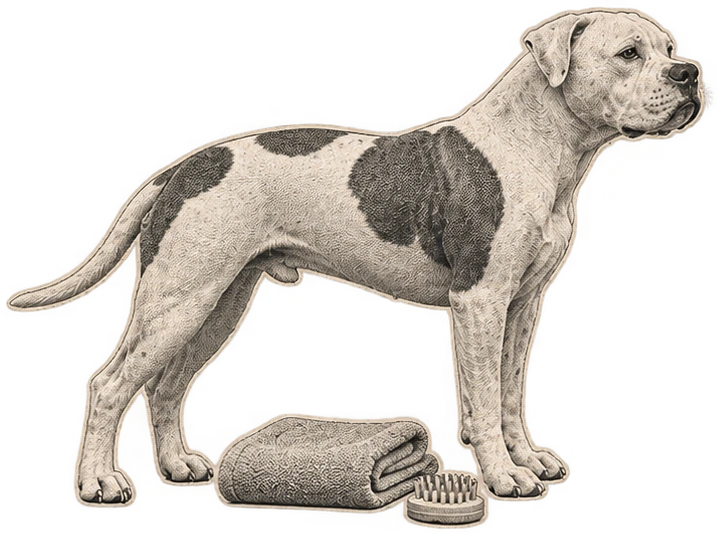
Give the dog a gentle brush and look at the skin. If they’ve got folds, note whether the skin there is sore or starting to smell. A coat doesn’t need to be complicated to be uncomfortable. If they suddenly dislike you touching a patch they used to let you brush, check whether it hurts. 1212223
Use small handling sessions to teach the dog what happens with a towel after a wet walk. Let them walk across it before asking to handle their paws. Ask the vet about persistent flaking or redness instead of trying a different shampoo every weekend. 21222425
American Bulldog notes / 04
Check the short coat
| What to look at | What to do |
|---|---|
| Short coat | Brush gently and note any change to skin or handling tolerance. 2122 |
| Folds, if present | Ask the vet about soreness, damp skin or an unusual smell. 23 |
| Paws | Get them used to a short, calm check. Let them step away. 2224 |
| Persistent scaling | Get the skin examined. A skin symptom doesn’t identify a genetic cause. 1225 |
How they handle company is an individual thing
Some dogs will try to greet everybody. Some would prefer not to. Watch whether yours moves away, goes still or keeps trying to regain space, and give them that space. Don’t make a visitor hold out a hand to answer whether a dog is friendly. 5926
If the dog is worried every time someone comes through, take the pressure off. Put a secure barrier in place before guests arrive and ask for help with the pattern. An adult needs to manage that routine. A child isn’t the person to send ahead to see how the dog’s feeling today. 57810
American Bulldog notes / 05
Give them room
Teach the turn on a quiet day
Choose a quiet straight bit of pavement. Give the cue just before you turn and reward the dog for following you. Build towards trickier places with enough room to do it well. The first proper attempt shouldn’t be with both of you wedged next to a parked car and another dog coming at you. 4627
Make coat checks equally boring by rewarding a touch the dog already accepts, working in short sessions they’re comfortable with. If your dog likes to carry something, give them a safe toy and teach a trade instead of grabbing what they’ve got. This makes checking them easier without needing to hold them still. 242728
American Bulldog notes / 06
Useful jobs for a normal day
Regular exercise without turning every walk into a test
Build activity around the dog’s fitness as they grow, using routes with space to pass and time for them to sniff. Don’t make a growing dog keep up with your run. A dog whose movement changes after a familiar walk needs an easier outing while you find out from the vet what’s going on. 6293031
Use calmer activity when it’s warm. Some dogs struggle with heat or wear themselves out before they stop playing. Repeated noisy breathing warrants a veterinary check and obvious difficulty breathing is an emergency. Start cooling immediately for suspected heatstroke and get emergency veterinary help. 323334
American Bulldog notes / 07
Keep the walk comfortable
| Situation | Better option |
|---|---|
| Crowded route | Move early or walk somewhere with room to pass. 6 |
| Young dog | Shorter manageable outings with breaks as they grow. 30 |
| Warm day | Use cooler hours or skip the walk if the conditions aren’t safe. 32 |
| Breathing distress | Call an emergency vet. If heatstroke is suspected, start cooling while you get help. 3334 |
Set up rest and footing at home
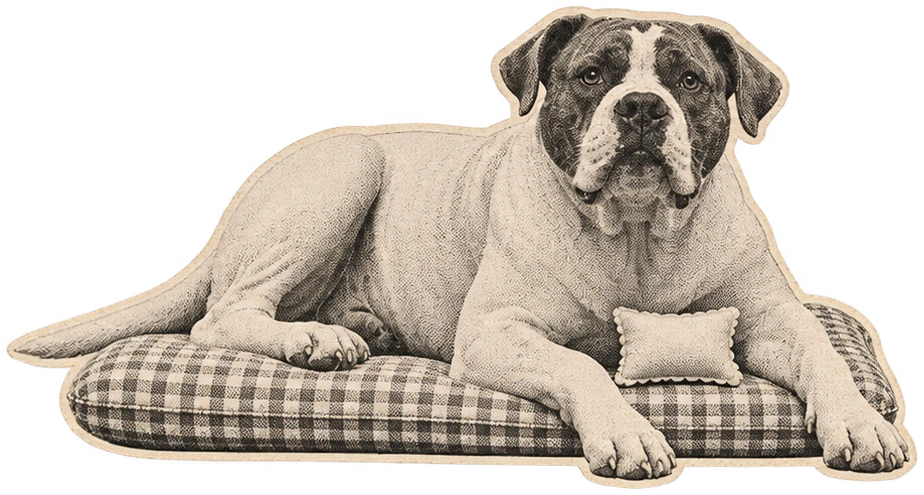
Put down something with grip where the dog turns to follow you, and place a big enough bed somewhere nobody has to step over them. If you’ve got a dog who darts to the hallway every time you stand up, reward them for lying somewhere out of the way before expecting them to stay there with a visitor in the house. 5935
Build time alone gradually and look at what happens after you leave. Make the next absence shorter if they pace instead of resting. Get help if it keeps happening. Also make a transport plan before they’re too sore to jump into the car. Ask your vet what’s appropriate if they have trouble getting in. 20313637
Family and other animals
A boisterous dog can knock someone down without being worried or cross. Watch the dog and children together, and make sure the dog can leave. Don’t give a child the lead because they managed it on the driveway with nothing to pull towards. The adult needs to be able to manage the situation. 4610
Introduce a cat with separation and a route away the dog can’t block. With another dog, use a space where both can keep their distance and take a break. If either one gets stuck staring, don’t wait for them to work it out. End the interaction and get help if you’re repeatedly worried. 67263839
Health checks and what they can tell you
The American Kennel Club’s Foundation Stock Service breed page advises hip and elbow evaluation. It’s US guidance, not a formal UK Health Standard tier for this breed. Research has identified particular inherited forms of ichthyosis and neuronal ceroid lipofuscinosis (NCL) in American Bulldogs. Those papers don’t tell you how common the conditions are in UK American Bulldogs today. Ask your vet which family screening results are relevant to the individual breeding dogs. 1112134041
If the dog goes lame or develops a persistent skin problem, get them examined. A screening result doesn’t diagnose the condition the dog has this week. The cited UK longevity table doesn’t give a separate American Bulldog lifespan figure. Don’t borrow one from the British Bulldog or American Bully. 2531414243
American Bulldog notes / 10
Health conditions and screening
| Check | What it means here |
|---|---|
| Hips and elbows | Ask about the actual assessments. These are recommended in the US breed guidance. 1141 |
| Skin and family history | Specific inherited ichthyosis variants have been documented; surface signs need veterinary examination. 1225 |
| NCL | Documented inherited disease in some studied lines, not a UK prevalence estimate. 1340 |
| Uncomfortable movement | Ask your vet rather than dismissing a change as part of the build. 31 |
| Breathing difficulty | Seek emergency help for distress. Discuss recurrent noise with your vet. 33 |
| Lifespan | No separate estimate in the cited UK table. 4243 |
| Evidence from breeding dogs | Ask whose results you’re seeing and what they test for. 1141 |
Budget for the dog on the lead, not just the dog on the sofa
Find out what your practice charges and what insurance would exclude. Look at the excess and any limits for a condition. Check what the actual dog eats and what a replacement harness or car restraint costs. It’s a large enough dog for “it’ll probably fit” to waste a fair bit of money. 4182044
Work out who can safely handle the dog when you can’t. Ask whether they’ll use your quieter route instead of taking the dog somewhere that usually leaves you holding your breath. A backup plan works better when everyone knows what the dog already finds hard. 619
American Bulldog notes / 11
Budget beyond the food
| Budget item | Before you commit |
|---|---|
| Vet and insurance | Ask for local routine prices, then check limits and exclusions. 44 |
| Harness and transport | Fit to the dog and check how it works in the vehicle. 420 |
| Food | Use an appropriate complete diet and keep an eye on condition. 1844 |
| Backup care | Find someone who can follow the actual handling and resting routine. 619 |
An American working-dog history
The US United Kennel Club traces the breed to bulldog-type working dogs in the United States and records recognition in 1999. The American Kennel Club lists the American Bulldog in its Foundation Stock Service, with entry in 2019. They’re separate registry decisions. Neither tells you how a dog will behave when the delivery turns up. 11145
The breed history is context, not a reason to rehearse guarding. Give a dog a job you’ll actually be glad they know. Following you out of a tight spot or settling away from the door will beat making the kitchen window look intimidating. 4579
What to find out about the dog you live with
Start with a normal walk and a normal doorway, if you can observe both safely. Find out how the dog recovers after activity and what happens when somebody visits. Keep a named copy of the health evidence rather than trusting “all clear” without seeing what was examined. 45113041
If they’re already home, set up an easier version of the hardest part of your day. Take the wider route or put the barrier in place before people arrive. If you’re not sure you can manage the dog safely, get qualified help early. You don’t have to give the difficult bit another go just to make sure it’s difficult. 5678
American Bulldog notes / 13
Ask for evidence you can use
| What to know | Check or do |
|---|---|
| Lead handling | Ask what the dog does when they want to go the other way. 46 |
| Visitor routine | Know where they can stay while people come in. 58 |
| Health evidence | Match results to specific dogs and use the vet to interpret them. 1141 |
| Legal uncertainty | Take questions about an individual dog to the relevant authority. 14151617 |
Sources
- S1US United Kennel Club American Bulldog breed standard and historySource · checked 21 November 2026
- S2United Kennel Club separate American Bully breed standardSource · checked 21 November 2026
- S3British Royal Kennel Club Bulldog breed standardSource · checked 21 November 2026
- S4Dogs Trust lead walking and harness fitSource · checked 21 November 2026
- S5Dogs Trust preparing safely for visitorsSource · checked 21 November 2026
- S6Dogs Trust handling triggers on walks and creating distanceSource · checked 21 November 2026
- S7RSPCA reward-based training and finding qualified helpSource · checked 21 November 2026
- S8Dogs Trust managing aggression towards visitorsSource · checked 21 November 2026
- S9Dogs Trust teaching a calm settleSource · checked 21 November 2026
- S10Dogs Trust actively supervising children with dogsSource · checked 21 November 2026
- S11American Kennel Club American Bulldog Foundation Stock Service profile and US assessment adviceSource · checked 21 November 2026
- S12Original study identifying a form of inherited ichthyosis in American BulldogsSource · checked 21 November 2026
- S13Original study describing an NCL variant in American BulldogsSource · checked 21 November 2026
- S14GOV.UK rules for banned dog types and breed-label limitsSource · checked 21 November 2026
- S15Official England and Wales XL Bully guidanceSource · checked 21 November 2026
- S16Official Scottish XL Bully guidanceSource · checked 21 November 2026
- S17Nidirect, current Northern Ireland XL Bully rulesSource · checked 21 November 2026
- S18PDSA body condition and dog weightSource · checked 21 November 2026
- S19Dogs Trust choosing an appropriate walkerSource · checked 21 November 2026
- S20Dogs Trust safe car travel and trainingSource · checked 21 November 2026
- S21PDSA grooming short-coated dogsSource · checked 21 November 2026
- S22PDSA checking skin, coat and feet at homeSource · checked 21 November 2026
- S23PDSA signs of skin-fold dermatitisSource · checked 21 November 2026
- S24Dogs Trust teaching gentle handlingSource · checked 21 November 2026
- S25PDSA skin problems and veterinary assessmentSource · checked 21 November 2026
- S26Dogs Trust dog body language and respecting distanceSource · checked 21 November 2026
- S27Dogs Trust reward-based trainingSource · checked 21 November 2026
- S28Dogs Trust how to swap a toy or item safelySource · checked 21 November 2026
- S29Dogs Trust enrichment and scent activitiesSource · checked 21 November 2026
- S30PDSA activity for the individual dog and growth stageSource · checked 21 November 2026
- S31PDSA veterinary advice for limping and stiffnessSource · checked 21 November 2026
- S32PDSA heatstroke prevention and veterinary guidanceSource · checked 21 November 2026
- S33PDSA emergency care for difficulty breathingSource · checked 21 November 2026
- S34PDSA suspected heatstroke first aidSource · checked 21 November 2026
- S35PDSA non-slip flooring and transport adjustments for dogs with joint problemsSource · checked 21 November 2026
- S36Dogs Trust gradual time-alone trainingSource · checked 21 November 2026
- S37PDSA recognising separation distressSource · checked 21 November 2026
- S38Dogs Trust on managing dogs with catsSource · checked 21 November 2026
- S39Dogs Trust on introducing dogs to one anotherSource · checked 21 November 2026
- S40University of Missouri canine genetics lab on American Bulldog NCL and other variant conditionsSource · checked 21 November 2026
- S41British Veterinary Association canine screening scope and limitationsSource · checked 21 November 2026
- S42Dogs Trust UK 2024 breed lifespan estimates tableSource · checked 21 November 2026
- S43Original 2024 UK breed longevity studySource · checked 21 November 2026
- S44PDSA costs of dog ownership, routine care and insuranceSource · checked 21 November 2026
- S45American Kennel Club Foundation Stock Service November 2019 decisionSource · checked 21 November 2026
