
Breed guide / Alaskan Malamute
Living with an Alaskan Malamute
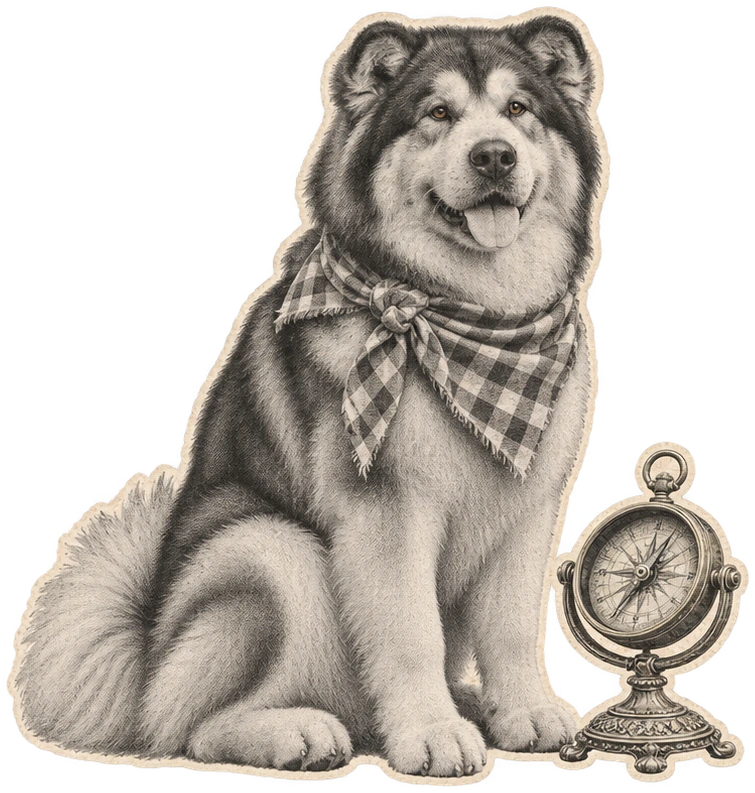
The Alaskan Malamute is a broad, strong Arctic sled dog, bred to move heavy loads steadily over distance. Living with one means finding good walks, coping with a coat that puts fluff in rooms the dog hasn’t even been in and making sure the front gate actually latches. You don’t need a sled, but it helps to have a plan for warm days and a walk you can manage together. 1234
Jump to a section
The short version
Start with the bits you have to get right every day. Pick walks with room to turn away before your dog gets fixed on a rabbit or another dog. Sort out a secure route from house to street. If you open the front door straight onto the road, a second barrier gives you time to put the lead on without a wrestling match. 3 4 5
Set aside time to brush through the coat before it packs down, not just when the hoover starts complaining. On warm days change the outing rather than pushing through the usual route. Have a cool room and water available at home. 2 6 7
Alaskan Malamute notes / 01
The daily basics
A Malamute isn’t a Husky with a bigger coat
The Royal Kennel Club lists the Alaskan Malamute and Siberian Husky as separate breeds. Its Malamute standard describes a heavier-boned freighting dog. The Siberian Husky standard describes a moderate, lighter-working sled dog capable of carrying a light load. Neither description tells you how a particular dog is going to live with your cat or walk past a bin lorry. 1 2 8 9
Alaskan Malamute notes / 02
Two different sled dogs
Measure before buying the bed
The UK written standard gives preferred figures of 64 cm at the shoulder and 39 kg for males, and 58 cm and 34 kg for females. Those are breed ideals, not goals to feed towards. You can feel the ribs and waist through the coat to check condition; your vet can show you what’s right for the dog you’ve got. 2 10
Measure the chest for a harness, and check that it still fits comfortably when the dog moves and takes a deep sniff. If they’re between sizes, try both rather than buying the one with a wolf on the packaging. Plan how you’d get a large dog into a car on a day when they can’t jump. 11 12
There’s a whole second coat under there
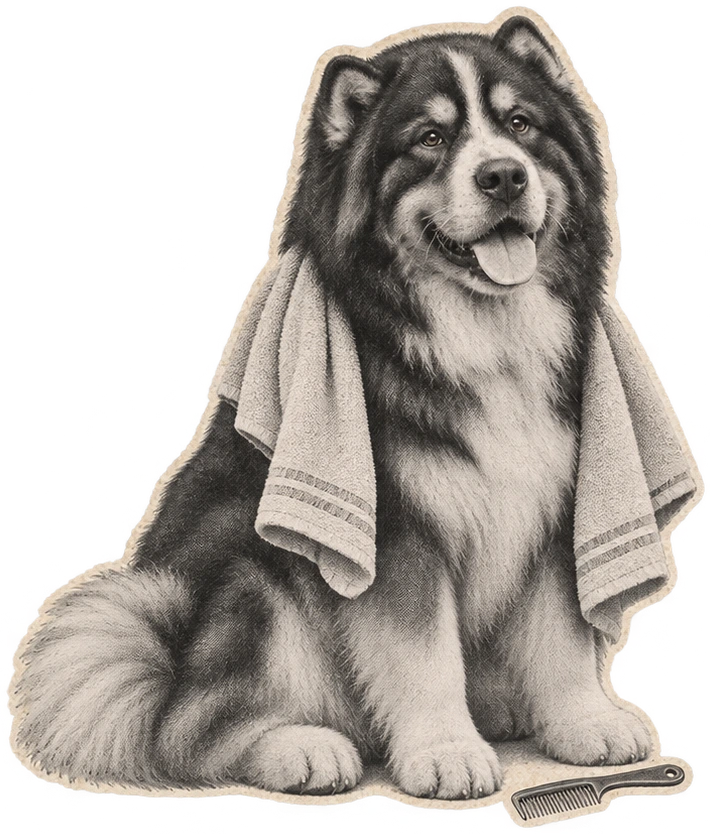
A Malamute has a thick guard coat and a dense undercoat. Start somewhere they’ll stand or lie comfortably. Part the hair and use a suitable brush in sections, especially round the neck and back legs where the coat is often thicker. If you’re tugging, stop and work on a smaller section. 2 6 13
Check what’s under the fur when the dog comes home wet or muddy. Look between the toes after a walk and under straps when you take the harness off. A vet or groomer can help with a densely matted patch; don’t go in with scissors next to skin you can’t see. 6 11 13 14
Alaskan Malamute notes / 04
The other coat
| Area | What to look for |
|---|---|
| Neck and back legs | Packed undercoat or a tangle working its way down to the skin. 2 6 |
| Under straps | Rubbing or damp fur left against the skin. 6 11 |
| Feet | Mud or debris; look more closely if they favour a foot. 2 14 |
| Skin | Soreness, persistent itch or a change that isn’t just shedding. 15 |
You don’t have to use every passing dog as practice
Give your dog room when another dog comes towards you. Reward them for looking away and moving with you before they’re at the end of the lead. Skip a face-to-face greeting if either dog is stiff, leaning away or staring. Nobody needs to find out how that meeting ends. 5 9 16
Watch what happens at home, too. A dog calling after you as you get ready to go out may need practice at much shorter absences. If vocalising or restlessness is new, look for a change in routine or health before blaming the breed. 17 18
Alaskan Malamute notes / 05
Make room on the path
Get the lead right before you add miles
Practise walking together on a quiet stretch and reward a loose lead while you still have one. Teach a clear turn cue somewhere easy, then use it before a situation gets too close. A well-fitting harness and reward-based training are more useful than a contest about who gets to drag whom round the corner. 5 11 16
For recall, start with low distractions and increase them gradually. Harness and long line can give you a bit of range in suitable open space; use a short lead near roads and livestock. Some dogs will need physical management around animals even after a lot of good practice. 3 20
Heat changes what counts as a good walk
Malamutes are active dogs and many adults do well with a substantial daily routine. Build the work gradually and tailor it to weather, age, condition and current fitness. A long, shaded sniffing walk can be more useful than a fast one you both want over with. Growing dogs or dogs coming back from illness need an individual plan. 1 3 21
In a UK VetCompass study, exercise was the most common recorded trigger of heat-related illness across the dogs studied. That isn’t a Malamute-specific rate. It does make a decent argument for going out earlier when it’s hot and keeping the outing easy. Get urgent vet advice if you suspect heatstroke; persistent heavy panting with weakness or collapse is not something to wait out. 7 22 23
Alaskan Malamute notes / 07
Change the walk in heat
| Situation | Better choice |
|---|---|
| Hot or humid out | A cooler time, easy pace, shade and water; skip hard exercise. 7 23 |
| On a suitable cool day | Work up to longer routes at their pace, with somewhere to turn back. 3 21 |
| Young dog or returning from illness | Match activity to current ability and ask the vet when uncertain. 21 |
| Possible heatstroke | Contact a vet urgently rather than waiting for a full set of signs. 23 |
Do the boring checks on the garden
Check the bottom of the fence as well as the top and look at what happens when somebody opens the gate. If soil has moved under it, fix the gap rather than waiting for the dog to demonstrate whether they fit. Give them activity with you outdoors rather than assuming that access to a garden covers their day. 3 4 21
If you want a quiet job away from the heat, try hiding a familiar toy for them to find. 19
Indoors, choose somewhere cool to rest where they can move around without being stepped over. Practise settling between walks. If they only get your attention once they’ve got up and started looking for trouble, paying for a quiet moment can help. 7 24
Think about who can hold the lead
A child who enjoys walking alongside should still have an adult control a dog this size. Supervise time together and separate them when you can’t watch properly. Give the dog a place to rest that isn’t part of the children’s play area. 2 26
Ask specifically about experiences with small animals, not just whether they’re “friendly”. Start pet introductions with separation and escape routes, and be prepared to maintain those arrangements if it doesn’t look safe. A nice first look through a gate is only a first look. 3 9 27 28
Alaskan Malamute notes / 09
Space at home
Health: notice changes in stride or sight
Alaskan Malamute polyneuropathy, or AMPN, is an inherited nerve condition. A change such as hind-leg weakness or an increasingly unsteady walk deserves a vet’s attention. So does bumping into things more in bright light, which may have several causes and isn’t a home test for cone degeneration. 3 29 30
For breeding, the Royal Kennel Club puts AMPN DNA testing in Good Practice and notes genetic diversity separately on the breed page. Best Practice adds cone degeneration DNA testing, hip scores, elbow grades and clinical eye testing. Ask for results for both parents rather than accepting a single “all clear”. The UK breed club publishes requirements for its own members separately. 1 31 32 33 34 42
The 2024 Dogs Trust UK longevity study estimated a median of 11.3 years for the 1,980 Alaskan Malamutes in its data. It’s a group estimate, not a forecast for this dog or a count of years in good health. 35 36
Alaskan Malamute notes / 10
Health conditions and screening
| Issue | What to check |
|---|---|
| AMPN | Good Practice DNA test; new weakness still needs veterinary assessment. 29 31 |
| Cone degeneration | Best Practice DNA test; changes in sight still need a vet. 30 31 |
| Clinical eyes | Best Practice clinical exam, separate from a DNA test. 31 32 |
| Hips | Best Practice hip scores for parents. 31 33 |
| Elbows | Best Practice elbow grades for parents. 31 34 |
| Possible heatstroke | Veterinary advice straight away. 23 |
| Lifespan | 11.3-year median in this UK cohort, not an individual forecast. 35 36 |
Budget for the dog and the time
A well-fitting harness, proper transport, regular brushing and dog care while you’re away are all worth working out before you need them. Price food on actual amounts and ask the vet about costs and insurance options locally. An insurance policy’s excess and exclusions matter more than the price on the first page. 11 12 25 37
Ask a walker where they take dogs on muggy days and what they do if a gate doesn’t shut. There’s no point paying for an hour if you spend it worrying whether they can get your dog back into the van. 4 7 38
Alaskan Malamute notes / 11
Cost the whole routine
Built for freight, not for a race
The Royal Kennel Club traces the breed to the Mahlemut people of Alaska and describes dogs hauling heavy loads over long distances. The written standard values a steady, powerful build. It’s useful history for getting your head round that broad chest and double coat. It doesn’t mean your pet needs to drag something heavy to have a good afternoon. 1 2 21
Ask about a normal week
For a rehomed adult, ask where they’ve walked, what they do at doors and gates and what the previous home knows about other animals. If possible, go for the kind of walk you’d actually do, not just the lap they know in the centre. For a puppy, meet the mum where the litter was raised and ask for the specific screening records. 26 31 39 40 41
Sort the gate, shady rest spot and car setup before they arrive. Start with a quiet routine and see what’s easy for them instead of taking them to meet the neighbourhood on the first morning. 4 7 12 39
Alaskan Malamute notes / 13
Ask about a normal week
| Ask or arrange | What you want to know |
|---|---|
| Lead | Who can walk them comfortably and what makes the dog pull or stop. 5 39 |
| Other animals | Actual experiences and what separation they might still need. 27 28 |
| Health records | Named parent tests and recorded results, not a blanket claim. 31 41 |
| First week | Gates, rest, food and travel arrangements ready before arrival. 4 12 39 |
Sources
- S1Royal Kennel Club Alaskan Malamute breed profile, origins and breeding guidanceSource · checked 21 November 2026
- S2Royal Kennel Club Alaskan Malamute written standard and preferred dimensionsSource · checked 21 November 2026
- S3PDSA veterinary Alaskan Malamute profile, exercise and health guidanceSource · checked 21 November 2026
- S4Dogs Trust leaving a safe distance and preventing escapesSource · checked 21 November 2026
- S5Dogs Trust loose-lead walkingSource · checked 21 November 2026
- S6PDSA grooming and skin checksSource · checked 21 November 2026
- S7Dogs Trust safety in hot weatherSource · checked 21 November 2026
- S8Royal Kennel Club official Siberian Husky written standard, light sled workSource · checked 21 November 2026
- S9Dogs Trust reading body languageSource · checked 21 November 2026
- S10PDSA checking a dog's body conditionSource · checked 21 November 2026
- S11Dogs Trust introducing and fitting a harnessSource · checked 21 November 2026
- S12Dogs Trust safer travel with a dogSource · checked 21 November 2026
- S13Dogs Trust low-pressure handlingSource · checked 21 November 2026
- S14PDSA limp and pain in dogsSource · checked 21 November 2026
- S15PDSA itchy skin adviceSource · checked 21 November 2026
- S16Dogs Trust reward-based focus trainingSource · checked 21 November 2026
- S17Dogs Trust practising time alone graduallySource · checked 21 November 2026
- S18PDSA separation anxiety and veterinary or behaviour helpSource · checked 21 November 2026
- S19Dogs Trust enrichment and search gamesSource · checked 21 November 2026
- S20Dogs Trust recall and safe long-line useSource · checked 21 November 2026
- S21PDSA exercise by age, comfort and conditionSource · checked 21 November 2026
- S22Hall et al., original 2020 UK VetCompass heat-related illness trigger researchSource · checked 21 November 2026
- S23PDSA heatstroke in dogs and urgent careSource · checked 21 November 2026
- S24Dogs Trust mat and settle trainingSource · checked 21 November 2026
- S25PDSA practical dog feeding and treatsSource · checked 21 November 2026
- S26Dogs Trust child and dog supervisionSource · checked 21 November 2026
- S27Dogs Trust cat and dog introductionsSource · checked 21 November 2026
- S28Dogs Trust dog-to-dog introductionsSource · checked 21 November 2026
- S29Royal Kennel Club AMPN DNA scheme and symptomsSource · checked 21 November 2026
- S30Royal Kennel Club cone degeneration DNA scheme and clinical contextSource · checked 21 November 2026
- S31Royal Kennel Club central Health Standard, Alaskan Malamute rowSource · checked 21 November 2026
- S32British Veterinary Association clinical Eye SchemeSource · checked 21 November 2026
- S33British Veterinary Association hip dysplasia schemeSource · checked 21 November 2026
- S34British Veterinary Association elbow dysplasia schemeSource · checked 21 November 2026
- S35McMillan et al. original UK dog longevity cohort, methods and supplementary breed estimatesSource · checked 21 November 2026
- S36Dogs Trust original UK longevity results, Alaskan Malamute rowSource · checked 21 November 2026
- S37PDSA dog ownership costs and insurance considerationsSource · checked 21 November 2026
- S38Dogs Trust guidance on finding a walkerSource · checked 21 November 2026
- S39Dogs Trust settling a rehomed dogSource · checked 21 November 2026
- S40RSPCA advice on selecting and visiting a breederSource · checked 21 November 2026
- S41Royal Kennel Club individual health results finderSource · checked 21 November 2026
- S42Alaskan Malamute Club UK, its own health testing and member rulesSource · checked 21 November 2026
