
Breed guide / Akita
Living with an Akita
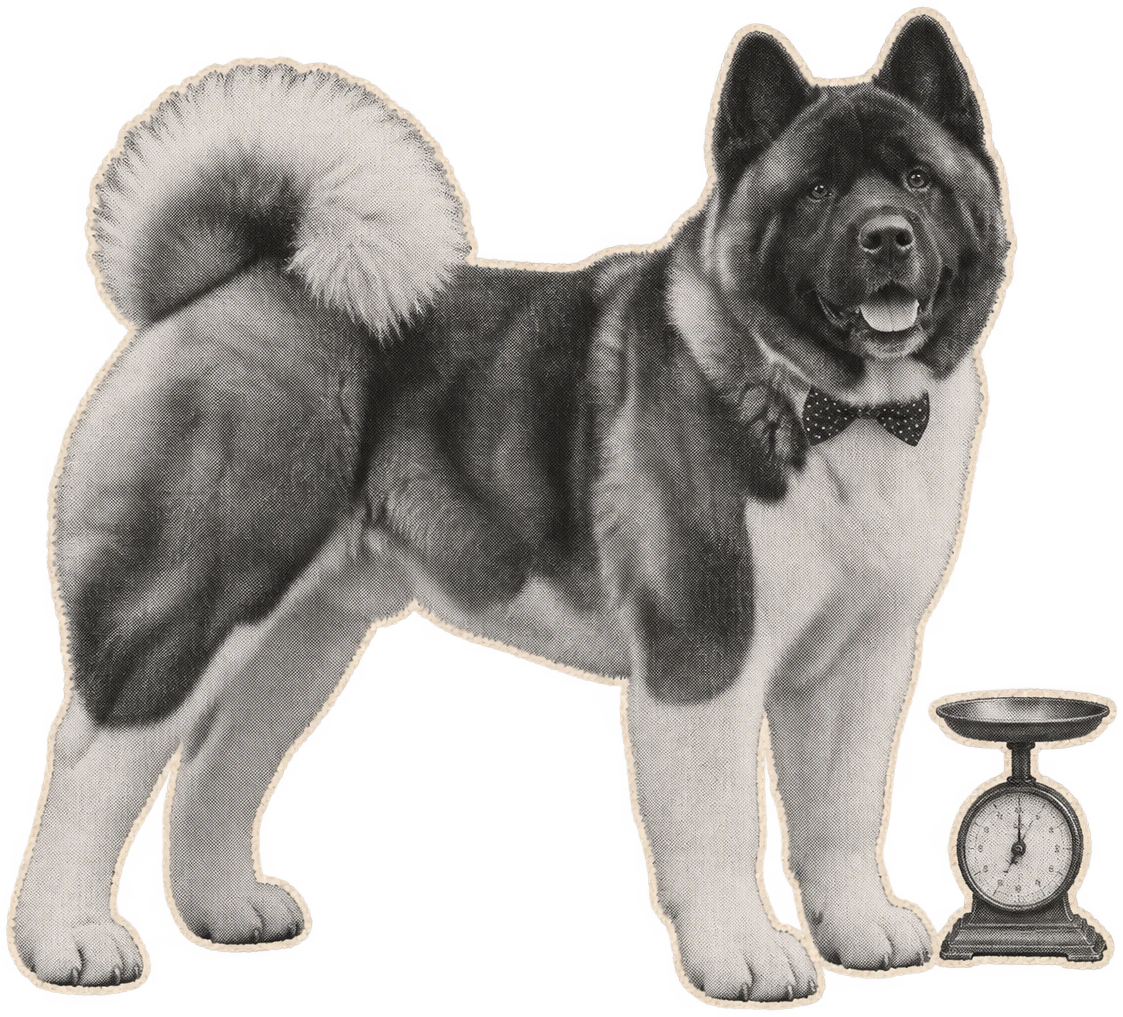
The Akita in this guide is the big, broad-headed dog often called the American Akita in the UK, not the separately listed Japanese Akita Inu. There’s a thick undercoat under the heavy outer hair and a lot of dog at the other end of the lead. The useful work begins with getting out of the front door calmly and working out how much room this dog needs around people and other dogs. 12345
Jump to a section
The short version
Practise walking on a slack lead somewhere quiet before you need to do it past the world’s most interesting dog. Give yourself room to turn away before the lead is tight. Good equipment helps you manage the space, but it won’t do the training or make a greeting necessary. 4 5 6
Set up for brushing outside the busiest part of the day. Part the coat where it’s thick and learn what the skin normally looks like. On a different note, save the out-of-hours vet number; repeated efforts to be sick without bringing anything up are not something to sleep on. 7 8 9
Akita notes / 01
Lead, coat and urgent signs
| Start here | What to do first |
|---|---|
| Walk | Practise a turn away in a quiet spot. Keep space on busy routes. 4 5 |
| Door | Use a barrier before opening the door if there’s any chance of a rush outside. 10 |
| Coat | Look all the way down to the skin on a patch you can easily reach. 7 8 |
| Urgent signs | Call the vet immediately if you suspect a twisted stomach, even without obvious swelling. 9 |
Which Akita?
The Royal Kennel Club currently calls this breed Akita. American Akita is a name you’ll hear for the same UK listing. Japanese Akita Inu has its own breed standard, and the UK kennel club separated the two in 2006. Rescue histories and vet records sometimes use shorter names. Get the full name if you’re checking a health result. 1 2 3 11 12
How much dog fits in the car?
The UK written standard gives shoulder heights of 66–71 cm for males and 61–66 cm for females. Those figures describe the intended size at the shoulder, not an individual adult’s height or target weight. Get a vet to demonstrate body condition through the coat. A broad chest and a big coat make guessing from the outside a fairly useless hobby. 2 14 15
Think about how you would transport the adult in an ordinary week. Check there’s space to lie down securely and room to get into the car without having to launch across a gap. If their movement changes or getting into the boot is suddenly hard, ask the vet rather than rehearsing the same jump. 16 17
Akita notes / 03
Fit kit to the dog
The undercoat has to go somewhere
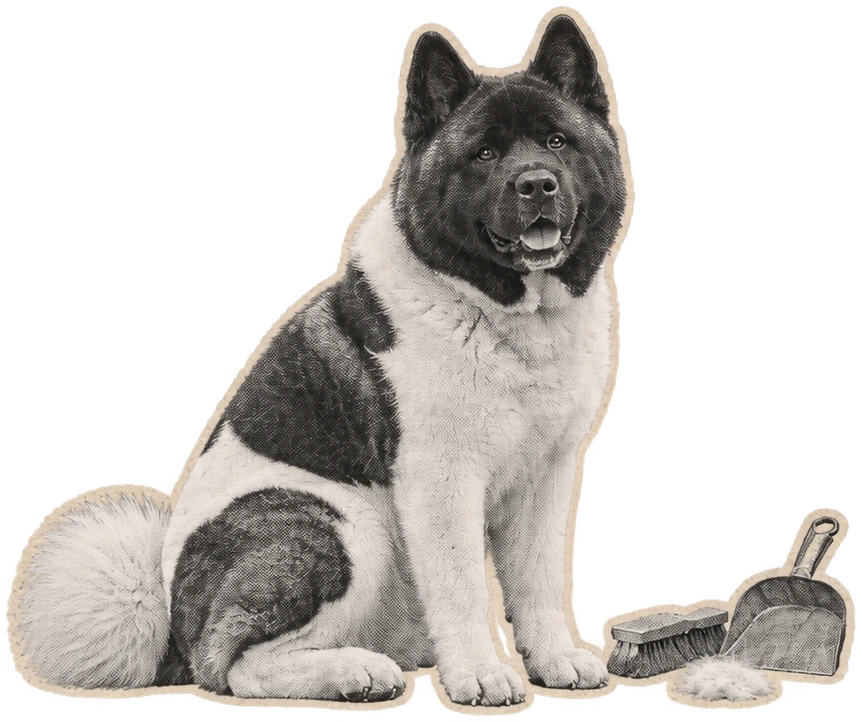
The Akita’s coat has a coarser outer layer and a dense undercoat. When the loose hair comes out, give yourself space to work and check what’s going on under the top layer. A brush chosen for the actual coat is better than anything that just gets the job done faster by scratching the skin. 2 7 18
Break grooming into pieces if they don’t like the whole routine. After a wet walk, take off the damp harness and check where it sits. Find out what they’re comfortable with before running a brush over their back legs. If a patch is sore or keeps itching, call the vet rather than deciding to scrub it clean. 6 7 8 19
Akita notes / 04
Look under the outer coat
| Coat or handling | What’s useful |
|---|---|
| Heavy loose coat | Do a few short grooming sessions rather than one tugging session. 7 18 |
| Near the harness | Part the coat and check for rubbing or dampness where the straps sit. 6 8 |
| Handling | Start with an area they’re comfortable having touched and stop when they ask for space. 20 |
| Persistent itching | Ask the vet about soreness or scratching that keeps coming back. 19 |
Leave room for a dog to decline
Start with what your dog does when they spot someone. If they look and carry on walking, let that be enough. If they stiffen or can’t look away, increase the distance. You don’t have to prove to the person on the other lead that both dogs are friendly. 4 21
At home, decide where the dog can be while visitors come in. Put the barrier in place before the doorbell and give the dog somewhere they can rest without people passing close by. If you’re seeing growling, lunging or repeated distress, check for pain and get qualified support rather than setting up another difficult greeting. 10 17 21 22
Akita notes / 05
Let the dog choose space
Work on the turn before you need it
Start a cue for turning on a quiet stretch. Say it once, change direction with your dog and reward the turn. It gives you something you can do well before everyone’s standing at the corner with both arms full of lead. Rehearse somewhere easy until it feels like a habit. 4 5 23
If your vet or behaviourist recommends a muzzle, teach the dog to put their nose into a correctly fitted basket by choice. It must leave room to pant and drink. Keep giving the dog space outside; it doesn’t make them any happier about what they’re looking at. 4 24
Akita notes / 06
Useful cues before you need them
A walk you both have a chance of enjoying
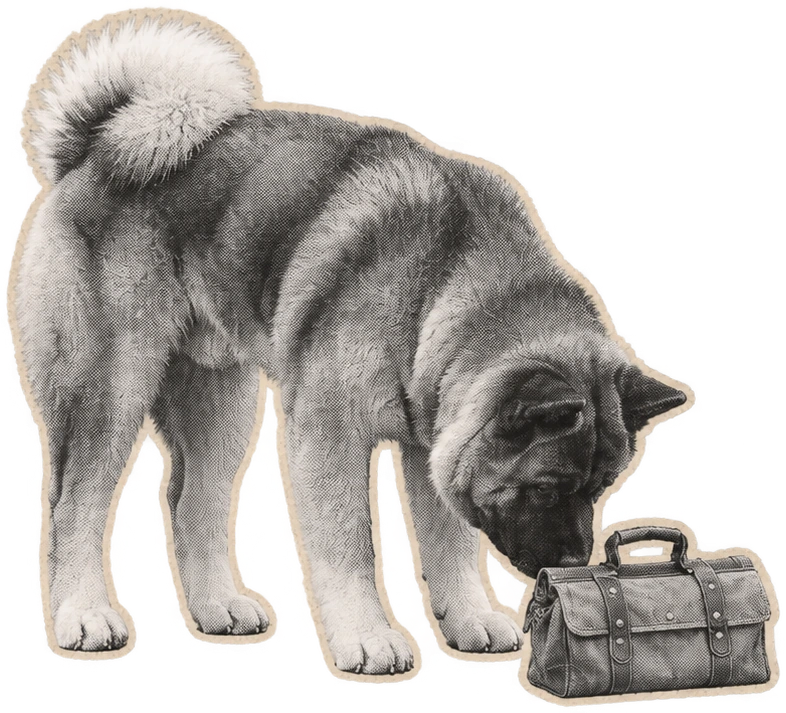
Plan routes where you’ve got a way out if a surprise dog appears. A fairly dull stretch with slack lead and time to sniff beats a busy path you spend negotiating inch by inch. Keep the lead on where there’s any doubt about recall or chasing. Hire a secure space if that’s a better fit, and check the boundaries before unclipping. 4 26 27
Build regular exercise around your dog’s age and fitness. Avoid testing a young dog with the full adult route straight away. In warm weather, make it shorter or go at a cooler time, rather than pushing the usual distance through heat. If you think your dog is developing heatstroke, cool them and contact your vet for urgent advice. 28 29 30
Akita notes / 07
Make a walk manageable
| Outside | Choose what fits |
|---|---|
| Busy path | Use a lead length you can manage and make room before passing. 4 5 |
| Open ground | Check recall and risk rather than relying on one successful practice. 26 27 |
| Hot day | Move the walk to a cooler time and make sure water is available. 29 |
| New reluctance | Cut it short and get new stiffness or limping checked. 17 28 |
A home set up ahead of time
Check the gate you actually use and any gap below it. Put a barrier between the dog and the door if you’re bringing something bulky through. Practise the routine without a real visitor so it doesn’t depend on getting everyone’s timing right while you’re holding four bags of shopping. 10 31
Find a rest spot away from the busiest route and put some grip down where they turn on a hard floor. If they struggle when left alone, start with absences they can already handle. Take a look at what happens while you’re gone. Boredom and distress don’t always need the same answer. 25 32 33 34
Akita notes / 08
Set the house up first
Children, cats and other dogs
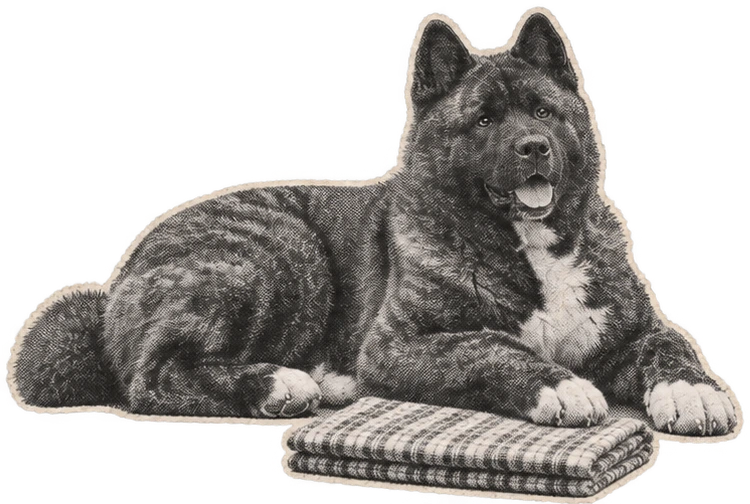
An Akita’s size changes the consequences of a bouncy greeting, even if the dog isn’t doing anything unusual. An adult actively supervises contact with children, and children leave the dog alone when they’re eating or resting. Separate the dog before fast games make it hard to manage, not when everyone’s already in the same corner. 2 35 36
If there’s a cat or another dog at home, plan introductions around the actual histories of both animals. Keep barriers up at first and make sure the smaller animal has a route away. Feed separately if there’s any need for space. If a rescue gives you a home restriction for a specific dog, use that rather than trying to negotiate with the breed description. 36 37 38 39
Health
There are UK clinical and lifespan datasets with a category called “Akita”. Don’t use a broad breed label by itself to assume every record was checked against today’s separate UK Akita and Japanese Akita Inu registrations. The lifespan sources here are not specific enough to give a lineage-verified number for this guide. The giant-dog study’s combined totals are not Akita-only rates. 11 40 41
For breeding screening, the current Royal Kennel Club Akita row has a blank Good Practice column and lists the clinical Eye Scheme and hip scoring under Best Practice. The Japanese Akita Inu row is separate and includes hip and elbow screening and an AI/FEH DNA test. Look at the named results for the actual parents. A certificate isn’t an explanation for why an adult dog has become stiff or started closing one eye. 1 12 13 17 42
Gastric dilatation-volvulus (GDV), a twisted stomach, is an emergency worth knowing about before you need to make a vet call. If there’s repeated retching with nothing coming up or other signs that make you suspect it, ring the vet immediately. A swollen belly isn’t always obvious. There’s no reliable diagnosis to make at home. 9 36
Akita notes / 10
Health conditions and screening
| Topic | Practical response |
|---|---|
| Hip screening | Ask for both parents’ actual hip scores when considering a puppy. Assess a new limp separately. 13 17 43 |
| Eyes | Check the clinical eye scheme result; a painful or closed eye needs a vet. 13 42 44 |
| GDV | Call immediately if suspected, even if the abdomen doesn’t look swollen. 9 |
| Skin or coat | Get persistent itching, redness or newly sore spots assessed. 8 19 |
| Exercise and weight | Use a suitable individual plan if a joint condition has already been diagnosed. 14 28 |
| Read the right row | Don’t transfer Japanese Akita Inu screening tests to the Akita listing. 12 13 |
| Evidence | A clinical record category, breeding score and individual assessment all tell you different things. 13 40 41 |
Cost is more than the food
Ask what good equipment and professional support actually cost near you. A dog walker who can read this dog and follow the handling plan is more useful than one who just has room in the group. If you need a trainer, ask about their approach before deciding who’s having a go with a worried adult. 22 45 46
Check insurance terms for ongoing joint care and for referrals, and work out what the excess would leave you paying. Put the out-of-hours number somewhere you can find it without scrolling past several months of group chat. 9 45
Akita notes / 11
Budget for proper support
| Cost | What to price |
|---|---|
| Gear | Match walking kit and vehicle restraint to the dog’s actual size. 6 16 |
| Grooming | Ask a local groomer what dealing with this coat would involve. 7 |
| Care cover | Find a walker who can use the agreed lead routine. 46 |
| Vet bills | Understand the excess and exclusions rather than just the monthly cost. 45 |
Two branches of the same history
Breed accounts trace the roots to Japan. The larger line developed in the United States and the two came to have distinct standards here. That explains why the name needs more care than it gets in some adverts. It doesn’t tell you how the dog on your drive will respond if someone comes through the gate. 1 3 11 12
Bringing one home
For an adult, ask what walks are like around other dogs and whether they rest comfortably behind a barrier. See what routine the rescue uses and start with that. Check who can handle a strong dog in your household and what your back-up is if that person can’t do the walk. 4 39 46 47
For a puppy, meet it with its mother where the litter is being raised. Ask to see named hip and eye evidence, plus an honest account of how the parents have been around people. Look for details about actual experiences. “Well socialised” isn’t much use without knowing what they’re comfortable with already. 13 48 49 50
Akita notes / 13
Questions about daily life
| Ask about | What a useful answer sounds like |
|---|---|
| Parents | Named results and an explanation for this exact UK breed entry. 13 49 |
| Handling | Specific things the adult dog is comfortable with and what the carer does when they need space. 4 39 |
| Other animals | A real account of their history and any limits you need to keep. 37 38 39 |
| First week | An ordinary walking and rest routine you can keep predictable. 47 50 |
Sources
- S1Royal Kennel Club Akita profile, breed history and screeningSource · checked 21 November 2026
- S2Royal Kennel Club Akita written standardSource · checked 21 November 2026
- S3Akita Rescue and Welfare UK: distinguishing the American Akita and Japanese Akita InuSource · checked 21 November 2026
- S4Dogs Trust managing dog reactions and allowing spaceSource · checked 21 November 2026
- S5Dogs Trust loose-lead walkingSource · checked 21 November 2026
- S6Dogs Trust fitting and introducing a harnessSource · checked 21 November 2026
- S7PDSA grooming dogs with different coatsSource · checked 21 November 2026
- S8PDSA dental disease signs and clinical adviceSource · checked 21 November 2026
- S9PDSA gastric dilatation volvulus urgent signsSource · checked 21 November 2026
- S10Dogs Trust handling visitors and giving spaceSource · checked 21 November 2026
- S11Royal Kennel Club Japanese Akita Inu distinct breed listing and dateSource · checked 21 November 2026
- S12Royal Kennel Club Japanese Akita Inu written standardSource · checked 21 November 2026
- S13Royal Kennel Club Health Standard, separately listed Akita and Japanese Akita Inu rowsSource · checked 21 November 2026
- S14PDSA body condition and healthy dog weightSource · checked 21 November 2026
- S15PDSA assessing an individual dog’s body conditionSource · checked 21 November 2026
- S16Dogs Trust secure transport and car travelSource · checked 21 November 2026
- S17PDSA new limping, stiffness and veterinary helpSource · checked 21 November 2026
- S18Akita Rescue and Welfare UK coat and grooming contextSource · checked 21 November 2026
- S19PDSA itchy skin adviceSource · checked 21 November 2026
- S20Dogs Trust handling and choice for a dogSource · checked 21 November 2026
- S21Dogs Trust body language and consent signalsSource · checked 21 November 2026
- S22Dogs Trust finding qualified behaviour and training helpSource · checked 21 November 2026
- S23Dogs Trust recall practice and turn away context in seasonal safetySource · checked 21 November 2026
- S24Dogs Trust acclimating a dog to a correctly fitted basket muzzleSource · checked 21 November 2026
- S25Dogs Trust settle and mat trainingSource · checked 21 November 2026
- S26Dogs Trust recall and use of long line and harnessSource · checked 21 November 2026
- S27Dogs Trust keeping dogs on lead while managing chasingSource · checked 21 November 2026
- S28PDSA adapting exercise for the individual dogSource · checked 21 November 2026
- S29Dogs Trust hot weather safetySource · checked 21 November 2026
- S30PDSA heatstroke in dogs and urgent careSource · checked 21 November 2026
- S31Dogs Trust secure harness and escape preventionSource · checked 21 November 2026
- S32PDSA non-slip footing and existing mobility issuesSource · checked 21 November 2026
- S33Dogs Trust gradual time-alone trainingSource · checked 21 November 2026
- S34PDSA separation anxiety and veterinary or behaviour helpSource · checked 21 November 2026
- S35Dogs Trust active supervision for children and dogsSource · checked 21 November 2026
- S36PDSA Akita veterinary guidance, size and GDV contextSource · checked 21 November 2026
- S37Dogs Trust safe cat and dog introductionsSource · checked 21 November 2026
- S38Dogs Trust introducing a dog to another dogSource · checked 21 November 2026
- S39Akita Rescue and Welfare UK local rescue and rehomingSource · checked 21 November 2026
- S40Original UK 2019 giant-dog cohort, 2026 publication, Akita coded as a breed groupSource · checked 21 November 2026
- S41Dogs Trust UK 2024 survival table, broad Akita record labelSource · checked 21 November 2026
- S42PDSA painful eye and urgent actionSource · checked 21 November 2026
- S43BVA Hip Dysplasia Scheme and resultsSource · checked 21 November 2026
- S44BVA clinical eye screening, its scope and purposeSource · checked 21 November 2026
- S45PDSA typical dog ownership costs and insurance considerationsSource · checked 21 November 2026
- S46Dogs Trust how to choose a dog walkerSource · checked 21 November 2026
- S47Dogs Trust settling a rehomed dog at homeSource · checked 21 November 2026
- S48RSPCA responsible puppy purchase and meeting the motherSource · checked 21 November 2026
- S49Royal Kennel Club Health Test Results FinderSource · checked 21 November 2026
- S50Dogs Trust healthy gradual puppy socialisationSource · checked 21 November 2026
